

Breed profile
Bulldog
A calm, affectionate dog happy with short walks, with real care needs for wrinkles, weight, heat and breathing.
Adult size
Males
- Weight
- about 50 lb (22.7 kg)
- Height
- 14 to 15 in (36 to 38 cm)
- Size group
- Medium
Females
- Weight
- about 40 lb (18.1 kg)
- Height
- 14 to 15 in (36 to 38 cm)
- Size group
- Medium
Source: AKC Bulldog standard; AKC breed page. Puppy size guide
AKC ratings (1 to 5)
These are the American Kennel Club's ratings for the breed as a whole; each dog is an individual. Source: AKC breed page (2026-10-23).
Living with a Bulldog usually means a calm, affectionate dog who is happy with short walks and a lot of couch time. The work comes from the details: wrinkle and nail care, a close eye on weight, careful handling of heat, and attention to breathing.
An apartment can suit a Bulldog well. The AKC describes a friendly, loyal dog that adapts to town or country, and a Bulldog does not need a big yard. Medical costs and health management can be higher than the short coat and relaxed personality suggest.
The AKC places the Bulldog in the Non-Sporting Group, with a life expectancy of 8 to 10 years. The sections below cover the daily routine first, then health, cost and the questions worth asking before you bring one home.
What a normal day looks like
Think of a dog who enjoys company and rest in roughly equal measure. The AKC calls Bulldogs mellow dogs that like to relax but still benefit from walks and the occasional romp. Most of the day is spent close to the people in the house.
Mornings and evenings tend to be the useful windows for activity, because the cooler hours are kinder to a short-muzzled dog. The breed began as a bullbaiting dog in England, a blood sport that was outlawed in 1835, and over time it became the companion Bulldog of today. The FCI lists its modern use as a companion and dissuasion dog.
How much exercise a Bulldog needs
A practical starting point is about 30 to 60 minutes of gentle activity spread across the day, adjusted for the individual dog's breathing, fitness, age, weight and the weather. Short walks in cool conditions, calm play, basic obedience, rally, scent games, food puzzles and brief training sessions all count.
The AKC recommends moderate exercise to help keep a Bulldog at a healthy weight. The Bulldog Club of America's 2026 guide recommends regular walks, playtime and a daily moderate-exercise routine to support joints, heart and lungs.
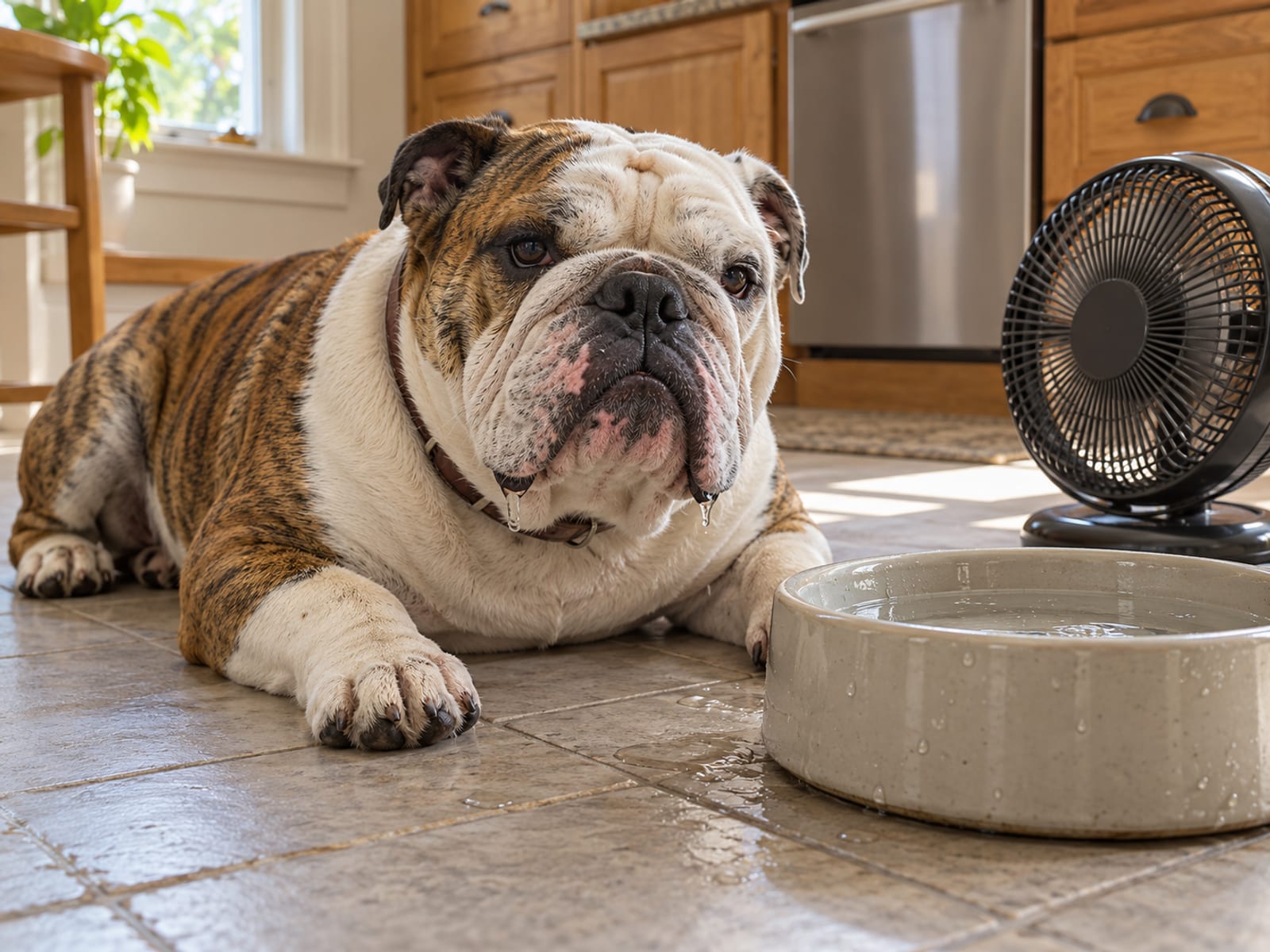
Heat and humidity are the real limits. The short muzzle makes cooling and breathing harder, so skip strenuous exercise in hot weather, never leave a Bulldog in a car, and provide shade and water. Stop if breathing becomes labored or sounds abnormal. The Bulldog Club of America also has guidance on breathing and heat, and UC Davis explains how flat-faced dogs struggle to cool down.
Puppies need controlled activity while their bones and joints develop. The club notes rapid early growth and the value of thoughtful nutrition and exercise.
Grooming, shedding and folds
The coat is short and smooth, and Bulldogs shed a moderate amount, with heavier shedding often in spring and fall. The AKC suggests about 10 minutes of brushing with a soft brush two or three times a week, and a rubber curry brush can help in heavy shedding periods. Short hair does not make a dog allergy-free; the AAAAI says no dog breed is truly hypoallergenic.
The coat is the easy part. Facial folds need regular checks and should be kept clean and dry, because trapped moisture or food can lead to irritation and infection. Ears and the area under the tail also need regular inspection and cleaning as your veterinarian directs.
Baths are occasional unless the dog gets dirty or has a skin-care plan from a vet. Nails may need trimming about every two weeks, according to the AKC, though walking surfaces and individual growth change the schedule. A groomer is not required for the coat, but can help with baths, nails or a dog who dislikes being handled.
Temperament and training
The breed standard describes a temperament that is "equable and kind, resolute and courageous," with a "pacific and dignified" demeanor. The AKC calls Bulldogs sweet, devoted and easygoing, and says they want to please their owners.
A Bulldog can also be self-willed or slow to respond. Early socialization and puppy classes help, and short, reward-based sessions with consistency work better than long drills.
On noise, the AKC places the Bulldog toward the quieter end of its barking scale. Individual dogs still snort, grunt, snore and vocalize in their own ways.
Time alone depends on the dog. Age, health, past training, attachment and routine all matter, and no breed-wide number of hours suits every Bulldog. Puppies and newly adopted dogs need a gradual plan, and a dog showing distress when left should get help from a qualified behavior professional.
Who a Bulldog fits, and who it does not
These are breed tendencies, and each dog is an individual. With children, a Bulldog may do well in a household that teaches kids not to climb on, hug tightly, disturb or take food from the dog, and an adult should supervise every interaction. The individual dog and the children's behavior matter more than the breed label.
With other dogs and cats, some Bulldogs get along fine. Introduce them gradually, use barriers and supervision, and do not assume a Bulldog will enjoy dog parks or a multi-dog home. Visitors should come in calmly, and the dog should have a quiet place to retreat.
A Bulldog tends not to suit a household that wants a heat-tolerant running or hiking partner, a dog who can safely spend long stretches alone, a low-maintenance health profile, or a dog certain to accept every child, pet and guest. Apartment life works when the home stays cool, the flooring is safe, stairs or elevators are planned for, and a veterinarian is close by.
Health: what to know before you choose
Bulldogs share a set of conditions linked to their build. A UK VetCompass study of 2,662 English Bulldogs, published in Canine Medicine and Genetics, found they had 2.04 times the risk of being diagnosed with at least one disorder in a year compared with other dogs. The Royal Veterinary College summary is a plain-language read.
The conditions named most strongly were:
- Skin-fold dermatitis, which is inflammation or infection in deep skin folds.
- Brachycephalic obstructive airway syndrome, or BOAS, which restricts airflow because of the short skull and airway shape. Cornell explains it well.
- Eye problems, including cherry eye, dry eye and entropion, an eyelid that rolls inward.
- Interdigital cysts, painful lumps between the toes, along with foot and skin infections.
- A protruding lower jaw, which can affect how the teeth meet.
Other veterinary sources also point to hip and elbow problems, patellar luxation, obesity, bladder stones, difficult births, dental crowding and heat intolerance. These are patterns across the breed, not a diagnosis for any one dog, and your vet is the person to ask about yours.
On lifespan, the AKC lists 8 to 10 years. A 2024 Scientific Reports study of dogs in the United Kingdom estimated a median of 9.8 years for Bulldogs, and the Bulldog Club of America's guide gives a usual range of 10 to 13. These describe populations, not your dog.
What a Bulldog costs
Good Dog reports that responsible-breeder Bulldog puppies run about $3,000 to $5,000 in 2026. That is a market range and says nothing on its own about a puppy's health or quality.
Rescue fees vary with the dog's age and medical needs. The Bulldog Club of America Rescue Network says fees depend on the individual dog, and one 2026 Phoenix Animal Rescue listing showed a $475 adoption fee for an English Bulldog. Confirm the fee with the organization.
For yearly care, the American Pet Products Association's 2024 to 2025 survey tables, archived by the Insurance Information Institute, report averages of about $293 for food, $331 for veterinary care and $73 for grooming or grooming aids. Those are averages for all dogs. Bulldog medical care can run well above them, so it helps to plan for medical costs, including insurance premiums, before the dog comes home.
Questions to ask a breeder or rescue
Start with health testing. The Bulldog Club of America's health testing position identifies three CHIC screenings: a patellar luxation evaluation, a cardiac evaluation and a tracheal hypoplasia X-ray. The club prefers a cardiac exam by a board-certified cardiologist using echocardiography, and encourages hips, elbows, thyroid and other tests.
Ask for the registered names of both parents and their OFA results, not a verbal assurance. A CHIC number shows the required tests were completed and made public; it does not mean every result was normal, so read the results themselves.
With a breeder or a rescue, you can also ask:
- How does the dog breathe at rest, in warm weather and after a short walk?
- What skin, fold, ear and eye care does the dog need now?
- How does the dog behave around children, other dogs and cats?
- What are the medical records, and what are the adoption or purchase terms?
- How has the dog handled time alone?
Where to go next
The Bulldog Club of America Rescue Network is the national parent-club rescue for purebred Bulldogs, including dogs called English or British Bulldogs. Municipal shelters and regional rescues also list Bulldogs, sometimes as mixes, so Petfinder is a useful place to look. Confirm the breed identification and medical history either way.
By adult weight, the AKC standard's mature sizes of about 50 pounds for males and 40 for females put a Bulldog in the medium range. Our puppy size guide can help you plan for a puppy's adult size.
To compare breeds, browse the Woof Wag Nation dog breeds hub. The Bulldog also appears in our list of 10 low-maintenance dog breeds, where it sits beside other breeds that ask for less grooming but may bring more health management.