

Breed profile
Dachshund
A small, lively hunting dog that needs daily walks, time to sniff and steady care for its long back.
Adult size
Standard
- Weight
- 16 to 32 lb (7.3 to 14.5 kg)
- Height
- 8 to 9 in (20 to 23 cm)
- Size group
- Medium
Miniature (at 12 months or older)
- Weight
- up to 11 lb (5 kg)
- Height
- 5 to 6 in (13 to 15 cm)
- Size group
- Toy
Source: AKC Dachshund standard (effective January 1, 2018); AKC breed page. Puppy size guide
AKC ratings (1 to 5)
These are the American Kennel Club's ratings for the breed as a whole; each dog is an individual. Source: AKC breed page (2026-10-23).
Living with a Dachshund means sharing your home with a small, lively hunting dog. It needs daily walks, plenty of time to sniff, reward-based training and steady protection for its long back.
Dachshunds can be affectionate companions in an apartment or a house. Barking, prey drive, a stubborn streak, shedding and trouble with long stretches alone all call for realistic planning, and that planning is what this page covers.
The breed comes from Germany, where it was developed to hunt badgers and other quarry above and below ground. The American Kennel Club places it in the Hound Group. That history explains a lot about the dog on your couch.
What a normal day with a Dachshund looks like
Expect a dog that attaches closely to its people and likes to be involved in whatever you are doing. The Dachshund Club of America describes the breed as clever, lively, courageous, affectionate and loving toward its family. AKC rates it 5 out of 5 for affection with family.
Size is simple: miniatures weigh 11 pounds or less and standards usually weigh 16 to 32 pounds, according to the official breed standard. AKC lists life expectancy at 12 to 16 years. A 2024 Scientific Reports study of UK dogs estimated a median of 13.2 years, which describes a population and not any one dog.
Exercise and keeping that nose busy
The Dachshund Club of America recommends on-leash walks and free play each day, and AKC says two moderate walks are generally enough. A practical adult target is about 30 to 60 minutes of activity, split across walks, controlled play and sniffing. AKC rates energy level 3 out of 5.
Scent matters as much as distance. Slow walks where your dog can follow smells, food puzzles, short training sessions, tracking games and Earthdog activities all give that nose a job. A supervised spot for digging helps some dogs.
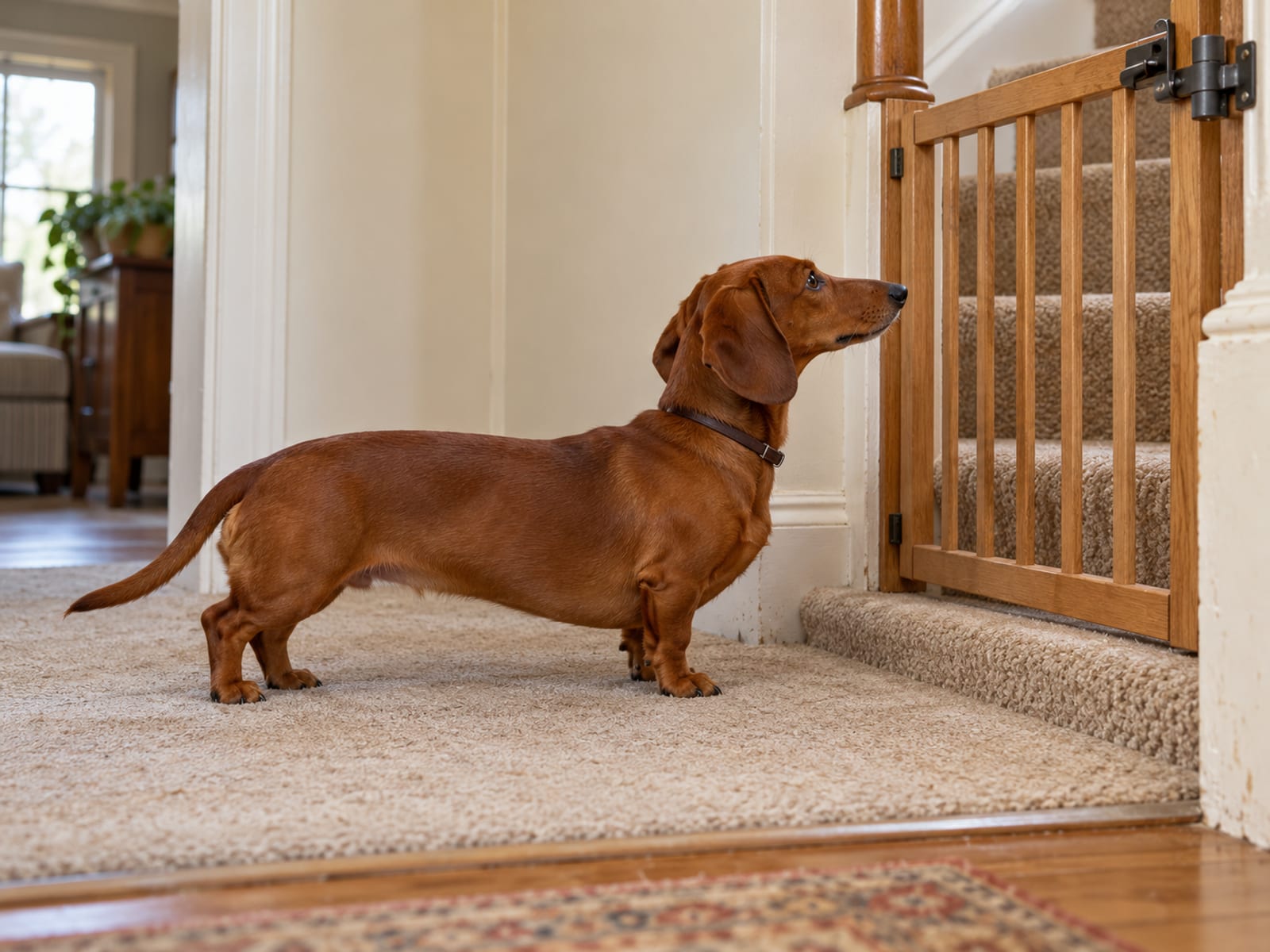
The goal is strong muscle without strain on the spine. Skip repeated jumps off furniture, fast runs up and down stairs and other high-impact play. Puppies should not be pushed into forced running or repetitive jumping while they grow.
Grooming and shedding
Grooming depends on the coat, and Dachshunds come in three: smooth, longhaired and wirehaired. Smooth coats usually need only an occasional brushing or a wipe with a grooming glove, perhaps a few minutes a week. Longhaired coats need brushing at least weekly, roughly 10 to 20 minutes, with extra care around the ears, chest, underside and leg feathering.
Wirehaired coats need brushing or combing once or twice a week. If you want to keep the traditional coat, plan on hand-stripping or professional grooming several times a year. A 2025 pet-care pricing report lists grooming appointments at about $50 to $125.
AKC calls Dachshunds moderate shedders, and shedding often rises in spring and fall. Bathe when the dog is dirty rather than on a fixed schedule. Clean the drop ears regularly, because poor airflow can contribute to ear problems, and trim nails about monthly. Teeth need routine home care too.
No Dachshund coat is allergy-free. The AAAAI notes that no dog breed is truly hypoallergenic, and allergens come from dander, saliva and urine as well as hair.
Temperament, training, barking and time alone
The official standard calls the Dachshund "clever, lively and courageous to the point of rashness." AKC describes the breed as intelligent, independent and sometimes stubborn, and it responds well to positive, reward-based training. A strong nose and prey drive can pull attention away from you, so short, rewarding sessions tend to work better than long drills.
Barking is the part to think about honestly. AKC rates barking level 5 out of 5 and describes a "big-dog bark," a trait the breed was selected for during hunting. Boredom, alerting and lack of company can add to it, and individual dogs vary.
Many Dachshunds bond closely and find long absences hard. How well a dog copes depends on the individual, early training, enrichment and routine, so no one can promise a quiet, relaxed dog when you are out. Battersea describes the same closeness.
Children, other pets, visitors and apartments
Dachshunds can live well with respectful children, other dogs and familiar cats. These are tendencies and not guarantees. AKC rates the breed 3 out of 5 for young children and 4 out of 5 for other dogs.
Children should be supervised and taught not to pick up, drop, chase or roughly handle the dog, because the long back is easy to injure. A Dachshund that accepts the family cat may still chase unfamiliar small animals.
With visitors, the breed can be reserved or suspicious and may bark at people, doors and hallway noise. Early socialization and calm, controlled introductions help.
Apartments can work because of the dog's size. You will need daily walks, indoor enrichment, a plan for stairs and furniture jumps, and a plan for the bark. This breed tends not to suit a household that needs a reliably quiet dog, leaves the dog alone through long workdays without support, allows rough handling by children, or cannot keep up with weight and back precautions.
Health: what to know about the back and beyond
Intervertebral disc disease, or IVDD, is the best-known concern. The discs that cushion the spine can degenerate or herniate, which may cause back pain, weakness, paralysis or loss of bladder control. Extra weight adds strain to the spine and joints, so keeping your dog lean is one of the most useful things you can do.
Other conditions associated with the breed include patellar luxation (a kneecap that slips out of its groove), progressive retinal atrophy and other eye problems, and Legg-Calvé-Perthes disease, which affects the hip joint in young dogs. Bladder stones, dental disease, ear infections and thyroid or adrenal conditions can also occur. VCA Animal Hospitals and the Dachshund Club of America health page describe these in more detail.
These are patterns across the breed, not a diagnosis for your dog. If your dog yelps, will not climb stairs, seems weak or wobbly in the back legs, or loses control of its bladder, call your veterinarian right away.
The Dachshund Club of America's health statement recommends these screenings for breeding dogs:
- A patella evaluation at 12 months or older, repeated periodically.
- An eye exam by a board-certified veterinary ophthalmologist, registered with CAER.
- A basic cardiac exam by a licensed veterinarian.
Ask a breeder for both parents' registered names and OFA records, plus current eye, patella and cardiac results and any CHIC numbers. A CHIC number means the required screenings were completed and made public. It does not mean every result was normal.
What a Dachshund costs
Good Dog lists US Dachshund puppy prices at $1,250 to $3,400 in 2026. That is a marketplace range, not a measure of breeder quality.
Rescue fees vary. Central Texas Dachshund Rescue's fees effective January 1, 2025 are $350 for puppies, $300 for dogs aged 1 to 9, $200 for seniors and $75 for senior-to-senior adoptions. Tennessee Dachshund Rescue lists $600 for puppies under six months down to $275 for dogs aged 10 or older. Confirm the current fee and what veterinary care it includes with the rescue you choose.
For yearly care, 2024 to 2025 APPA figures reported by the Insurance Information Institute average about $331 for veterinary care, $293 for food and $73 for grooming or grooming aids. Those are broad dog-owner averages and leave out many insurance and emergency situations. Local prices for food, grooming, insurance and vet visits will differ, so get quotes before you commit.
Questions to ask a breeder, rescue or foster
Whether you are buying or adopting, these questions help you judge the individual dog and the household it is going to:
- How does this dog behave with children, other dogs, cats and visitors?
- How does it handle being alone, and how loud is it at the door?
- Has it had any back, knee, eye or ear trouble? For a puppy, which health screenings have both parents completed, and can I see the results?
- What coat type is it, and what grooming will that coat need?
- How does it handle stairs and jumping, and does its current home use ramps or other supports?
Where to go next
If you are still comparing, our 10 low-maintenance dog breeds list puts the Dachshund beside other dogs that suit a simpler routine, with the back-care tradeoff spelled out. To see how big a puppy is likely to become, try the puppy size guide, or browse every profile in the dog breeds hub.
For adoption, the Dachshund Club of America keeps a national rescue directory. Dachshund Rescue of North America explains its adoption process, and shelters, Petfinder and Adopt-a-Pet often list Dachshunds and mixes, including adults and seniors.