

Breed profile
German Shepherd Dog
A large, intelligent, athletic dog that needs daily exercise, training, company and regular brushing.
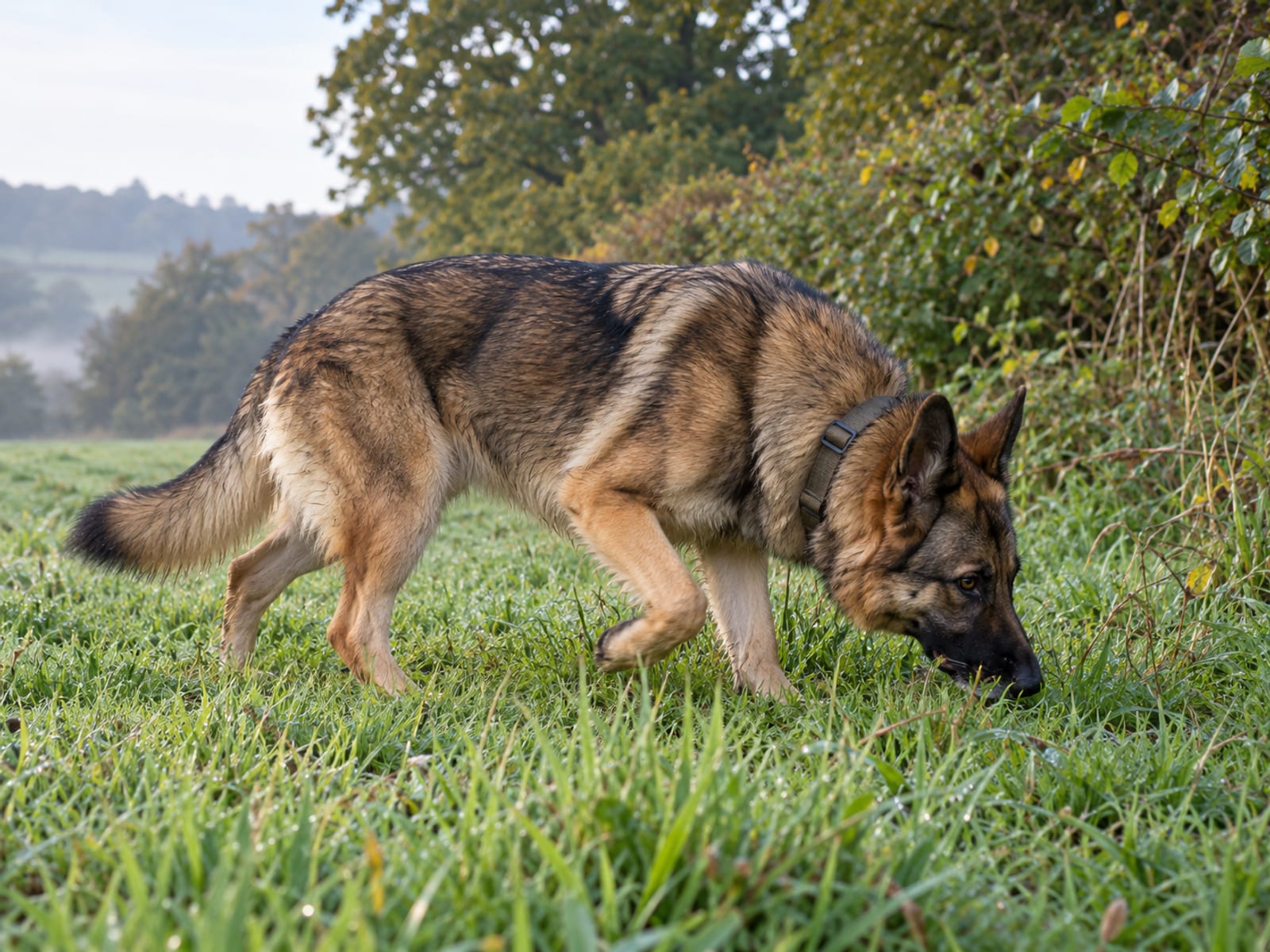
Adult size
Males
- Weight
- 65 to 90 lb (29.5 to 40.8 kg)
- Height
- 24 to 26 in (61 to 66 cm)
- Size group
- Large
Females
- Weight
- 50 to 70 lb (22.7 to 31.8 kg)
- Height
- 22 to 24 in (56 to 61 cm)
- Size group
- Large
Source: AKC German Shepherd Dog standard; AKC breed page. Puppy size guide
AKC ratings (1 to 5)
These are the American Kennel Club's ratings for the breed as a whole; each dog is an individual. Source: AKC breed page (2026-10-23).
Living with a German Shepherd Dog means sharing your routine with a large, intelligent, athletic dog that needs daily exercise, training, company and regular brushing. The breed can be loyal, capable and watchful.
It also sheds heavily, and it is not automatically easy with children, other pets, visitors, apartments or long stretches alone. Those are tendencies, and each dog and household is different.
The AKC places the breed in the Herding Group, and it began as a working dog in Germany. Males stand 24 to 26 inches and females 22 to 24 inches, so you are planning for a large dog.
What does a day with a German Shepherd Dog look like?
Most days are built around activity and company. The AKC describes the breed as very active and athletic, with substantial needs for both physical and mental exercise. The dog tends to bond closely with its people, so it usually wants to be where the family is.
The breed started as a herding and guarding dog, and the German Shepherd Dog Club of America notes that its work later grew to include police, military, search and rescue, guide and assistance roles. That background explains a dog that watches, learns quickly and likes having a job.
How much exercise and mental work does it need?
A healthy adult generally needs about 60 to 120 minutes of purposeful activity a day, split between walks, training, play and other work. That range is a practical planning estimate from veterinary and breed-care guidance, not a breed-standard requirement, so adjust it for age, health, body condition and heat.
Good fits include brisk walks, hiking, retrieving, scent work, tracking, obedience, agility, herding activities, swimming and dock diving. Short training sessions, food puzzles and problem-solving games cover the mental side. The GSDCA and PetMD have more on exercise and care.
Puppies need short walks and play sessions, with gradual increases as they mature. Avoid forced running, repetitive jumping and heavy impact while the skeleton is still developing, since hip and elbow problems are recognized in the breed.
How much does it shed, and what does grooming take?
Plan on loose hair all year. The coat is a medium-length double coat, a dense outer layer over a softer undercoat, and the AKC rates shedding 4 out of 5, where 5 means "Hair Everywhere." Once or twice a year the dog drops much of its undercoat, and for a few weeks the hair gets much heavier.
A routine usually looks like this:
- Brush every few days, and daily during the heavy shed.
- Trim or grind nails about monthly if they do not wear down on their own.
- Bathe only when the dog is dirty or a veterinarian suggests it.
- Check the ears regularly and clean only when needed.
- Do not clip or shave the double coat.
A normal brush-out takes about 10 to 20 minutes, longer during a coat blow. The AKC calls the coat easy to maintain but high-shedding, and its double-coat grooming advice explains the basics. A groomer is optional, though one can help with baths, deshedding and nails. If allergies are a concern, know that no breed is allergy-free; the AAAAI says dog allergens come from dander, saliva and urine.
What is the temperament like, and how trainable is the breed?
The breed standard describes a "direct and fearless, but not hostile" expression, with self-confidence and "a certain aloofness" toward instant friendships. The dog should still be approachable and willing to meet friendly overtures. The AKC's temperament guide sums it up as "fearless, confident, aloof with strangers."
The AKC calls the breed highly intelligent and highly trainable, and rates trainability 5 out of 5. Consistent, reward-based training and early socialization matter most. Intelligence cuts both ways, though; a bright dog without enough to do will invent its own work.
Barking comes with the guarding and alerting background. The AKC gives it 3 out of 5 on a scale from "Only To Alert" to "Very Vocal," and how much a given dog barks depends on genetics, socialization, training and daily activity.
Time alone is the part to plan carefully. German Shepherd Dogs are happiest living with their family and are not a reliable choice if they will be left alone for long stretches every day. Build alone time gradually and watch how your own dog handles it.
Does it suit children, other pets, visitors and apartments?
It can, depending on the individual dog, early socialization, training and supervision. With children, size and energy create practical risks even when the dog is friendly. Supervise them together, and teach children not to climb on, chase or corner the dog, or to bother it while it eats or rests.
With other dogs and cats, introduce them carefully and keep supervising. Herding instinct, prey drive and past experience vary, and a breed label cannot promise compatibility. The AKC rates the breed 3 out of 5 for good with other dogs and for openness to strangers, which fits a dog that is reserved rather than outgoing. Visitors may meet a watchful dog, so teach calm behavior around guests and set up a plan for arrivals.
Apartment life works for some of these dogs if you can supply real daily exercise, training, quiet management and landlord approval. A fenced yard helps but does not replace activity or time with you.
This breed tends not to suit households that want a low-exercise, low-shedding, highly social dog, or that leave a dog alone most of the day. A first-time owner can do well with preparation, but this is a demanding first dog.
What health conditions should you know about?
Several conditions are well recognized in the breed. Hip and elbow dysplasia are developmental joint problems that can cause pain, lameness and arthritis. Degenerative myelopathy is a progressive spinal-cord disease, and Cornell lists the breed among those commonly affected. Bloat, a sudden stomach expansion that can twist, is an emergency. Others include osteoarthritis, exocrine pancreatic insufficiency, hemangiosarcoma, ear infections and excess weight.
In a UK VetCompass study of 2,216 dogs under primary veterinary care, 63.43% had at least one disorder recorded during 2013. The most common were ear infection (7.89%), osteoarthritis (5.54%), diarrhea (5.24%) and overweight or obesity (5.18%). Those are clinical-record frequencies, not lifetime odds for every dog.
The AKC lists a life expectancy of 12 to 14 years. A 2024 Scientific Reports study of 19,908 UK dogs estimated a median of 11.3 years, and the VetCompass study reported 10.0 years. Neither is a promise for an individual dog.
What does a German Shepherd Dog cost?
Responsible breeders price puppies differently depending on region, pedigree, purpose, health testing, puppy raising and contract terms. Ask each breeder for the current total price, what it includes, and the parents' health-test records.
Adoption fees vary by group. German Shepherd Dog Rescue of Georgia lists $500 for an adult and $600 for a dog under one year, effective January 1, 2025. Bay Area German Shepherd Rescue charges $400 for adults and puppies, as of October 2026. German Shepherd Rescue of Northern California runs a temporary $150 fee for its 25th-anniversary promotion from March 1 through December 31, 2026.
For yearly costs, the Insurance Information Institute lists APPA 2024-2025 survey averages of $293 for dog food and $331 for veterinary care. Together that is about $624 a year before grooming, training, supplies, medications and emergencies. Those are all-dog averages, so a large breed can run higher. A 2023 federal consumer document cited about $44 a month, roughly $528 a year, for dog insurance; premiums vary by age, location, deductible and coverage.
What should you ask a breeder, rescue or foster?
With a breeder, ask for the registered names or OFA numbers of both parents and confirm the results in the OFA database. The GSDCA's health and genetics page says the breed's CHIC requirements are OFA hip and elbow evaluations plus a passing GSDCA Temperament Test. Its broader Health Award of Merit adds cardiac and thyroid evaluations and a published degenerative myelopathy DNA result. Ask for each record and make sure it belongs to the actual sire and dam. A CHIC number means the tests were completed and submitted, not that every result was normal.
With a rescue or foster, ask for all available veterinary records, orthopedic history, neurological signs, prior diagnoses and medication history. Applications often ask about housing, exercise, other animals, children, work schedule, fencing and dog experience. A foster home may be able to tell you how the dog behaves day to day, though no assessment guarantees future behavior.
Where to go next
The AGSRA rescue network is the GSDCA's rescue-network route, and the AKC Rescue Network lists the club and affiliated rescues. Municipal shelters, humane societies and Petfinder listings also place German Shepherd Dogs and mixes.
To see how big a puppy may grow, try our puppy size guide. To compare other breeds, visit the dog breeds hub.
German Shepherd Dogs also appear in our lists of 10 guard dog breeds and 10 working dog breeds, which show how it compares with other dogs bred for similar jobs.