

Breed list
10 Watchful Guard Dog Breeds and What Each One Needs From You
Ten watchful guard dog breeds compared by size, lifespan, grooming and exercise, plus socialization, children, pets, insurance and local rules to check first.
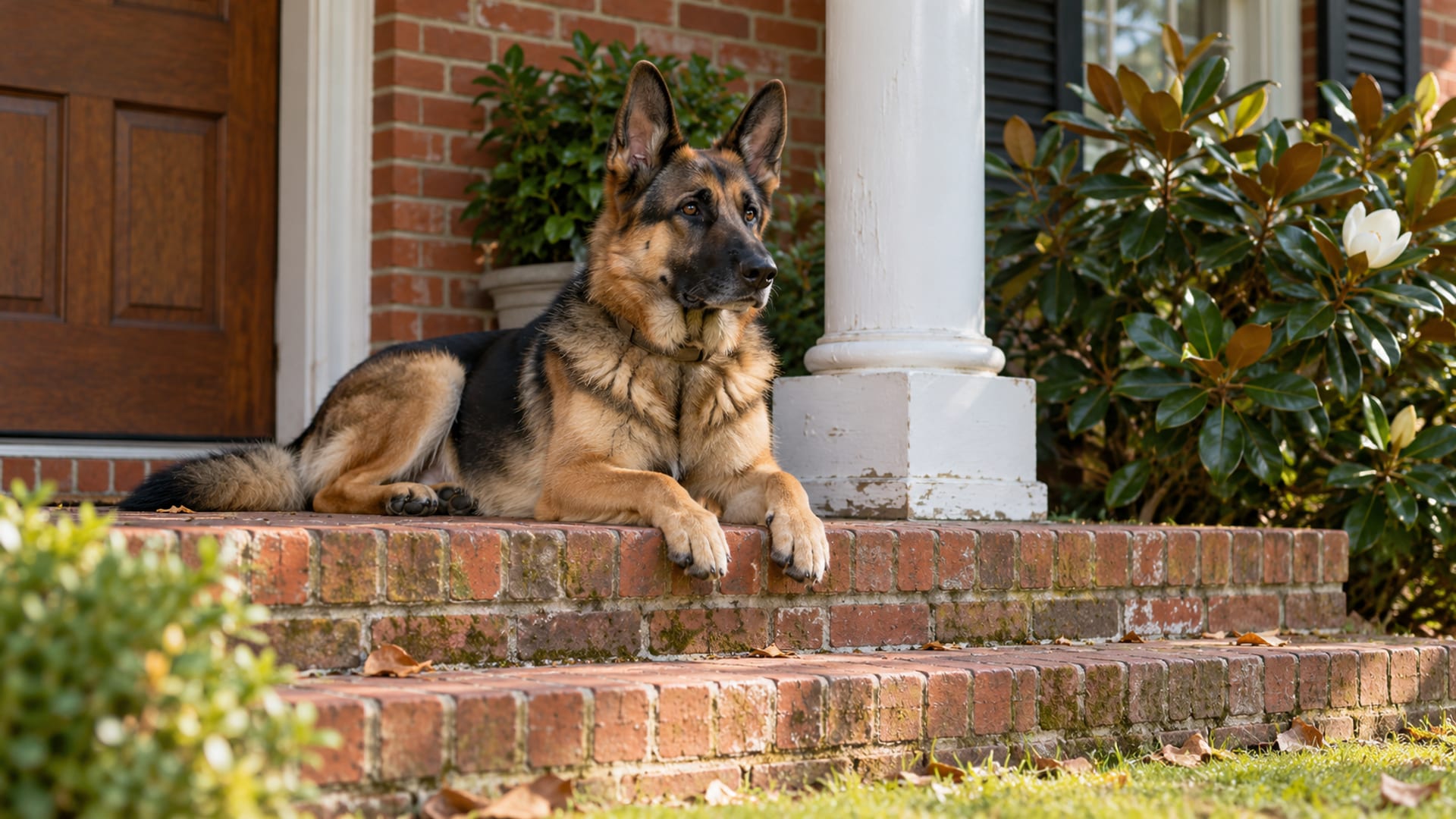
Protective dog breeds can be watchful, loyal family companions. German Shepherd Dogs, Boxers, Rottweilers, Dobermans, mastiff breeds, Belgian Malinois and livestock guardians differ widely in energy, barking, size, independence and fit with children and pets. Choose for how your household lives, not for how intimidating a dog looks. (AKC, AKC livestock guardians)
Key takeaways
Tap a card to bring it forward.
- A dog is a companion with protective tendencies, not a home-security product.
- Watchdogs alert by barking, guardian breeds have protective temperaments, and livestock guardians work independently.
- Early socialization and reward-based training matter more than the breed label.
- Children need adult supervision with every dog, whatever the breed.
- Ask your insurer, landlord and local government about the exact dog and address before you adopt.
- Size, grooming, barking and exercise differ a lot from one breed to the next.
What counts as a guard dog breed, and how these ten were picked
The word "guard dog" covers three different kinds of dog. A watchdog alerts people, usually by barking, when it notices a person, an animal or an odd sound. A guardian breed is one selected for protective, territorial and vigilant tendencies, and the American Kennel Club describes these dogs as ones that may alert their family and recognize when protection could be needed.
A livestock guardian lives with sheep, goats or poultry and deters predators by staying with the group, patrolling and barking. The AKC says these dogs keep the group calm and judge predators on their own. The categories overlap. A Great Pyrenees can be both a livestock guardian and a family watchdog, and a small dog can be a fine watchdog without being a guardian breed at all.
Each breed below has a documented history or recognized tendency involving guarding, vigilance, working partnership or livestock protection, and each is registered with the AKC. Behavior depends on the individual dog, its breeding, socialization, training, health and the home it lives in.
Seven of the ten are household guardians and working partners: German Shepherd Dog, Rottweiler, Doberman Pinscher, Boxer, Bullmastiff, Cane Corso and Giant Schnauzer. The Belgian Malinois is a high-drive specialist. The Great Pyrenees and Anatolian Shepherd Dog are livestock guardians that may also watch over a home.
A household bends around one dog's habits, and with dogs this large and strong, those habits carry more weight, which is why the practical details below matter.
What a protective breed needs from your household
Protective breeds need early, gentle exposure to people, other dogs, handling, household noise, visitors, different surfaces, car rides and ordinary public places. The AVMA identifies roughly 3 to 14 weeks of age as a key socialization window for puppies, while the Merck Veterinary Manual describes about 3 to 12 weeks. Socialization should stay safe, gradual and positive, and it should continue well past puppyhood.
Training should build everyday skills: coming when called, walking on a leash, settling, accepting handling and staying calm when visitors arrive. Reward-based methods are the recommended approach. The Merck Veterinary Manual warns that punishment, confrontation and physical force can increase fear, anxiety and aggression. For help finding a trainer or handling a behavior concern, DogServ is a place to start.
Management matters as much as training. Control the front door, visitors, children's play, food, toys, fences and meetings with unfamiliar animals. When socialization falls short, owners can see fear of strangers, territorial behavior, constant barking and handling problems. The Merck Veterinary Manual notes that too little socialization, bad early experiences and genetics can all feed fearfulness and aggression, and the AVMA states that whether a dog bites depends on more than breed.
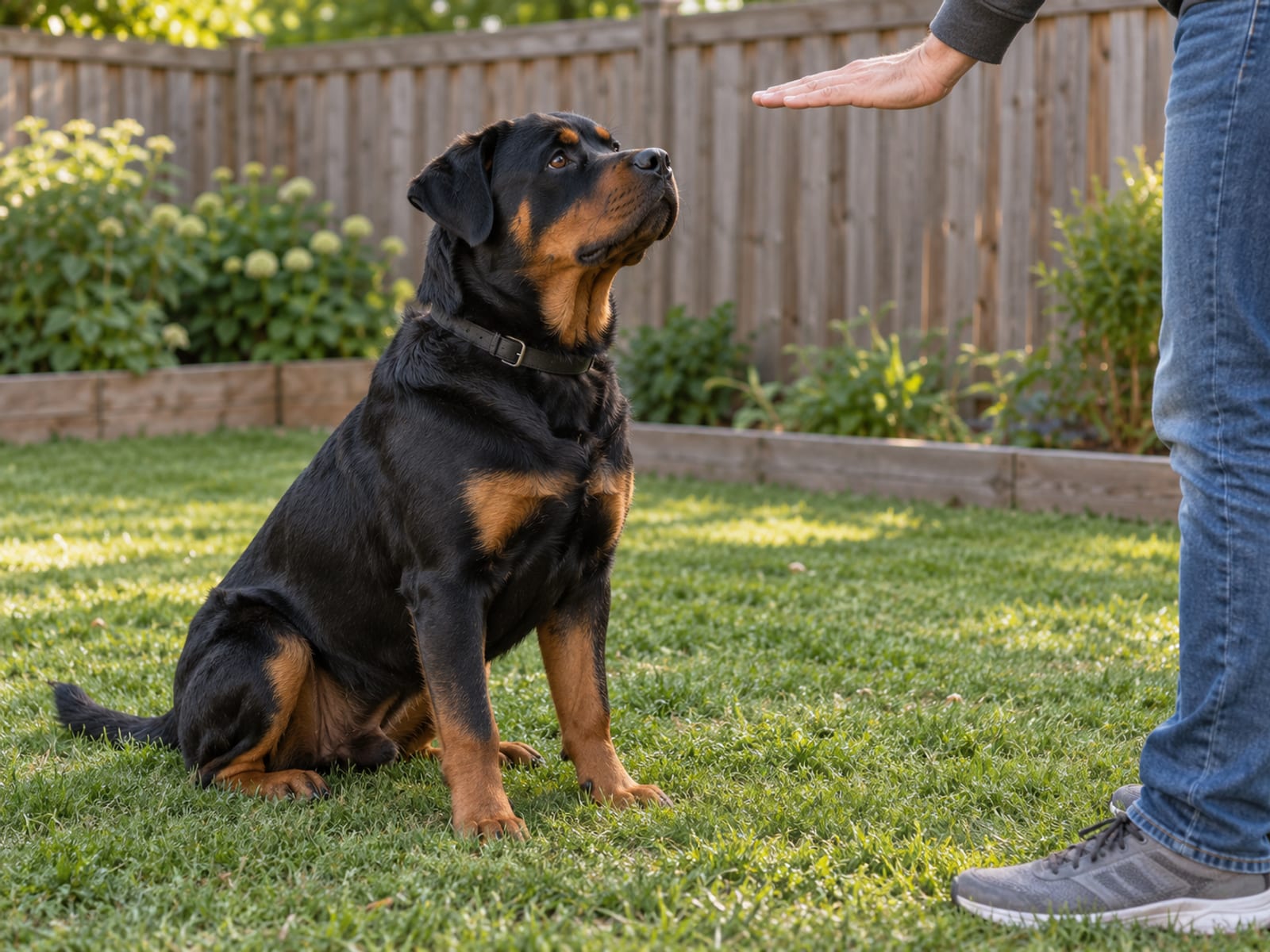
Protective breeds with children and other pets
Judge every dog as an individual, since breed tendencies vary from dog to dog. Children should be supervised with every dog, whatever the breed. The German Shepherd Dog, Boxer, Great Pyrenees and some well-bred Rottweilers often have the stronger family-dog reputations when properly socialized. The AKC describes the German Shepherd Dog as protective, affectionate with family and good with children when appropriately raised, the Boxer as bright, alert, courageous and affectionate, and the Great Pyrenees as patient, calm and gentle with family.
Even these breeds are big and strong, and a dog that is tolerant with its own children may not cope with visiting children, rough play, crowding or someone reaching for its food. The Belgian Malinois, Cane Corso, Doberman Pinscher, Rottweiler, Giant Schnauzer and Anatolian Shepherd Dog generally need more experienced management. Living safely with children or other pets is still possible, but their intensity, prey drive, independence or size leaves less room for mistakes.
For cats and other small animals, early socialization helps, but supervision and separation may still be needed. The AVMA advises careful introductions when a puppy joins a home with older pets. For a wider look at dogs that fit family life, see our list of family-friendly dog breeds.
Insurance, housing rules and local laws to check first
Homeowners and renters policies often cover some personal liability for dog-related injuries, but exclusions and limits differ from policy to policy. The Insurance Information Institute says many policies exclude dogs with a bite or aggression history, that some homeowner associations restrict breeds, and that some communities require extra liability coverage.
Before you adopt, ask your insurer whether the specific breed, the individual dog and your address are covered. Ask about exclusions, liability limits, umbrella coverage, required disclosures and whether a past incident changes eligibility. Breed-specific rules are local and can change. They may sit in state law, county codes, city ordinances, landlord rules or homeowners-association documents, and the rule for your home depends on where you live. Ask your landlord, your city or county, and your homeowners association about the exact dog you plan to bring home.
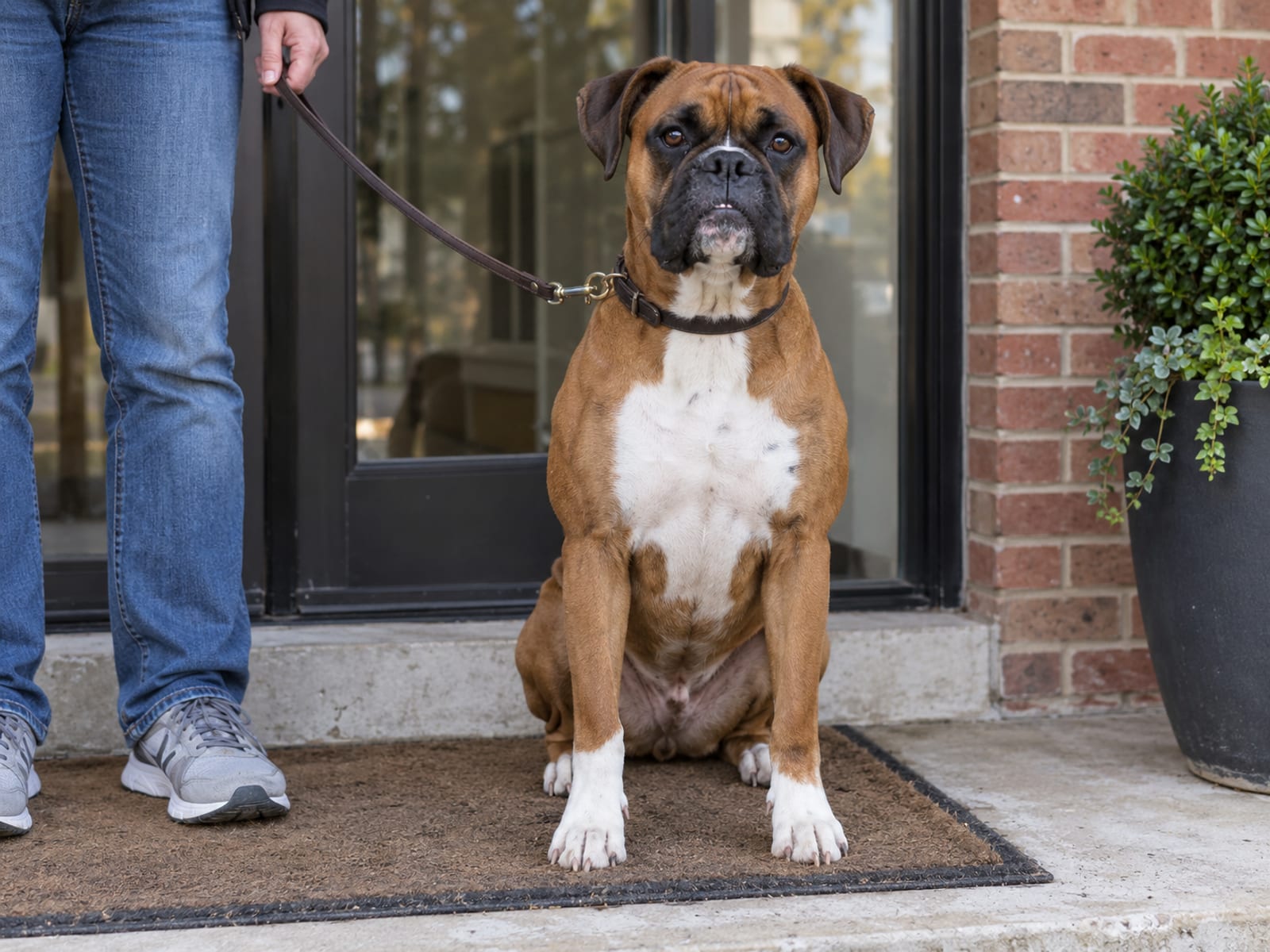
1. German Shepherd Dog
The German Shepherd Dog stands 24 to 26 inches and weighs 65 to 90 pounds for males, and 22 to 24 inches and 50 to 70 pounds for females. The AKC lists a life expectancy of 12 to 14 years. The medium-length double coat has a dense undercoat and sheds all year, more heavily when the seasons change, so brushing several times a week is practical. Breed-linked health concerns include hip and elbow dysplasia, degenerative myelopathy and bloat.
The breed is typically courageous, confident, smart, trainable and loyal, and somewhat aloof with strangers. Barking is often moderate to high because the dog is vigilant. The practical point is range: this breed offers perhaps the broadest mix of trainability, versatility, family companionship and watchfulness, but it needs a daily job and family contact, and it generally does poorly with long, boring isolation.
It suits an active family that will train it, exercise it and introduce it carefully to other pets. It is a poor match for a household that wants a quiet, low-exercise dog, or for a small apartment without serious daily activity.
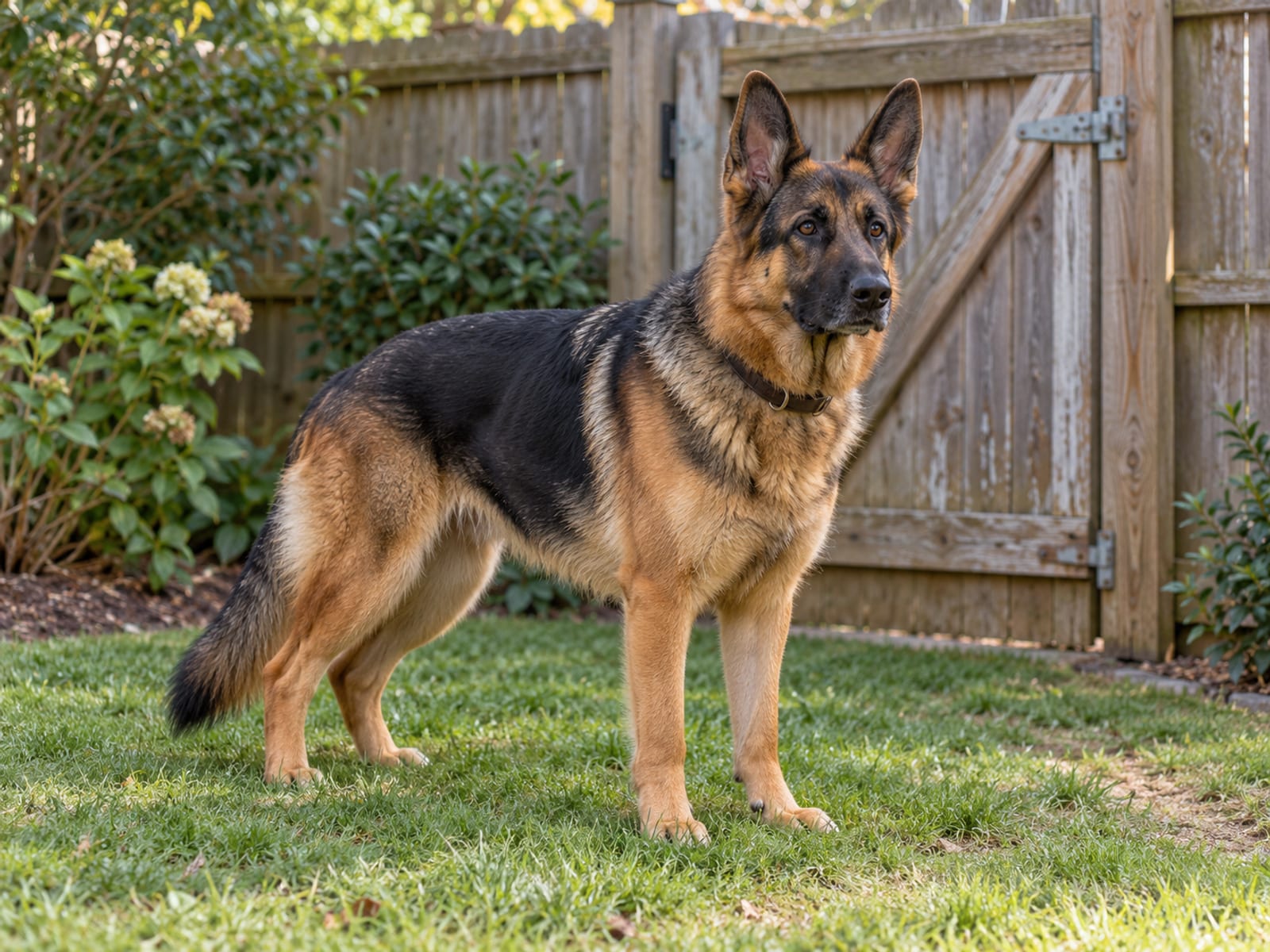
2. Rottweiler
Rottweiler males stand 24 to 27 inches and weigh 95 to 135 pounds, and females stand 22 to 25 inches and weigh 80 to 100 pounds. The AKC gives a life expectancy of 9 to 10 years. The coat is short, coarse and straight, with moderate shedding and modest grooming needs. Health concerns include hip and elbow dysplasia, cardiac disease, eye disease, juvenile laryngeal paralysis and polyneuropathy, and cancer. The breed traces to Roman-derived drover dogs that moved cattle, pulled carts and guarded property, according to the AKC's breed history.
The AKC describes loyal, loving, confident, protective dogs with an aloof attitude toward the outside world. Barking is commonly moderate, and territorial alerting is possible. The practical point is strength in a compact frame, so leash skills and visitor management matter early.
A Rottweiler can be affectionate with family and suitable with children in a carefully managed household, though other dogs and unfamiliar animals need deliberate introductions. It is a poor fit for an inexperienced owner who cannot handle a very strong dog, and long isolation or a lack of structure works against it.
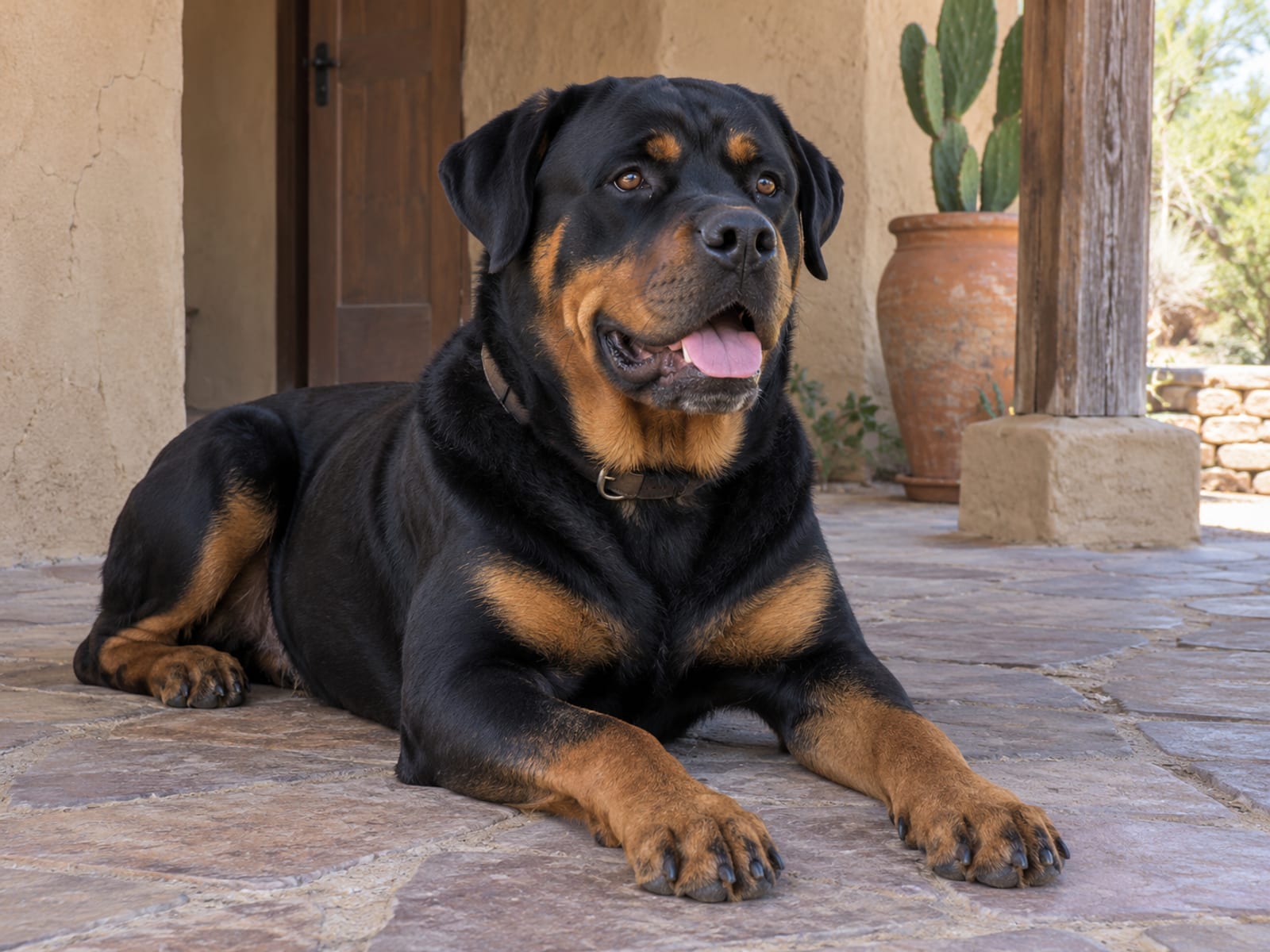
3. Doberman Pinscher
Doberman males stand about 26 to 28 inches and weigh roughly 75 to 100 pounds, and females stand about 24 to 26 inches and weigh 60 to 90 pounds. The AKC life expectancy is about 10 to 12 years. The coat is short, smooth and low-maintenance, with light to moderate shedding. Concerns include dilated cardiomyopathy, von Willebrand disease, hip dysplasia, hypothyroidism and cervical vertebral instability. A German tax collector named Louis Dobermann developed the breed around 1890 in Apolda, Germany, as a guard dog and companion, according to the AKC's history.
The AKC and the Doberman Pinscher Club of America describe a vigilant, loyal, intelligent, protective and athletic dog. Barking is usually moderate but can turn persistent without training. The practical point is that the coat is easy while the dog is not: it tends to need unusually close family involvement and regular activity, and it may become frustrated when under-stimulated or left alone.
It can live with children when socialized and supervised, and getting along with cats and other dogs varies a lot by individual. It is a poor fit for a household wanting a detached outdoor dog or a low-maintenance first dog. If low maintenance is your goal, our low-maintenance dog breeds list is a better place to look.
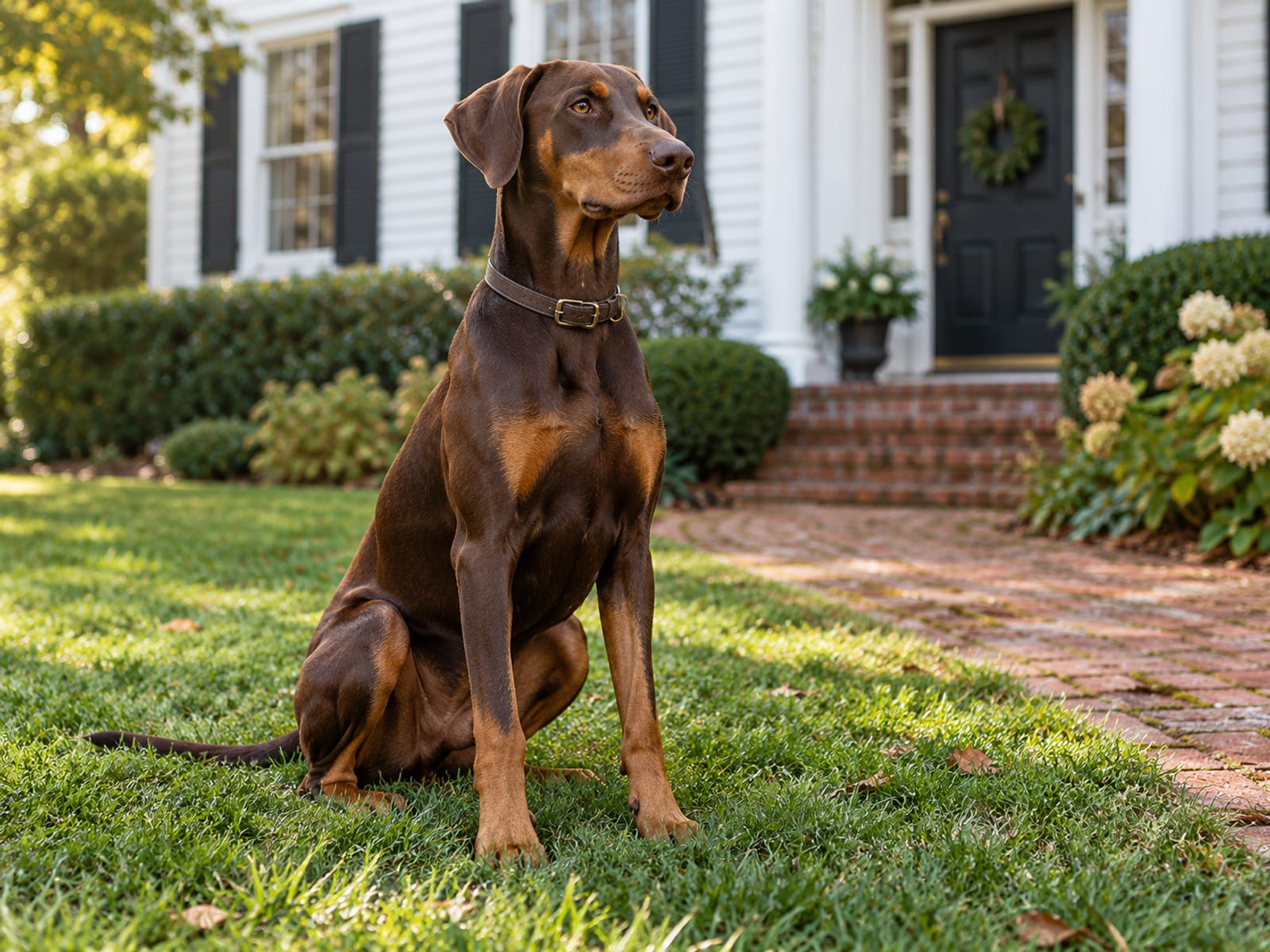
4. Boxer
Boxer males stand 23 to 25 inches and females 21.5 to 23.5 inches. Males weigh about 65 to 80 pounds, and females are generally about 15 pounds lighter. The AKC life expectancy is 10 to 12 years. The short, smooth coat is easy to maintain, with moderate shedding. Breed-linked concerns include cardiomyopathy, aortic stenosis, hip dysplasia, cancers, degenerative myelopathy and bloat.
The AKC describes a bright, alert, sometimes silly, affectionate and courageous dog. Barking is moderate, with alert barking and vocal play both possible. The practical point is that jumping and adolescent impulse control are often bigger daily issues than grooming. Boxers usually prefer company and can turn destructive when bored or left alone too long.
Boxers often suit active families with older children, but their exuberance can overwhelm toddlers, and getting along with other dogs varies. They are a poor fit for a quiet, sedentary home or for anyone who wants a naturally calm guard dog.
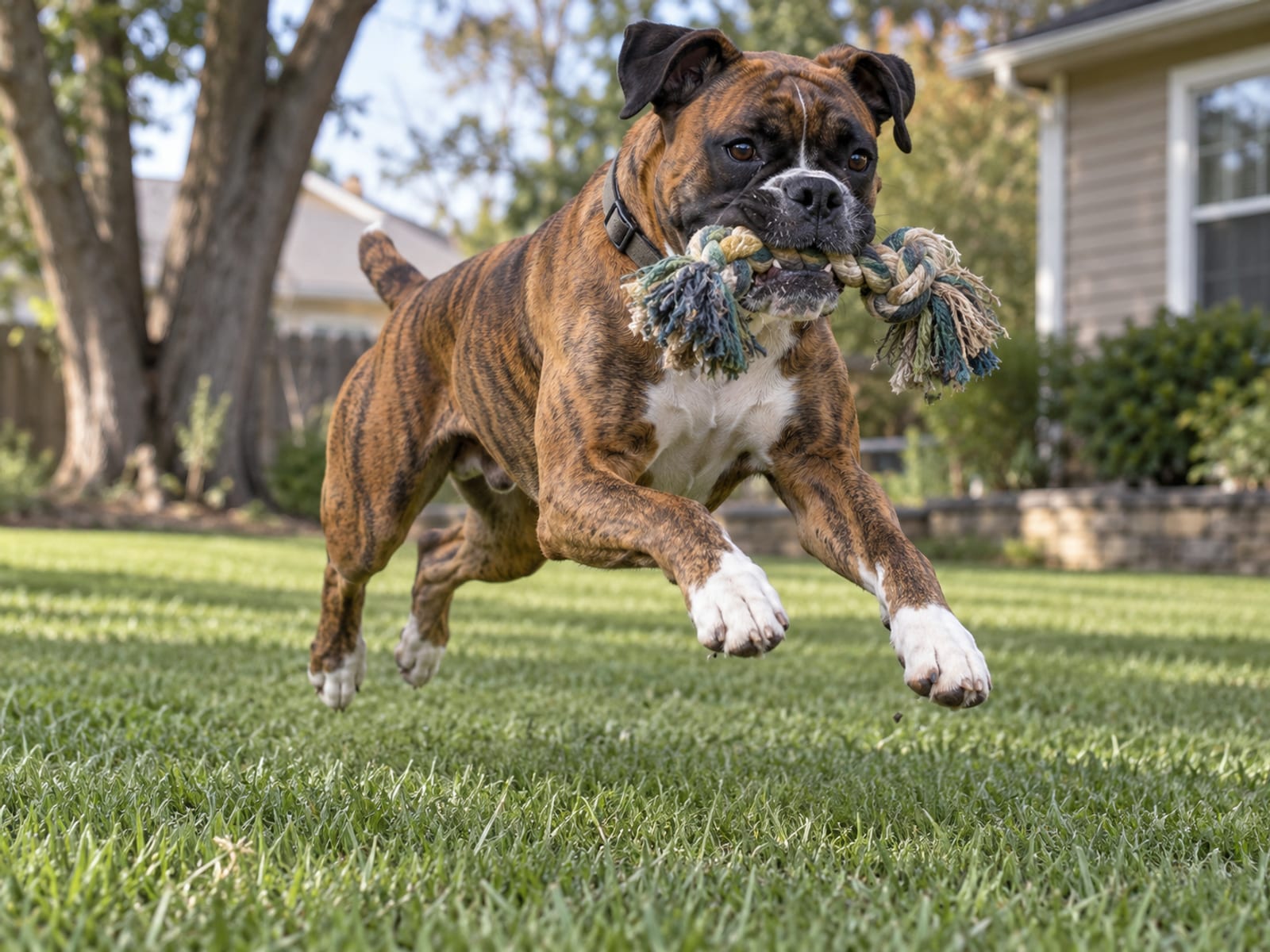
5. Bullmastiff
Bullmastiff males stand about 25 to 27 inches and weigh 110 to 130 pounds, and females stand 24 to 26 inches and weigh 100 to 120 pounds. The AKC life expectancy is about 7 to 9 years. The coat is short and dense, with moderate shedding and simple grooming. Common concerns include hip and elbow dysplasia, bloat, cancer, cardiac disease and cruciate-ligament problems. The AKC breed standard says gamekeepers developed the breed in England to guard against poachers.
The breed tends to be devoted, alert, protective and reserved with strangers, and territorial alerting can be strong. Daily walks, basic training and controlled activity are necessary. The practical point is that size and a shorter lifespan are the big commitments: a dog this strong needs supervision around children even when it is gentle with its own family.
Getting along with other dogs and cats varies. A Bullmastiff is a poor fit for cramped housing, for owners who cannot manage a giant, strong dog, and for families hoping for a long-lived breed.
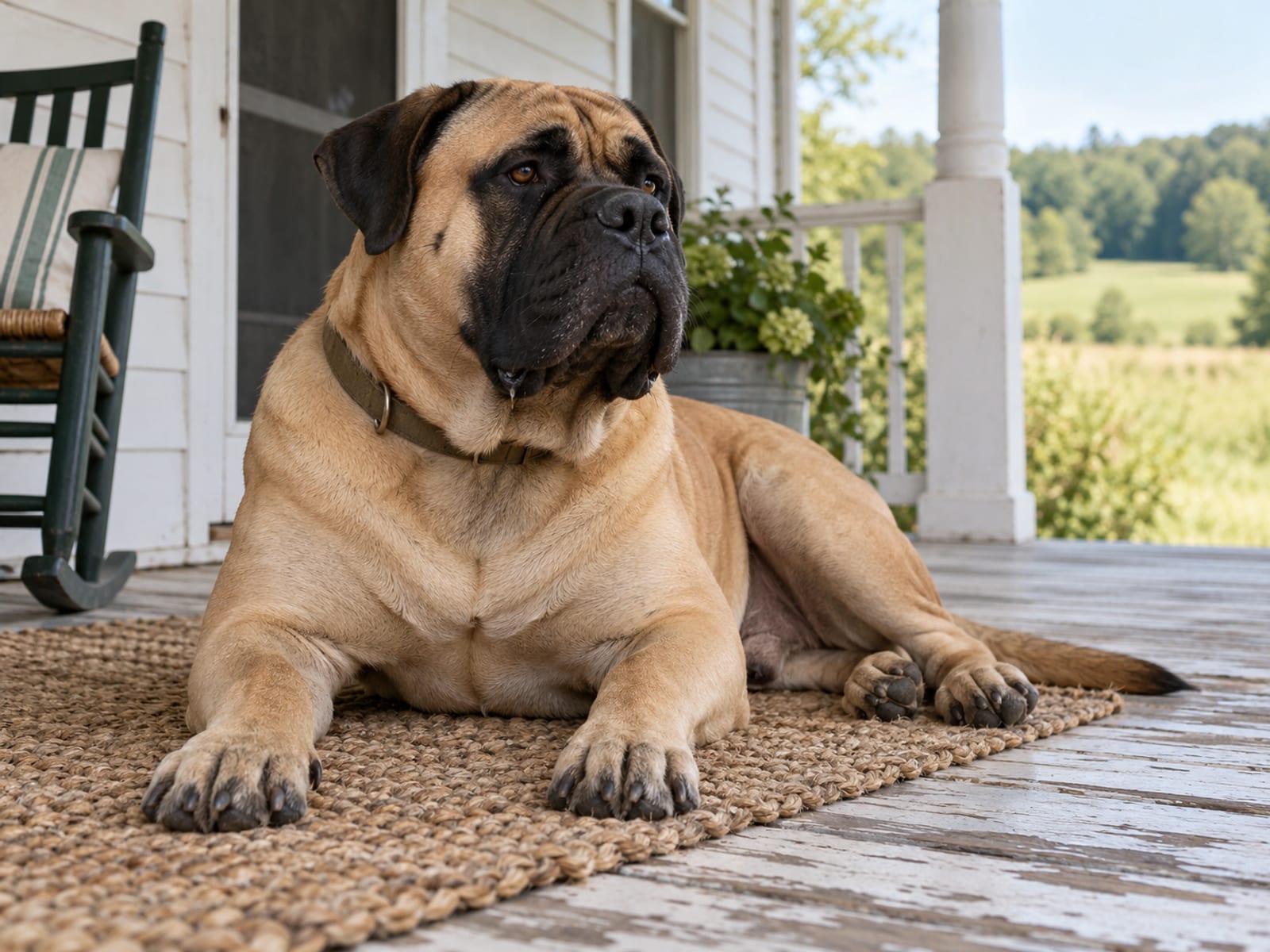
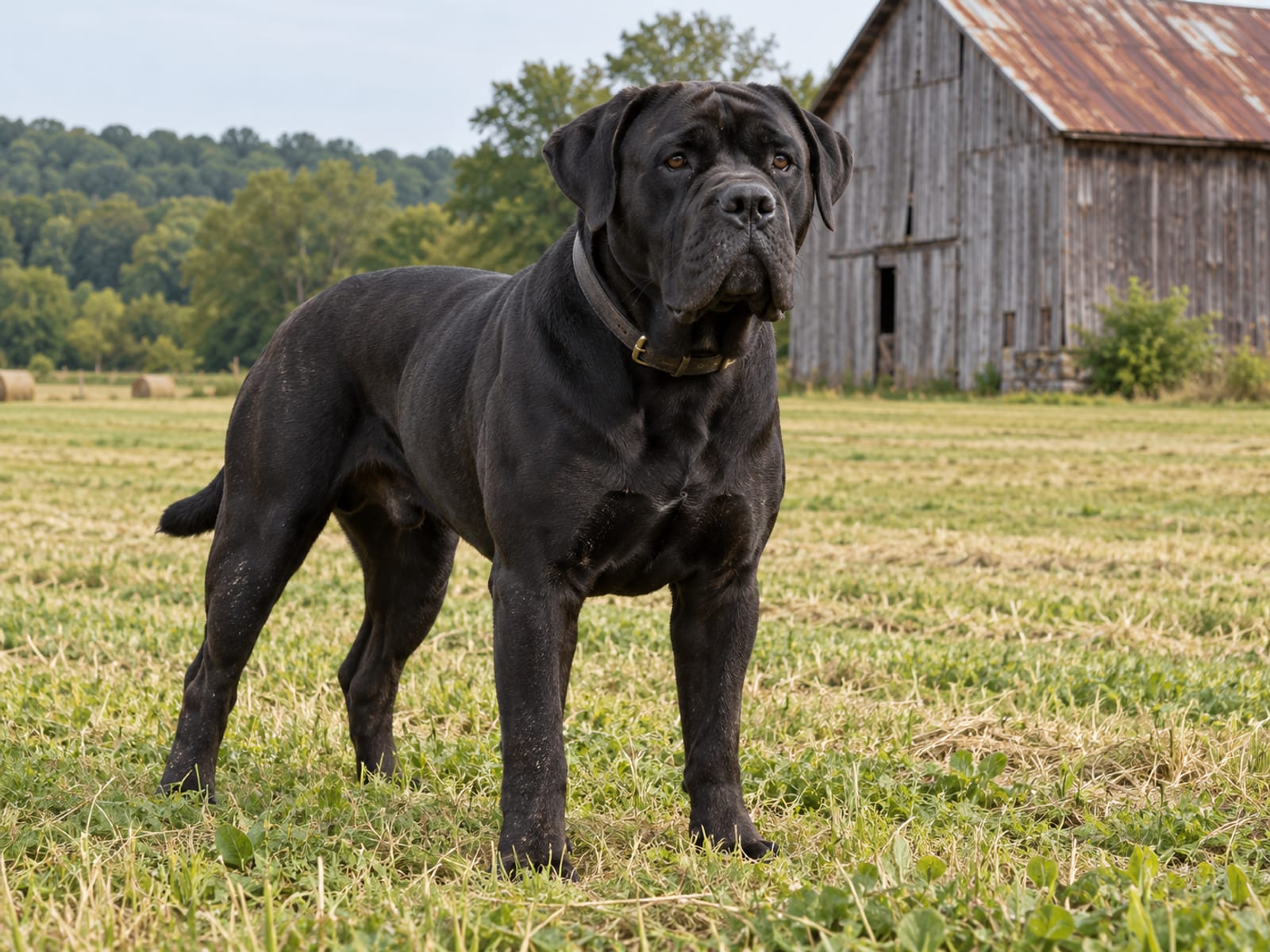
6. Cane Corso
Cane Corso males stand about 25 to 27.5 inches and weigh roughly 90 to 110 pounds, and females stand 23.5 to 26 inches and weigh 85 to 100 pounds, though condition and frame vary. The AKC life expectancy is about 9 to 12 years. The short, stiff, double-layered coat sheds moderately with the seasons and is easy to groom. Concerns include hip dysplasia, eyelid abnormalities, idiopathic epilepsy, bloat and cancers. The breed has an ancient Roman lineage, and its name relates to a bodyguard dog.
The breed standard emphasizes confidence, trainability and protection of property and family, with reserve toward strangers. Barking is often moderate but can turn territorial and forceful. The practical point is that this reserve makes visitor routines, gates and delivery access especially important, along with professional reward-based training.
It may fit an experienced family with older children when supervision and boundaries are firm, and other pets need early, careful socialization. It is a poor fit for a first-time owner, a chaotic household, permissive handling or anyone wanting an easygoing social dog. If this is your first dog, start with our list of dog breeds for first-time owners.
7. Belgian Malinois
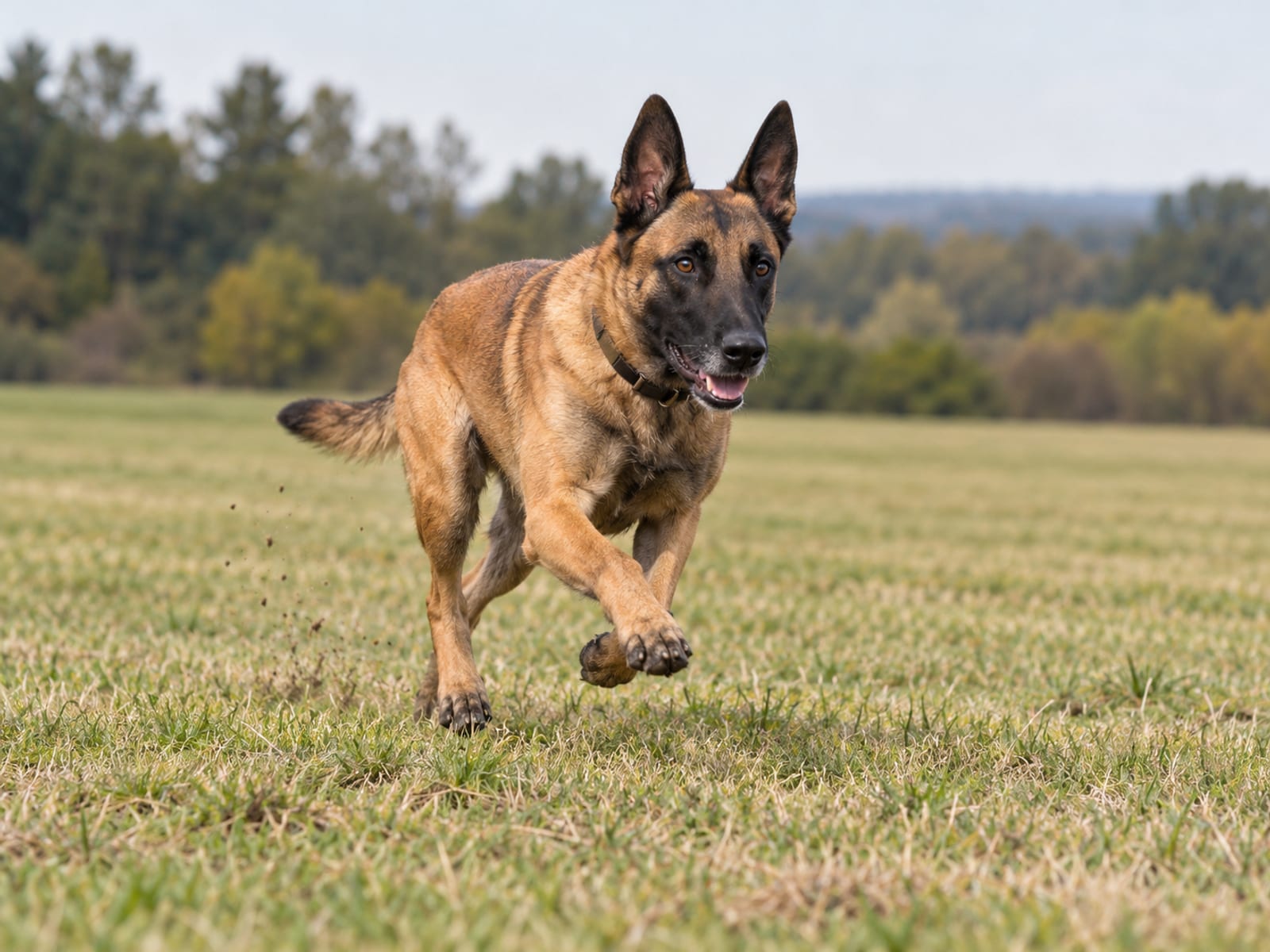
Belgian Malinois males stand 24 to 26 inches and weigh 60 to 80 pounds, and females stand 22 to 24 inches and weigh 40 to 60 pounds. The AKC life expectancy is 14 to 16 years. The coat is short, straight and weather-resistant, with moderate shedding and simple grooming. The breed developed near Mechelen, Belgium, from local shepherd dogs, according to the AKC's history. Concerns include hip and elbow dysplasia, eye disease, epilepsy, and working-line problems such as anxiety or excessive arousal.
The AKC describes a smart, confident, versatile, alert dog strongly bonded to its handler. It needs extensive daily exercise, training, problem-solving and meaningful work. Barking can be high when the dog is under-stimulated or reacting to movement, and it generally tolerates isolation poorly when its needs go unmet.
The practical point is that military and sport ability reflects an extreme work ethic, so this breed suits households ready for daily, serious work. A Malinois can live with children and other pets only with careful selection, socialization, training and supervision. It is a poor fit for most sedentary households and first-time owners.
8. Giant Schnauzer
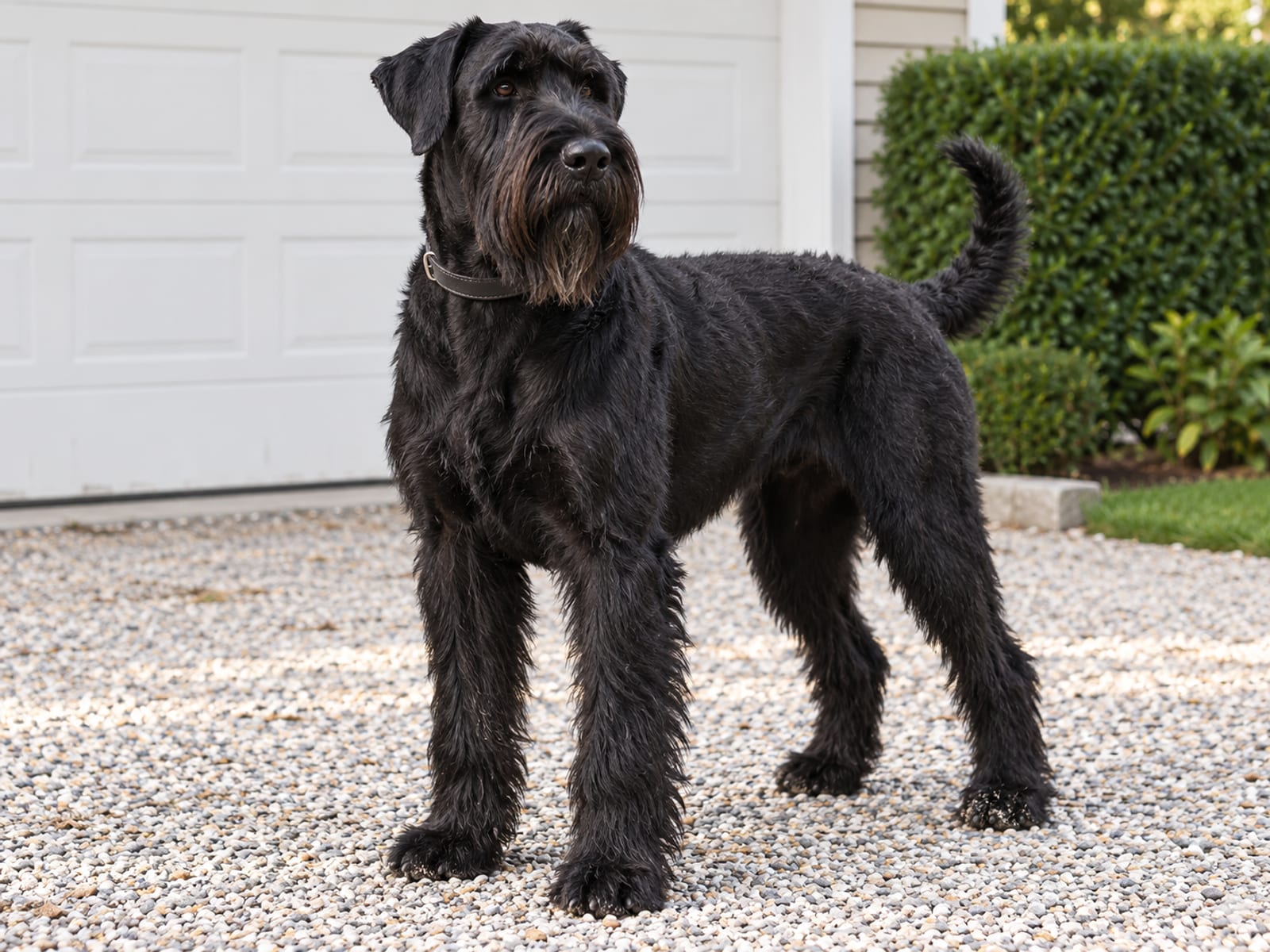
Giant Schnauzers stand about 25.5 to 27.5 inches for males and 23.5 to 25.5 inches for females, and weigh commonly about 55 to 95 pounds depending on sex and build. The AKC life expectancy is 10 to 12 years. The hard, wiry, dense coat has low to moderate shedding but substantial grooming needs, including regular brushing, hand-stripping or clipping, and beard care. Concerns include hip and elbow dysplasia, autoimmune thyroiditis, eye disease, epilepsy and bloat.
The AKC describes an intelligent, loyal, bold and valiant dog. Barking is often moderate to high because the breed is alert and territorial. The practical point is that grooming is a recurring time and cost commitment. If you are drawn to lower shedding, remember that it is not the same as low grooming; our lower-shedding breeds page covers that tradeoff.
A Giant Schnauzer can fit an active family with older children, though its intensity and size call for supervision, and other dogs and small animals need careful socialization. It is a poor fit for a low-energy home, an owner unwilling to groom, or a household without structured daily activities. It generally does poorly with long isolation and boredom.
9. Great Pyrenees
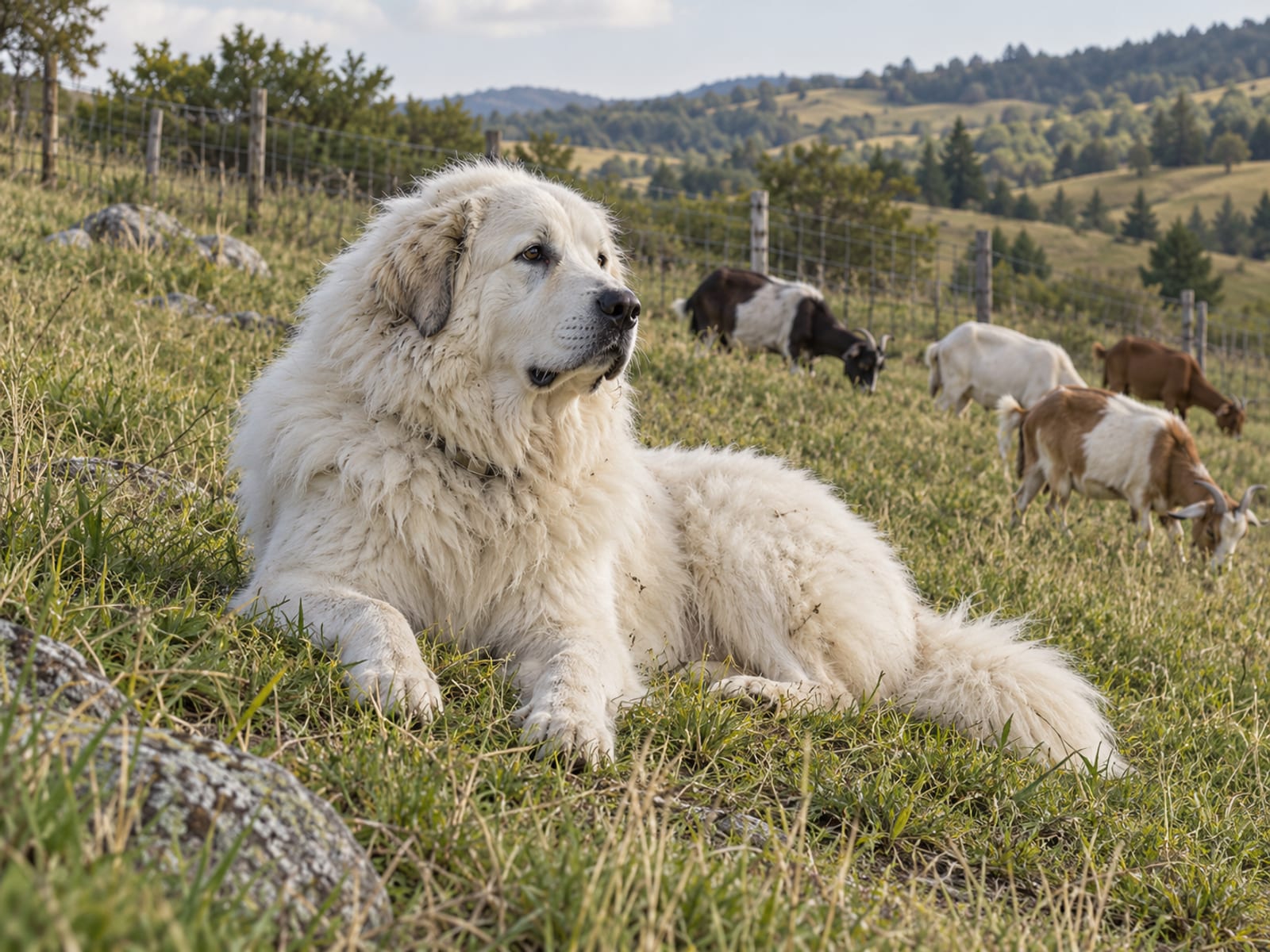
Great Pyrenees males stand 27 to 32 inches and weigh at least 100 pounds, and females stand 25 to 29 inches and weigh at least 85 pounds. The AKC life expectancy is 10 to 12 years. The coat is long, thick and weather-resistant with a dense undercoat. It sheds heavily, especially with the seasons, and needs frequent brushing. Concerns include hip and elbow dysplasia, patellar luxation, bloat and certain cancers.
The AKC describes a smart, patient and calm dog with an independent livestock-guardian temperament. It needs regular walks and room to patrol, but not the intense repetitive exercise a Malinois needs. The practical point is nighttime barking and secure fencing. Barking can be high, especially after dark, because it is part of the work this breed was developed to do on its own.
A Great Pyrenees can be gentle with family children and livestock, though supervision is essential, and unfamiliar dogs or visitors may trigger territorial behavior. It is a poor fit for apartments, close neighbors, weak fencing or owners who want a quiet, highly obedient dog. For a better apartment match, see our apartment dog breeds.
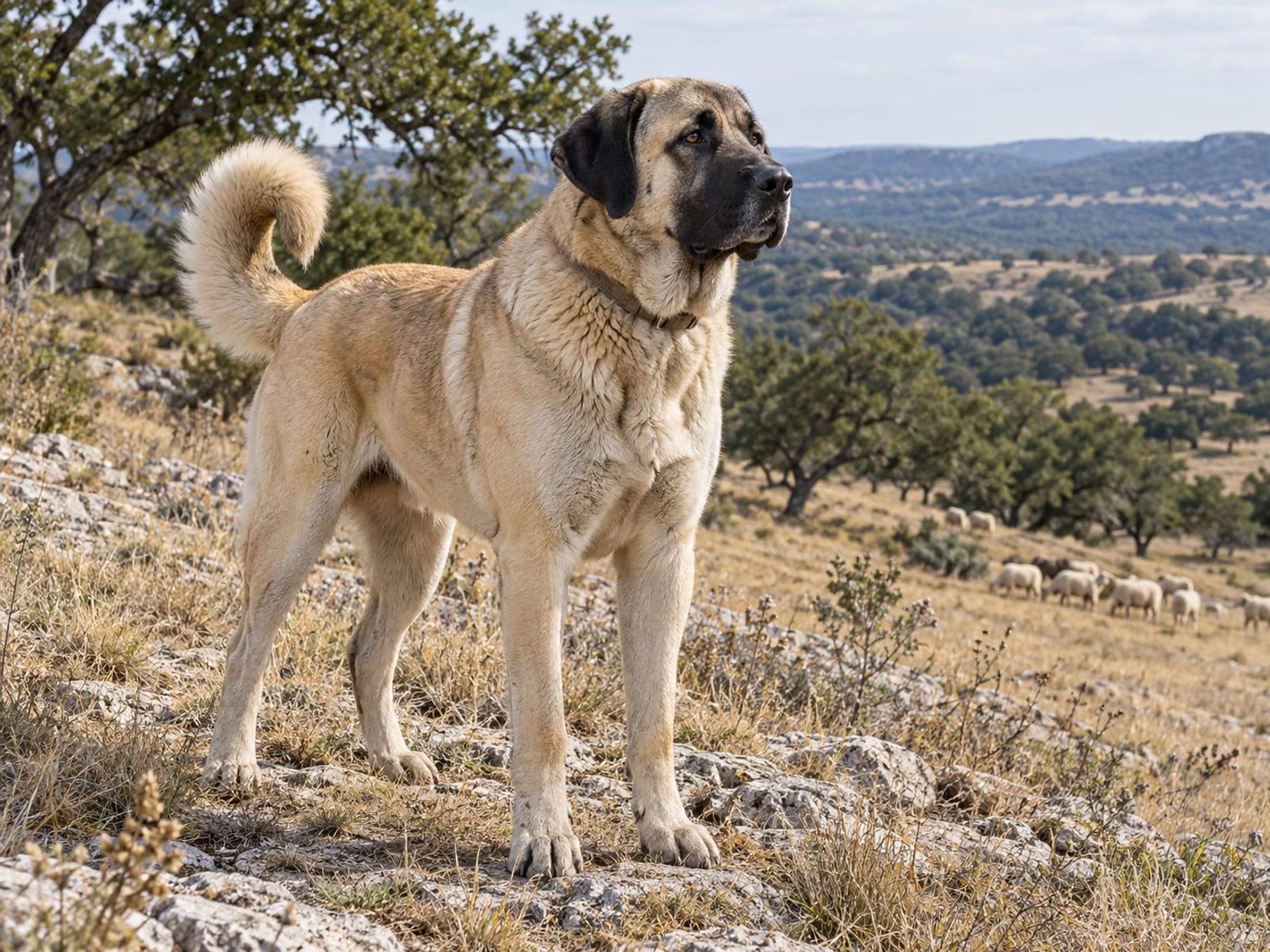
10. Anatolian Shepherd Dog
Anatolian Shepherd Dogs stand approximately 27 to 29 inches, and the AKC describes the breed as weighing up to 150 pounds, with males generally larger and heavier than females. The AKC lists a life expectancy of approximately 11 to 13 years. The coat is short to medium in length, dense and weather-resistant, with moderate seasonal shedding and regular brushing. Concerns include hip dysplasia, entropion, hypothyroidism and sensitivity to anesthesia.
The AKC describes a smart, devoted, responsive, adaptable, protective, territorial and independent dog. It needs daily movement, secure space, independent work and early socialization. Barking can be high, particularly at night and around perceived threats. The practical point is independent decision-making: do not expect the immediate obedience of a dog that lives for its handler's attention, like a Doberman or Malinois.
It can protect livestock, children, smaller dogs and cats, but its intensity and size demand responsible management, and an independent dog still needs company and care, not long isolation. It is a poor fit for apartments, open neighborhoods, weak fencing, frequent unfamiliar visitors, or owners wanting an eager-to-please beginner dog.
The ten breeds side by side
The table below puts the main numbers next to each other so you can see how different daily life with each one is. Each exercise note is a general tendency, and individual dogs vary.
Tap or hover a row to highlight it.
| Breed | Weight | Lifespan | Coat and shedding | Exercise |
|---|---|---|---|---|
| BreedGerman Shepherd Dog | Weight65 to 90 lb males, 50 to 70 lb females | Lifespan12 to 14 years | Coat and sheddingMedium double coat, sheds year-round | ExerciseDaily exercise plus mental work |
| BreedRottweiler | Weight95 to 135 lb males, 80 to 100 lb females | Lifespan9 to 10 years | Coat and sheddingShort coat, moderate shedding | ExerciseRegular exercise and obedience work |
| BreedDoberman Pinscher | Weight75 to 100 lb males, 60 to 90 lb females | Lifespan10 to 12 years | Coat and sheddingShort coat, light to moderate shedding | ExerciseDaily exercise and close family time |
| BreedBoxer | Weight65 to 80 lb males, females about 15 lb lighter | Lifespan10 to 12 years | Coat and sheddingShort coat, moderate shedding | ExerciseEnergetic daily exercise and play |
| BreedBullmastiff | Weight110 to 130 lb males, 100 to 120 lb females | Lifespan7 to 9 years | Coat and sheddingShort dense coat, moderate shedding | ExerciseModerate; daily walks and training |
| BreedCane Corso | Weight90 to 110 lb males, 85 to 100 lb females | Lifespan9 to 12 years | Coat and sheddingShort double coat, moderate seasonal shedding | ExerciseDaily exercise and structured training |
| BreedBelgian Malinois | Weight60 to 80 lb males, 40 to 60 lb females | Lifespan14 to 16 years | Coat and sheddingShort coat, moderate shedding | ExerciseExtensive exercise and meaningful work |
| BreedGiant Schnauzer | Weight55 to 95 lb | Lifespan10 to 12 years | Coat and sheddingWiry coat, low to moderate shedding, heavy grooming | ExerciseVigorous exercise and mental work |
| BreedGreat Pyrenees | WeightAt least 100 lb males, at least 85 lb females | Lifespan10 to 12 years | Coat and sheddingLong thick coat, heavy shedding | ExerciseRegular walks and room to patrol |
| BreedAnatolian Shepherd Dog | WeightUp to 150 lb | Lifespan11 to 13 years | Coat and sheddingShort to medium coat, moderate seasonal shedding | ExerciseDaily movement, secure space |
Choosing between them
A good match starts with the days you actually have: how many hours the dog will have company, how much training you can keep up, how big a dog you can walk and handle, and how your neighbors and children will live alongside it. A watchful dog can add a lot to a home, and it also adds work. Take your time with the individual dog, meet its parents or its foster family if you can, and plan the training before the dog arrives.
If you want to see how these dogs compare with breeds that were developed for other kinds of jobs, our working dog breeds page is a good next stop. Browse more profiles in our dog breeds section, and for health, training or safety questions, DogServ can point you toward the right help.
Questions people ask about guard dog breeds
Which is the most protective dog breed?
No breed wins that title. The Anatolian Shepherd Dog and Great Pyrenees were bred for independent livestock protection, while the German Shepherd Dog, Rottweiler, Doberman Pinscher, Cane Corso and Bullmastiff have household or property-guardian histories. A better question is which breed fits your household, based on temperament, training, socialization, size, barking, exercise, insurance and local rules.
Which dog is the best guard dog?
The best choice is an individual dog whose temperament, socialization, training and management fit your family. The German Shepherd Dog is among the most versatile choices for an active, experienced household. Expect alerting and companionship from a dog, and keep locks and common sense in place.
What is the most friendly but protective dog?
The Boxer and German Shepherd Dog are reasonable candidates for families wanting affection plus alertness. The Great Pyrenees can also be gentle and calm with family. Every one of them needs supervision and training around children, visitors, dogs and cats.
What dog do Navy SEALs use?
The Naval Special Warfare Command has featured Belgian Malinois, including Chief Hutch, a Malinois assigned to SEAL Team Four. The National Navy UDT-SEAL Museum calls the Belgian Malinois the predominant breed used by SEAL Teams. Military selection and training reflect specialist work, so check that your household can match the breed's drive.
Which guard dog breeds are good with kids or cats?
German Shepherd Dogs, Boxers, Great Pyrenees and some Rottweilers may suit families with children when each dog is evaluated, socialized, trained and supervised. Cat compatibility is more individual and depends on early experience, prey drive and careful introductions. The Anatolian Shepherd Dog may protect household cats, but its territorial independence calls for experienced handling.
Which guard dogs suit first-time owners?
A strong protective breed is rarely a casual first-dog choice. A well-socialized Boxer, or an especially stable German Shepherd Dog with professional training support, tends to be more approachable than a Belgian Malinois, Cane Corso or Anatolian Shepherd Dog. The individual dog and your access to qualified reward-based training matter more than the label.
Which guard dog breeds are not dangerous?
Risk depends on the individual dog, its health, genetics, socialization, training, supervision and surroundings, and the AVMA says whether a dog bites depends on more than breed. Boxers, German Shepherd Dogs and some Great Pyrenees can be family options, always with supervision and training.
Which breed looks after children the most?
No breed watches over every child automatically. German Shepherd Dogs, Boxers and Great Pyrenees can be affectionate and protective with their own family when they have good temperament, socialization and handling. An adult should always be watching.
What is the best guard and companion dog?
It depends on the home. For an active family that can train and socialize steadily, the German Shepherd Dog often offers a wide combination of companionship, working ability, watchfulness and trainability. A well-evaluated individual dog counts for more than any breed reputation.
What are the best medium-sized guard dogs?
The Doberman Pinscher and Boxer are medium-to-large choices for active homes. The Belgian Malinois is a little smaller, but its exercise and work needs are far more intense. "Medium" varies by source, so compare weight, height, energy and handling needs, not just the size label.
Where to go from here
If your household has young children, our family-friendly dog breeds list is a good next read. Woof Wag Nation has more breed guides in the dog breeds library, and the free Woof Wag Nation newsletter sends one practical dog guide each week,.
Sources
- American Kennel Club, Best Guard Dogs
- American Kennel Club, Livestock Guardian Breeds
- American Veterinary Medical Association, Preventing Dog Bites
- American Veterinary Medical Association, Selecting a Pet Dog
- Merck Veterinary Manual, Social Behavior of Dogs
- Merck Veterinary Manual, Behavior Problems of Dogs
- Insurance Information Institute, Facts About Pet Insurance
- American Kennel Club, Is a German Shepherd Dog the Right Breed for Your Lifestyle?
- American Kennel Club, German Shepherd Dog
- American Kennel Club, Rottweiler
- American Kennel Club, Rottweiler history
- American Kennel Club, Doberman Pinscher
- American Kennel Club, Doberman Pinscher history
- American Kennel Club, Boxer
- American Kennel Club, Bullmastiff
- American Kennel Club, Bullmastiff breed standard
- American Kennel Club, Cane Corso
- American Kennel Club, Belgian Malinois
- American Kennel Club, Belgian Malinois history
- American Kennel Club, Giant Schnauzer
- American Kennel Club, Great Pyrenees
- American Kennel Club, Anatolian Shepherd Dog
- Naval Special Warfare Command, Navy SEAL Military Working Dog Retires
- National Navy UDT-SEAL Museum, Combat Assault Dogs