

Breed list
10 Large Dog Breeds and the Space, Food and Care They Need
Great Danes, Mastiffs, Newfoundlands and seven more large breeds, with AKC heights and weights, lifespans, grooming, yearly costs and family fit.
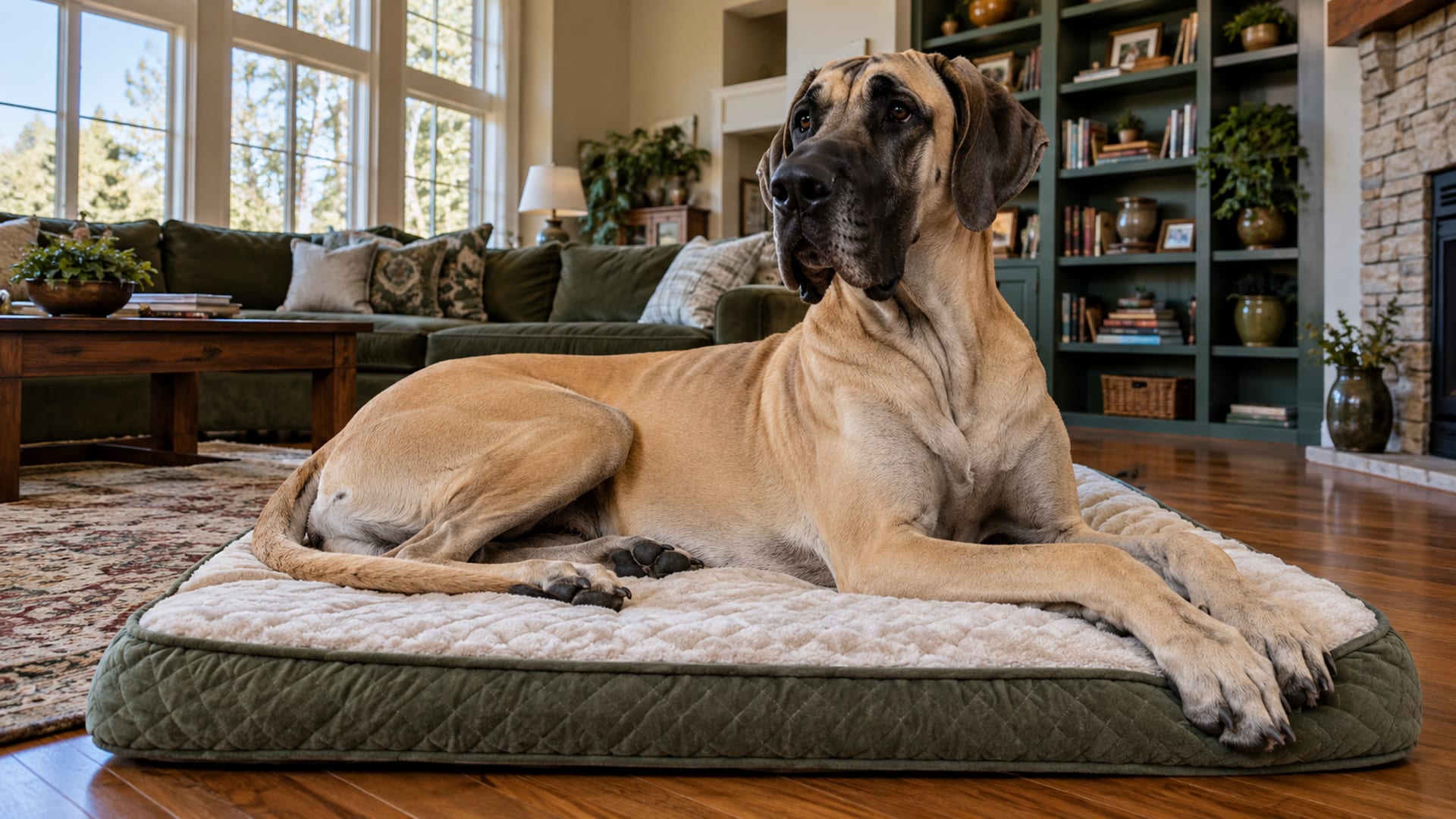
The ten large dogs below are the Great Dane, Mastiff, Irish Wolfhound, Newfoundland, Saint Bernard, Leonberger, Bernese Mountain Dog, Great Pyrenees, Rottweiler and Cane Corso. Pick by height and weight, your home and vehicle, your budget and exercise time, and the shorter lifespan big dogs average.
Key takeaways
Tap a card to bring it forward.
- Giant breeds such as the Great Dane (110 to 175 lb) and Mastiff (120 to 230 lb) weigh far more than large breeds such as the Labrador Retriever (55 to 80 lb).
- Large and giant dogs live shorter lives on average; AKC summarizes about 8 to 12 years for large breeds and 8 to 10 years for giant breeds.
- Bloat, joint disease and bone cancer are the health topics to discuss with a vet before you bring home a giant breed.
- Food, medication, boarding, crates and vehicle space cost more as size goes up; plan a larger emergency reserve.
- Large-breed puppies grow for longer, so controlled calories and low-impact exercise protect growing joints.
- Calm dogs still need upkeep: a Newfoundland needs grooming and cooling, and a Great Pyrenees may bark at night.
A big dog changes more than the size of the bed. It changes the car you drive, the food bill, the vet bill and how many years you can expect together. The ten breeds below show how different that can be from one big dog to the next.
What counts as a large or giant dog
Registries use different size cutoffs. In practical terms, a large dog commonly reaches at least about 50 to 70 pounds, and a giant breed is commonly above 100 pounds or stands above roughly 28 to 30 inches. The ten breeds below include giant companion breeds and large working or guardian breeds, so their routines differ. The AKC weight chart lists Labrador Retrievers at about 55 to 80 pounds and German Shepherd Dogs at about 50 to 90 pounds among large breeds. It lists Great Danes at 110 to 175 pounds, Mastiffs at 120 to 230 pounds, Newfoundlands at 100 to 150 pounds and Saint Bernards at 120 to 180 pounds among giants.
Which dog counts as the largest changes with the measure: maximum height, maximum weight, average adult size or breed-standard minimums.
What a big dog costs each year
Large dogs usually cost more for food, weight-based medications, some preventives, boarding, travel equipment, beds and crates. Routine exam fees may be similar, while doses, anesthesia, imaging, hospitalization and surgery can cost more. Grooming varies by coat: short-coated dogs need little professional grooming, and Newfoundlands, Bernese Mountain Dogs, Leonbergers and Saint Bernards need more brushing and drying time.
AKC's cost analysis reported annual care at about $2,569 for large dogs and $2,500 for small dogs, covering food, grooming, veterinary checkups, pet-sitting and related routine costs. For giant dogs the same analysis reported $3,321 a year, against $1,831 for small dogs. A 2025 veterinary cost guide estimated roughly $2,500 to $4,500 a year for large dogs and $3,000 to $6,000 or more for giant dogs.
The practical takeaway is to budget at the higher end if you are choosing a giant breed, and to keep a larger emergency reserve for veterinary care. Food quality, health, insurance, location and how often you board will move your own number.
Health risks that rise with size
Risk varies by breed, family line, body condition and age, but several conditions show up more often in large and giant dogs. Gastric dilatation-volvulus, called bloat or GDV, happens when the stomach swells and rotates. It is a life-threatening emergency, and the Merck Veterinary Manual and the American College of Veterinary Surgeons describe it. Deep-chested breeds including Great Danes and Saint Bernards are commonly listed among higher-risk breeds. Ask your vet about feeding schedules, exercise around meals and preventive surgery, and call a vet right away if the belly swells. DogServ can help you find urgent and routine care.
Hip and elbow dysplasia put more load on the joints of a heavy dog, and the Orthopedic Foundation for Animals runs screening programs. Keeping a growing dog lean and using age-appropriate exercise reduces avoidable stress. Cornell's Riney Canine Health Center notes that osteosarcoma, a primary bone cancer, is disproportionately represented in large and giant dogs.
AKC summarizes typical life expectancy at about 8 to 12 years for large breeds and about 8 to 10 years for giant breeds. Individual breeds range from a Bernese Mountain Dog at 7 to 10 years to a Newfoundland at 10 to 12 years.
Space, vehicle and puppy care
A large dog needs enough floor space to stand, turn and stretch out without knocking into furniture. A yard helps, and walks, training and socialization still fill the day. A large dog can live in an apartment when its exercise, noise, building access, elevator or stairs and landlord rules work out. Our guide to apartment dog breeds shows how that plays out for other sizes.
Vehicles need room for the dog, a crash-tested restraint or secured crate and a way to load an older or injured dog. Giant dogs may not fit comfortably in compact cars or standard boarding kennels, so measure before you commit.
Large-breed puppies grow for longer. AKC and VCA guidance favors a complete, balanced diet formulated for large-breed growth, controlled calories, a lean body, no routine calcium or vitamin supplements unless prescribed, and regular low-impact play. Their growth plates may stay open until about 16 to 18 months, compared with about 6 to 9 months in toy dogs, so skip forced running, repetitive jumping and long hikes on hard surfaces while the skeleton develops.
1. Great Dane
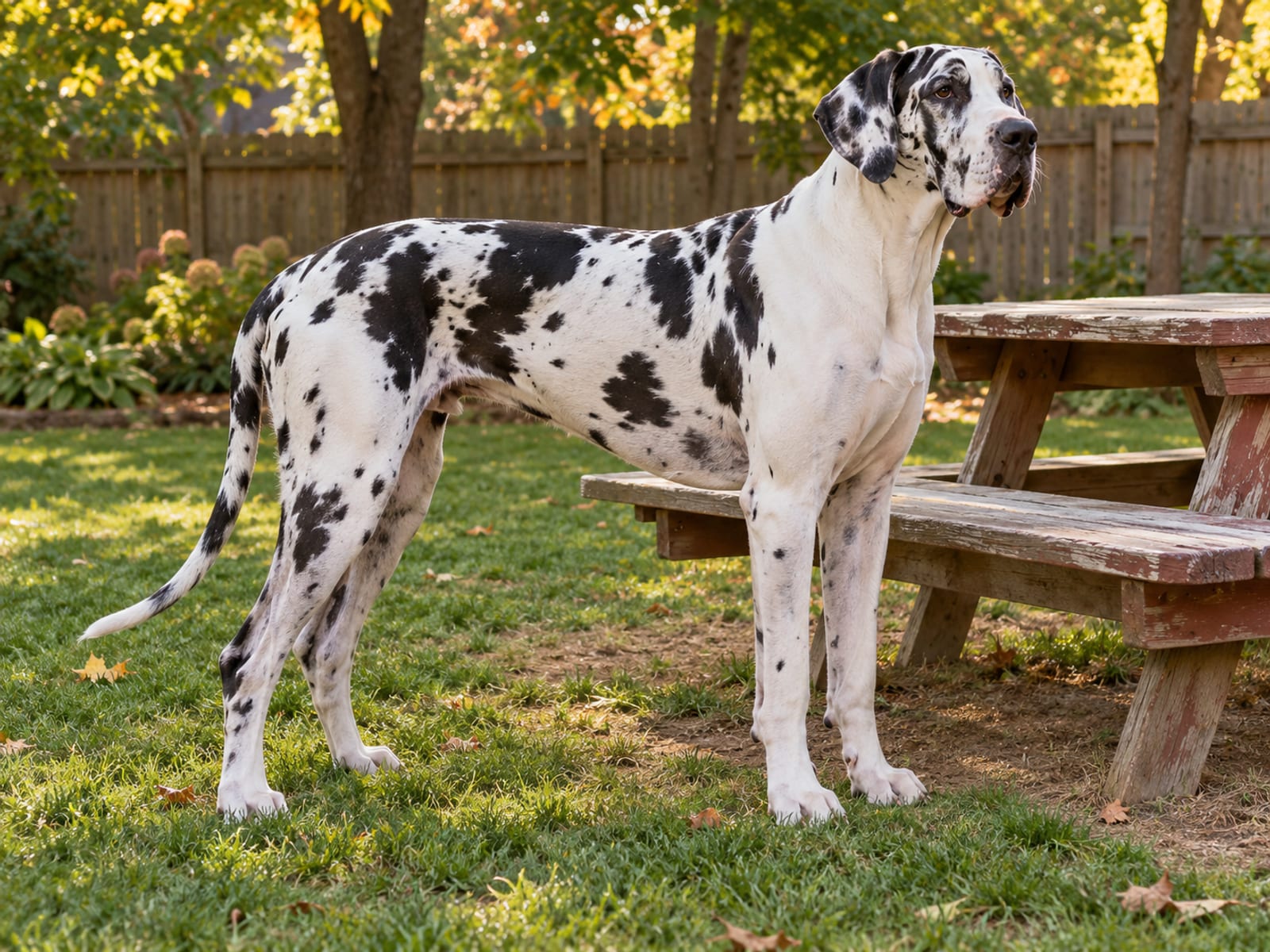
The AKC lists Great Dane males at 30 to 32 inches and 140 to 175 pounds, and females at 28 to 30 inches and 110 to 140 pounds. Life expectancy is 7 to 10 years. The short, smooth coat sheds moderately, and weekly brushing is usually enough.
Great Danes are friendly, patient and dependable, with moderate daily exercise needs. Bloat, cardiomyopathy, hip dysplasia, osteoarthritis and cancer are the health topics to raise with a breeder and your vet. Early training matters because of size.
The practical point is reach. A Great Dane's height puts counters, tables and coffee tables within range, even when its weight is lower than some Mastiffs. It suits a household with room to move and patience for adolescence, and it is a poor fit for tiny spaces or fragile belongings. Many Danes are people-oriented and struggle with long isolation, and respectful children and compatible pets usually do well with them.
2. Mastiff
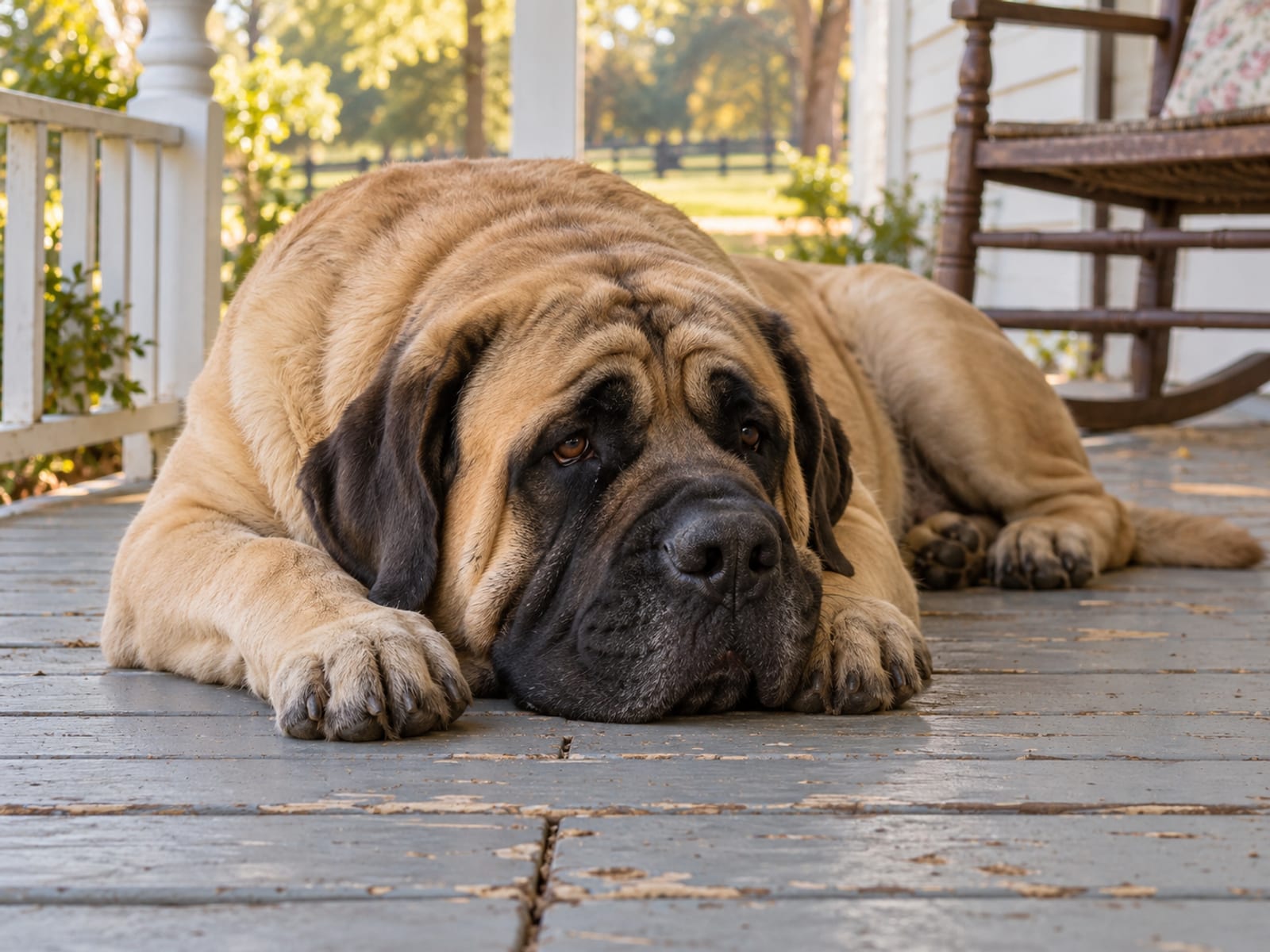
The AKC lists Mastiff males at least 30 inches and commonly 160 to 230 pounds, and females at least 27.5 inches and commonly 120 to 170 pounds. Life expectancy is about 6 to 10 years. The short, straight coat sheds moderately and needs weekly brushing, and drooling can be substantial.
Exercise needs run low to moderate. Mastiffs are calm, dignified and protective, and they respond to calm, consistent training. Bloat, hip and elbow dysplasia, cruciate disease, cancer and cardiac disease are the health concerns listed.
The practical point is mass and strength. Leash manners and door control are especially important to teach before adulthood. Barking is low to moderate, and the breed is a strong watchdog that prefers to stay near family. It can be good with children under supervision, and apartment living is limited mainly by bulk and building rules. It suits a home that wants a calm presence, and fits poorly if you want an athletic or highly social dog.
3. Irish Wolfhound
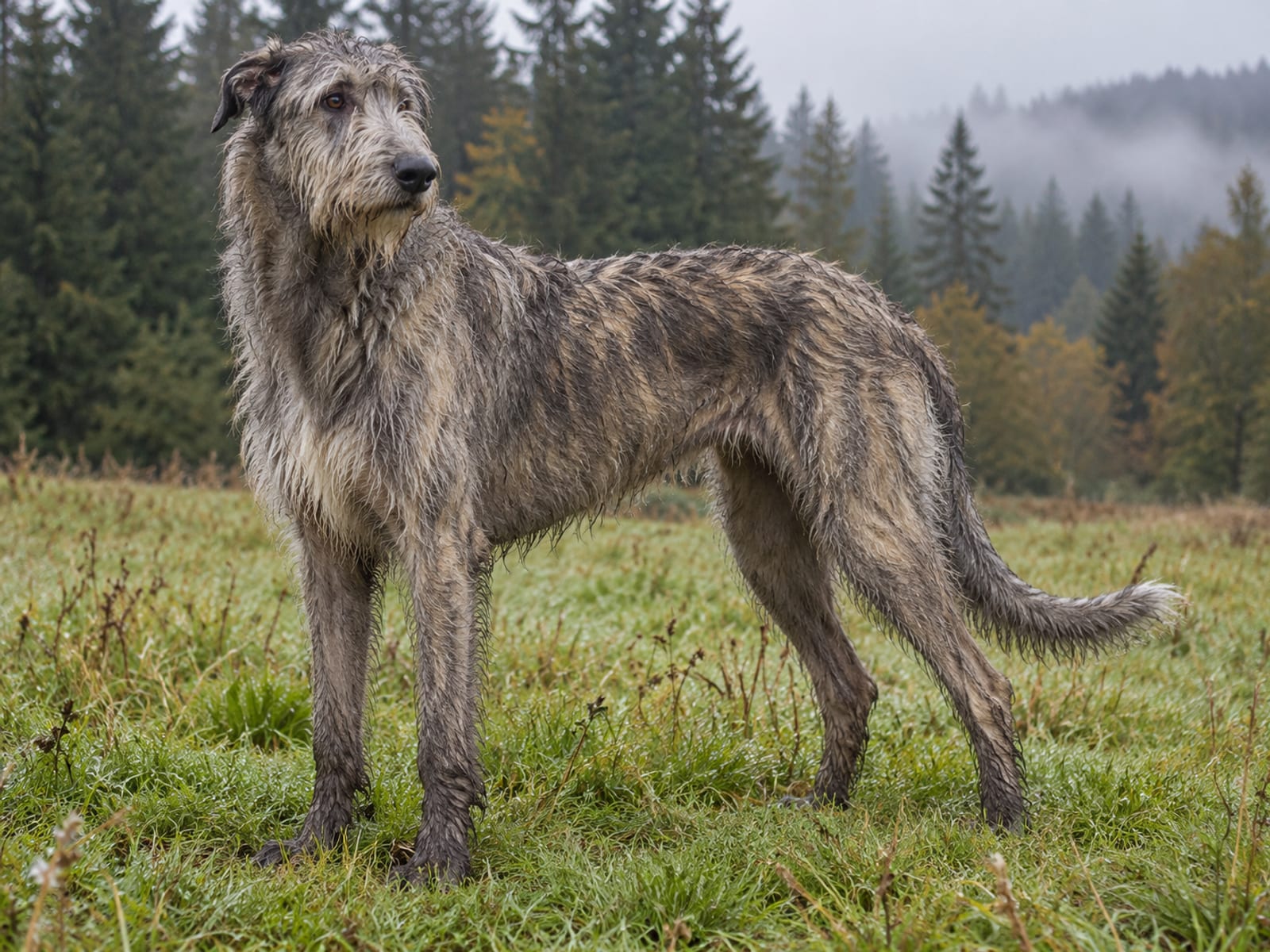
The AKC lists Irish Wolfhounds at a minimum of 32 inches for males and 30 inches for females. Males run about 140 to 180 pounds and females about 115 to 140 pounds, with a life expectancy of 8 to 10 years. The rough, wiry coat sheds moderately and needs regular brushing and occasional stripping or trimming.
Wolfhounds are calm, dignified and kindly, and cooperative though independent. They need daily walks and safe running space. Cardiomyopathy, osteosarcoma, bloat, hip and elbow dysplasia, liver shunt and pneumonia are the listed health concerns.
The practical point: this is a giant sighthound that works as a gentle companion, so look to a guardian breed for protection. Wolfhounds are usually quiet, are highly social and do poorly with long daily isolation. They are often gentle with children and other dogs when socialized. They suit owners who want a tall, quiet companion and accept an 8 to 10 year lifespan. For guarding breeds, see our guard dog breeds guide.
4. Newfoundland
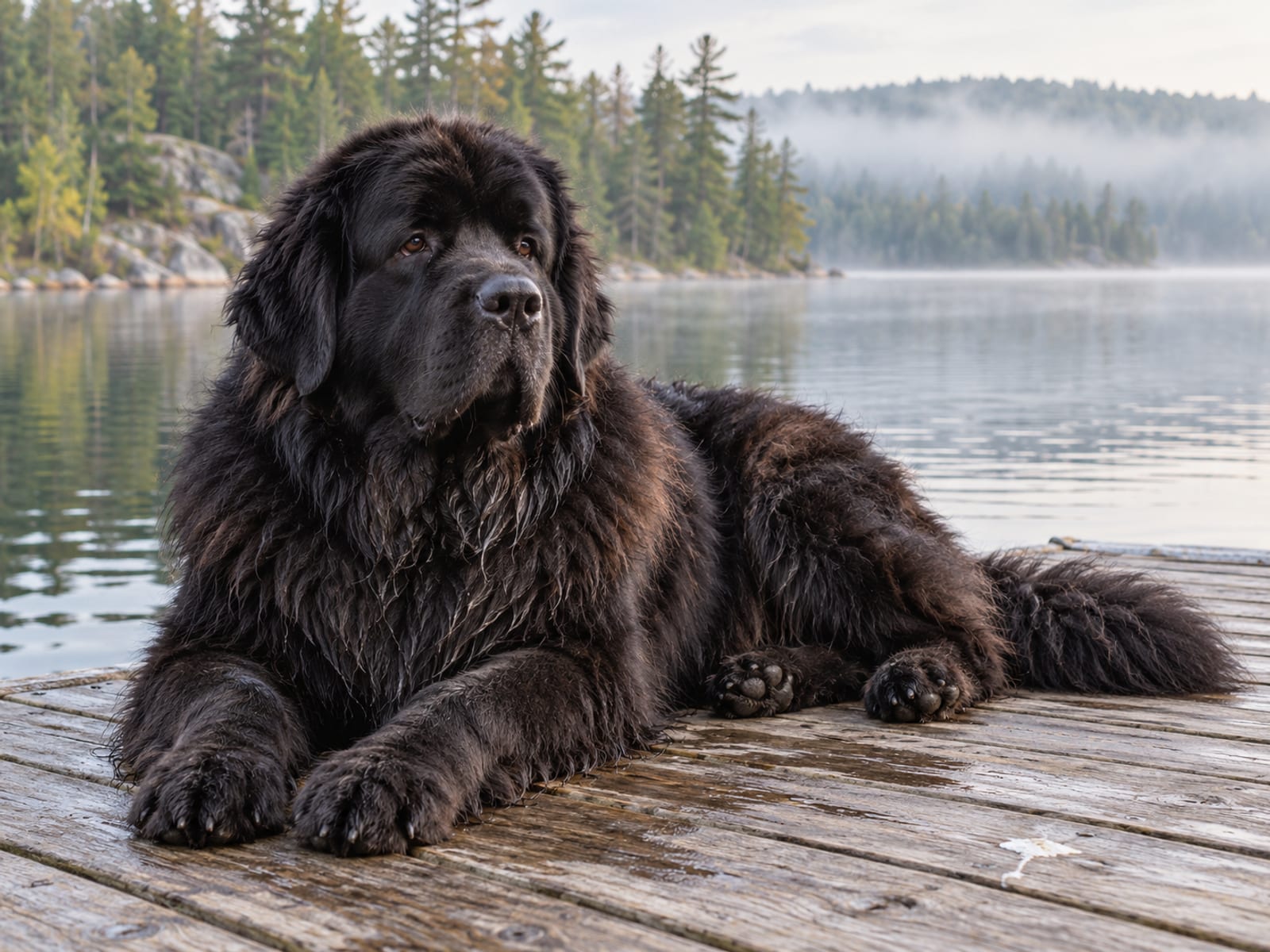
The AKC lists Newfoundland males at about 28 inches and 130 to 150 pounds, and females at about 26 inches and 100 to 120 pounds. Life expectancy is 10 to 12 years. The heavy double coat sheds heavily in season and needs frequent brushing and drying.
Newfoundlands are sweet, patient and devoted, with moderate exercise needs, especially swimming. They train well with reward-based methods. Subaortic stenosis, cystinuria, hip and elbow dysplasia, cruciate disease and bloat are the listed health concerns.
Swimming is the distinctive outlet, and the cost of it is a wet coat, drying time and water or mud in the house. Expect drool and shedding, and give the dog a cool spot. The breed wants close family contact and is often a strong family fit with supervision, and pets are usually manageable. An apartment is difficult because of coat, size and heat. It suits families who like grooming and water play, and less suits anyone who dislikes drool.
5. Saint Bernard
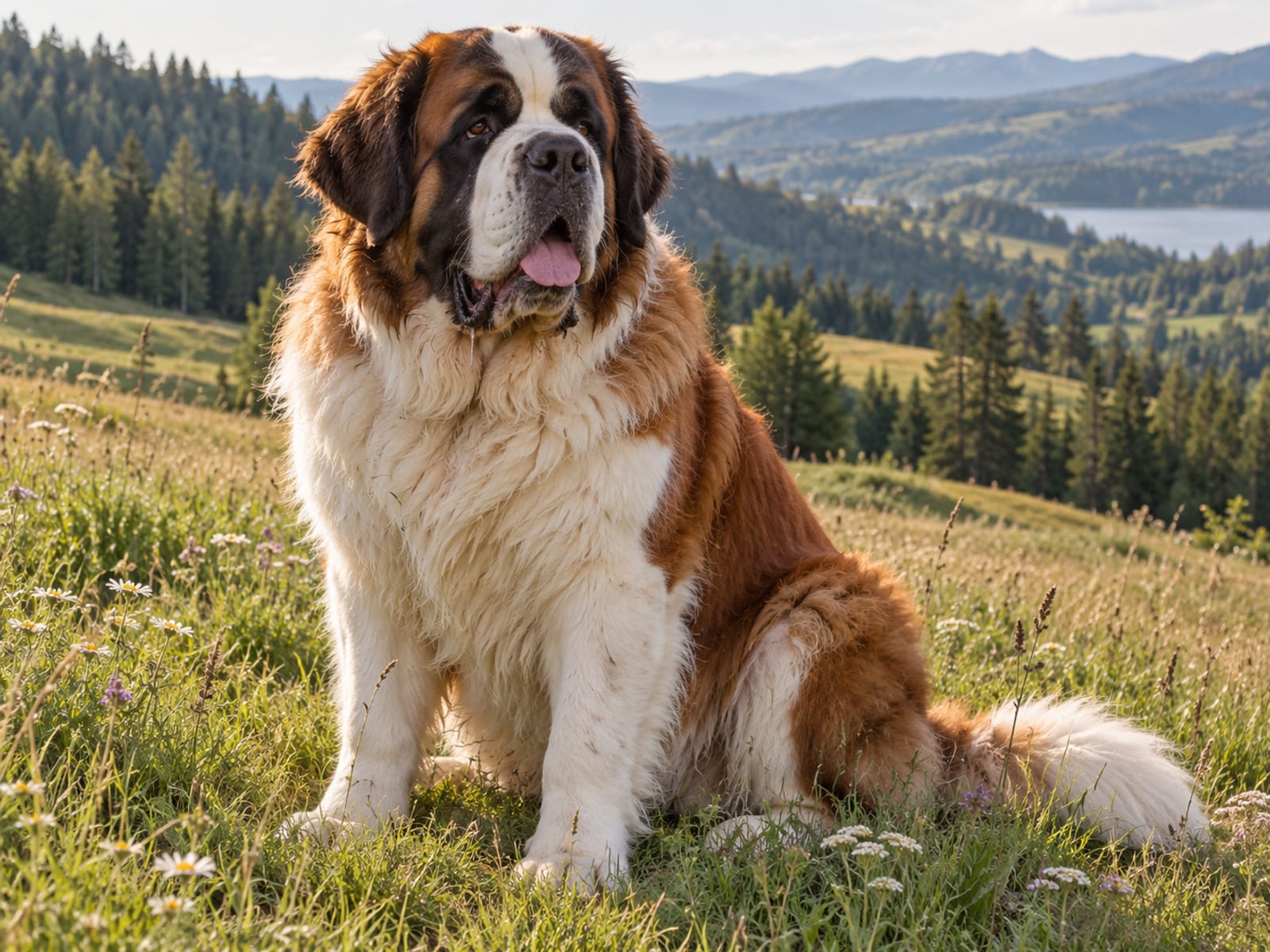
The AKC lists Saint Bernard males at about 27.5 to 30 inches and females at 25.5 to 28 inches, with weights of about 120 to 180 pounds. AKC's lifespan summary gives 10 to 12 years for the breed, and some sources give 8 to 10 years. Coats come in short and long varieties with moderate to heavy shedding.
Saint Bernards are friendly, patient and watchful, with moderate exercise needs, and they should avoid heat. Bloat, hip and elbow dysplasia, osteosarcoma, entropion and heart disease are the listed health concerns. Train early because of mass.
Heat management is the practical point. The heavy body and coat make warm weather difficult, so reliable cooling and shade matter in a hot region. Barking is moderate, and drooling is part of life. The breed prefers company and can be good with children and pets with training. Apartments are limited by size and heat. It suits a cool home and a patient family, and fits poorly if you live somewhere hot without reliable cooling.
6. Leonberger
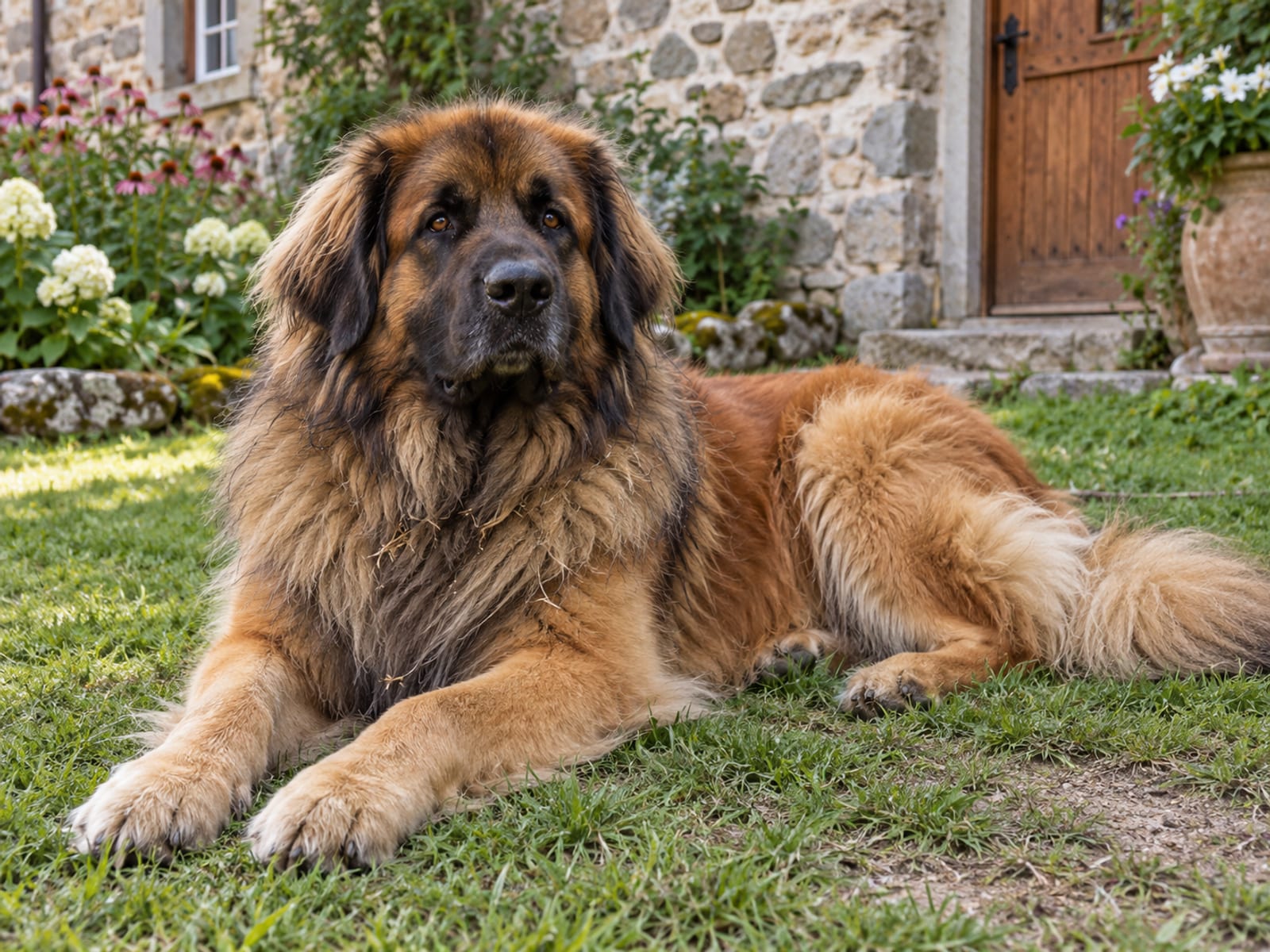
The AKC lists Leonberger males at 28 to 31.5 inches and 110 to 170 pounds, and females at 25.5 to 29.5 inches and 90 to 140 pounds. Life expectancy is about 7 years. The long, water-resistant double coat sheds heavily in season and needs frequent brushing.
Leonbergers are gentle, adaptable and family-oriented. They are trainable but sensitive and independent, and exercise needs are moderate. Hip and elbow dysplasia, bloat, polyneuropathy, osteosarcoma and eye disease are the listed health concerns.
The coat and the frame together make a substantial brushing, drying and seasonal-shedding routine. Plan on time and space for it. Leonbergers are strongly people-oriented and often good with children and pets if socialized. Barking is usually moderate. Apartment living is difficult because of coat and size. It suits an owner who enjoys grooming and wants a family-centered dog, and it is a poor fit for anyone wanting low grooming or a dog comfortable alone all day.
7. Bernese Mountain Dog
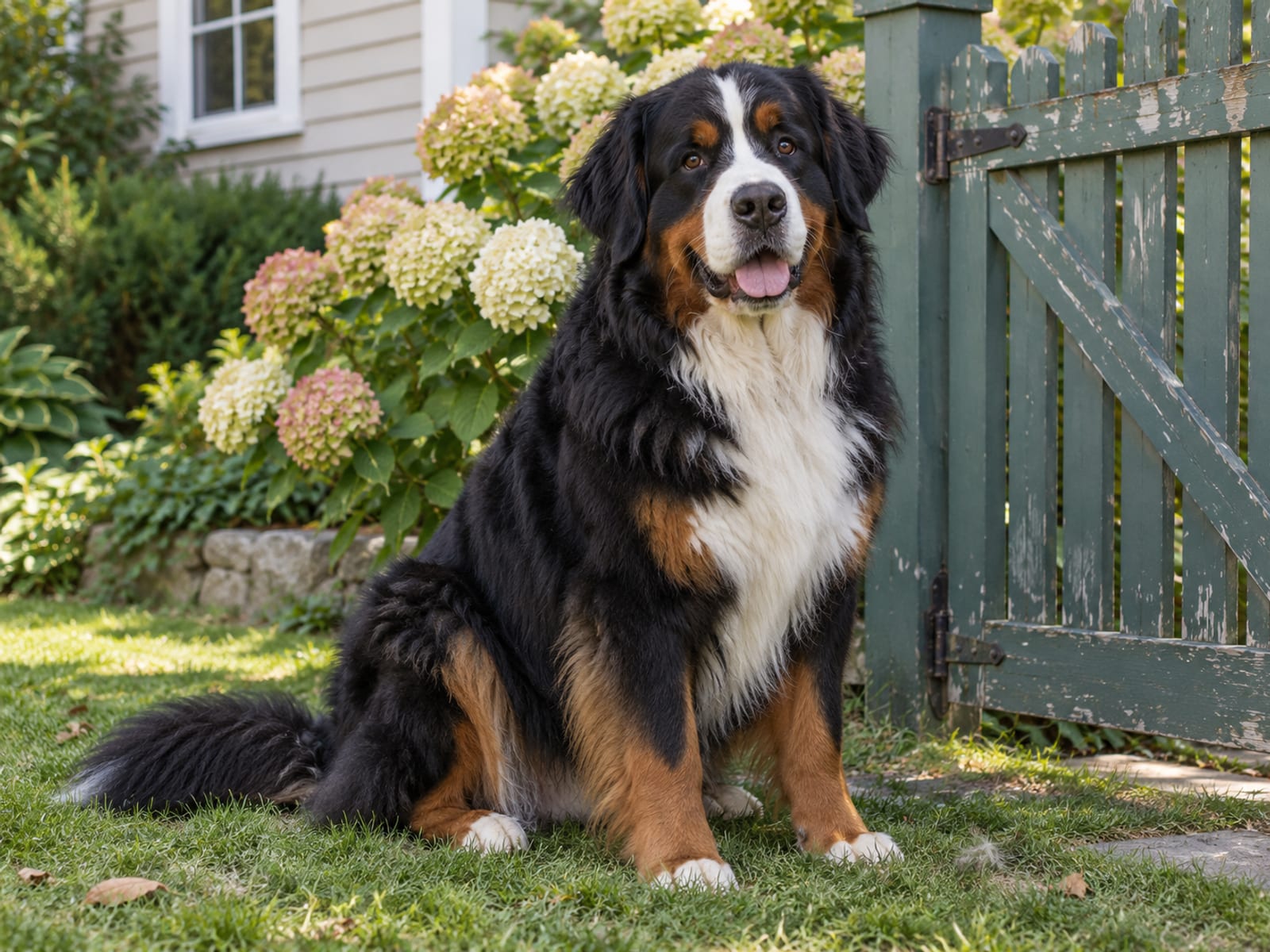
The AKC lists Bernese males at 25 to 27.5 inches and about 80 to 115 pounds, and females at 23 to 26 inches and about 70 to 95 pounds. Life expectancy is 7 to 10 years. The long, silky double coat sheds heavily and needs frequent brushing.
Bernese are affectionate, gentle and even-tempered, generally trainable though sometimes slow to mature. Histiosarcoma and other cancers, hip and elbow dysplasia, bloat and degenerative myelopathy are the listed health concerns.
The distinctive practical point is the pairing of a family-oriented temperament with a notably short average lifespan for a companion breed. If you are choosing for children, talk through that before you commit. Barking is moderate, and the breed bonds closely and may not tolerate long isolation. Berners are often good with children and other pets. Apartments are possible with exercise and cool temperatures. They suit families in a cool climate who are ready to ask breeders about cancer and joint screening. Compare other kid-friendly options in our family-friendly dog breeds.
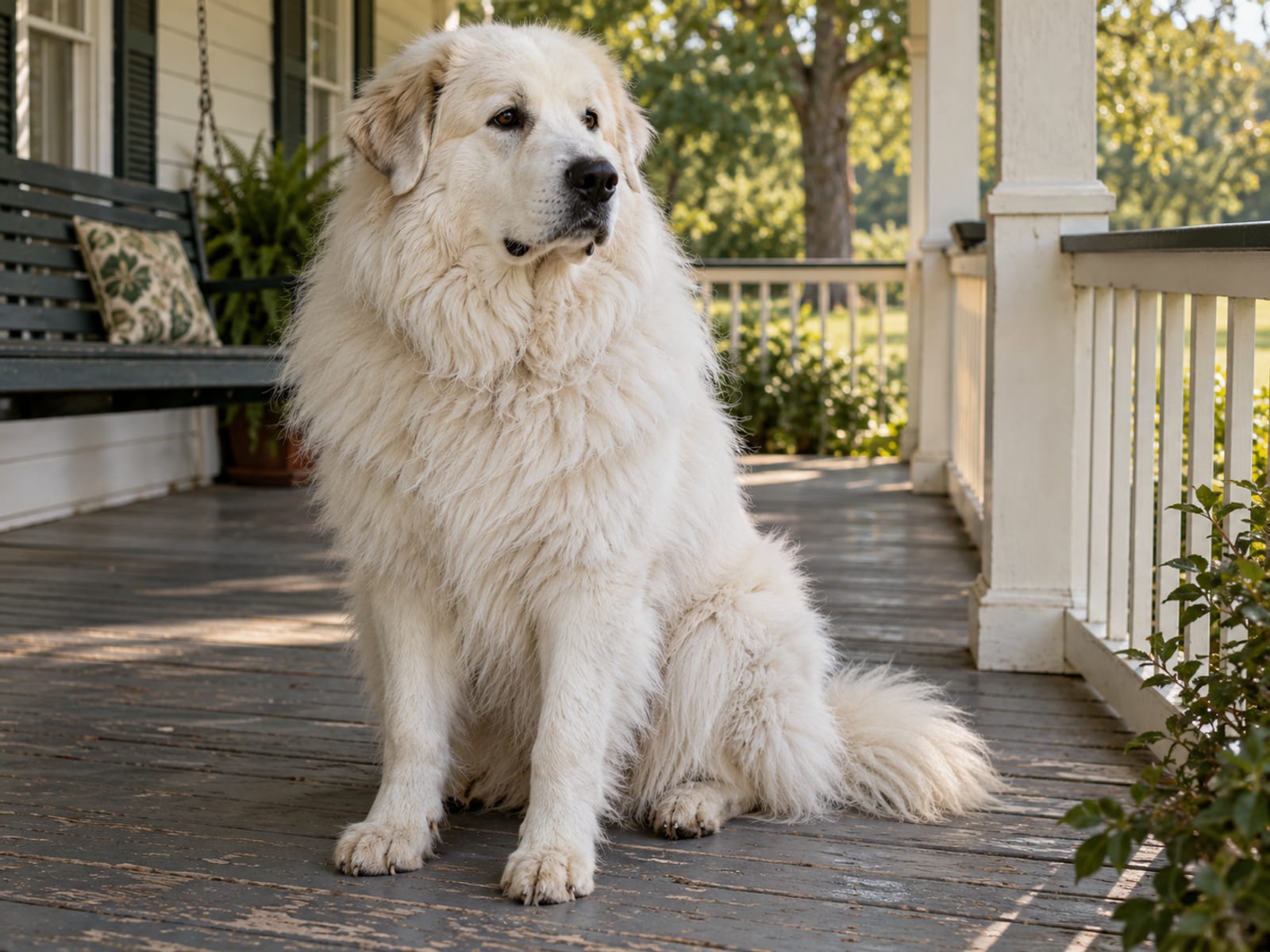
8. Great Pyrenees
The AKC lists Great Pyrenees males at 27 to 32 inches and commonly 100 pounds or more, and females at 25 to 29 inches and commonly 85 pounds or more. Life expectancy is about 10 to 12 years. The long, thick double coat sheds heavily in season and needs regular brushing.
This breed needs moderate exercise but a strong sense of territory and purposeful activity. It is independent, calm and protective. Hip and elbow dysplasia, patellar luxation, bloat, osteosarcoma and eye disorders are the listed health concerns.
Night barking and independent territorial behavior can matter more than exercise volume in a suburban or apartment setting. The breed is more tolerant of solitude than many companion breeds, but it needs secure fencing. Great Pyrenees can be good with children and livestock, while pet fit depends on socialization. Apartments are usually a poor fit because of barking. It suits a rural or fenced property, and it is a poor match for close neighbors or a household without secure outdoor management.
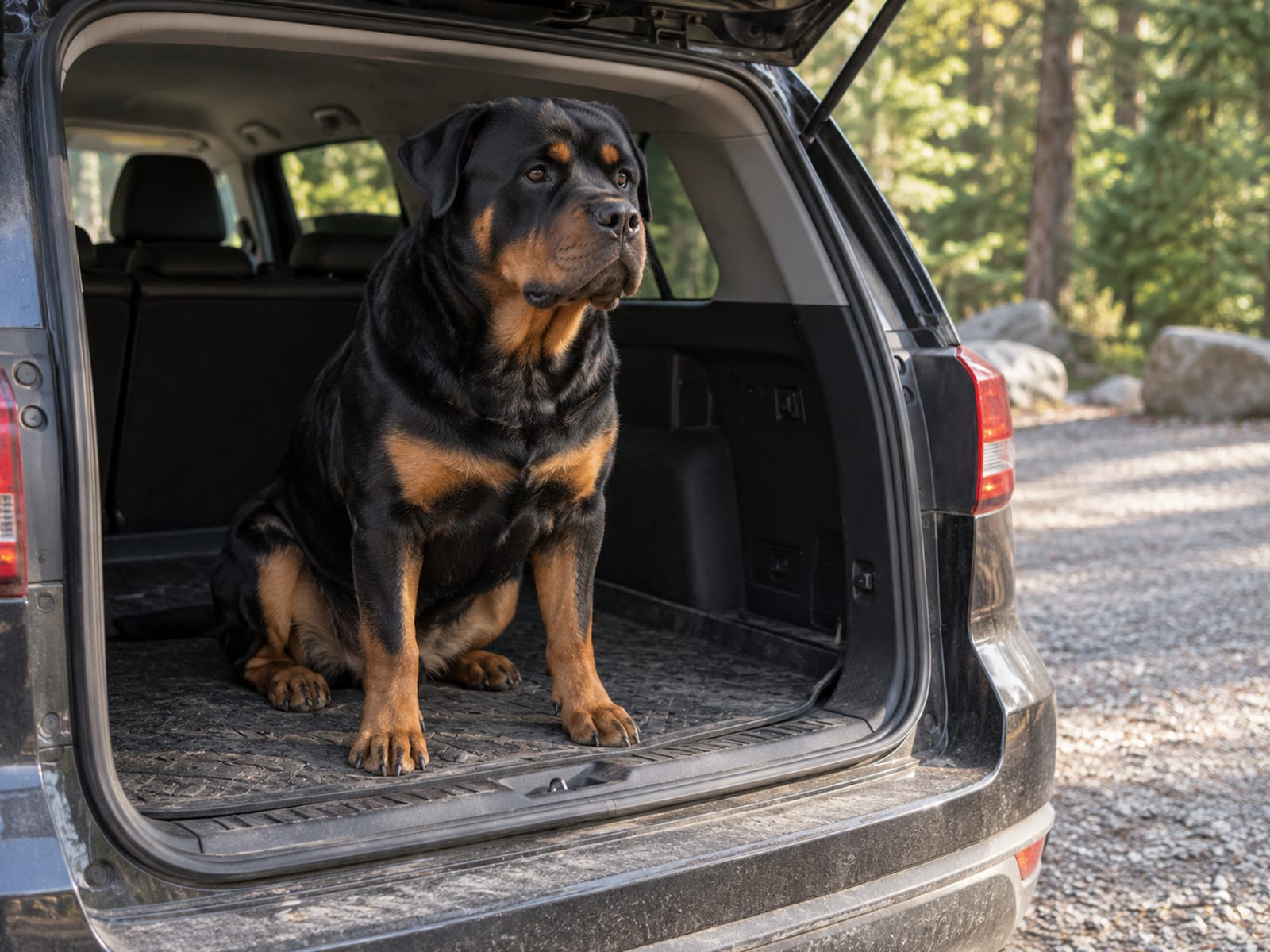
9. Rottweiler
The AKC lists Rottweiler males at 24 to 27 inches and females at 22 to 25 inches, about 80 to 135 pounds. Life expectancy runs about 8 to 12 years depending on the source. The short double coat sheds moderately and needs weekly brushing.
Rottweilers need daily physical and mental work. They are confident, protective and trainable, and they need early socialization and competent handling. Hip and elbow dysplasia, cruciate disease, subaortic stenosis, cancer and bloat are the listed health concerns.
The practical point is that suitability depends heavily on early socialization, impulse control and an owner able to manage a powerful working dog. Barking is moderate and alert. Rottweilers may tolerate routine alone time better than highly dependent breeds, and they do best with plenty of company. They can fit families with experienced supervision. Apartment fit depends on training and exercise. It suits an experienced owner, and fits poorly if you want an easygoing giant. See also working dog breeds.
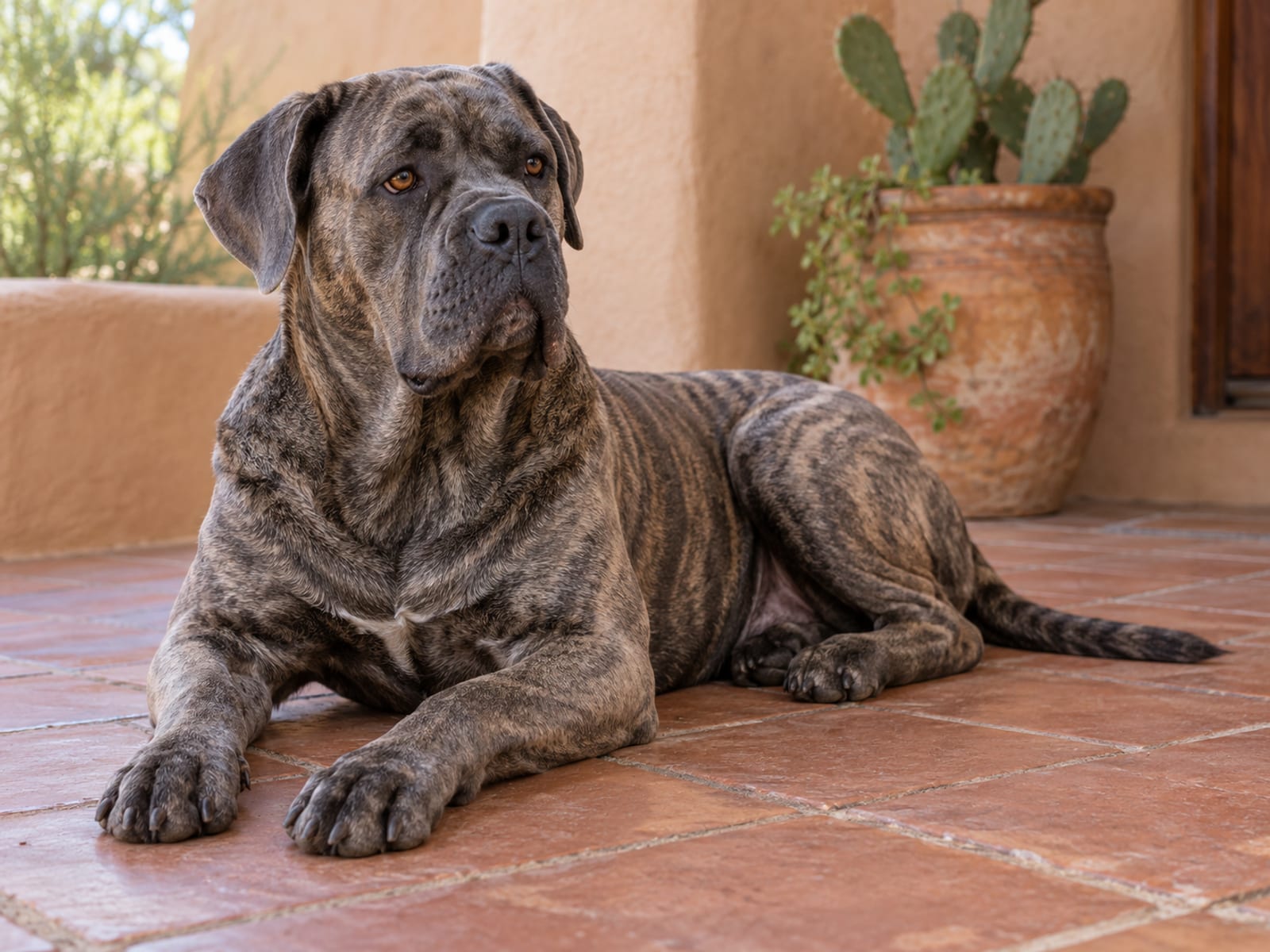
10. Cane Corso
The AKC lists Cane Corso males at 25 to 27.5 inches and females at 23.5 to 26 inches. Weight should be proportionate to height, commonly about 85 to 110 pounds, and life expectancy is about 9 to 12 years. The short, stiff coat sheds seasonally and needs little grooming.
The breed is intelligent, assertive, protective and reserved with strangers, with high needs for training, socialization and structured exercise. Hip and elbow dysplasia, eyelid disorders, bloat, idiopathic epilepsy and cardiac disease are the listed health concerns.
The guardian temperament makes visitor management and controlled introductions a daily part of life. Teach a settle cue and plan how guests will arrive. Barking is moderate to high when alert. A Cane Corso is close to its family and does poorly with neglect or prolonged isolation. It may fit older children and compatible pets under skilled management. Apartment living is possible only with excellent training and exercise. It suits an experienced, structured household and is a poor fit for first-time owners or chaotic homes.
The ten breeds side by side
The numbers below put height, weight and lifespan next to the care each breed asks for.
Tap or hover a row to highlight it.
| Breed | Height (male/female) | Weight | Lifespan | Coat and shedding | Exercise |
|---|---|---|---|---|---|
| BreedGreat Dane | Height (male/female)30 to 32 in / 28 to 30 in | Weight110 to 175 lb | Lifespan7 to 10 years | Coat and sheddingShort, moderate | ExerciseModerate |
| BreedMastiff | Height (male/female)At least 30 in / at least 27.5 in | Weight120 to 230 lb | LifespanAbout 6 to 10 years | Coat and sheddingShort, moderate, drools | ExerciseLow to moderate |
| BreedIrish Wolfhound | Height (male/female)At least 32 in / at least 30 in | Weight115 to 180 lb | Lifespan8 to 10 years | Coat and sheddingRough, moderate | ExerciseDaily walks, safe running space |
| BreedNewfoundland | Height (male/female)28 in / 26 in | Weight100 to 150 lb | Lifespan10 to 12 years | Coat and sheddingHeavy double, high seasonal | ExerciseModerate, swimming |
| BreedSaint Bernard | Height (male/female)27.5 to 30 in / 25.5 to 28 in | Weight120 to 180 lb | Lifespan8 to 10 or 10 to 12 years | Coat and sheddingShort or long, moderate to heavy | ExerciseModerate, avoid heat |
| BreedLeonberger | Height (male/female)28 to 31.5 in / 25.5 to 29.5 in | Weight90 to 170 lb | LifespanAbout 7 years | Coat and sheddingLong double, heavy seasonal | ExerciseModerate |
| BreedBernese Mountain Dog | Height (male/female)25 to 27.5 in / 23 to 26 in | Weight70 to 115 lb | Lifespan7 to 10 years | Coat and sheddingLong, silky, heavy | ExerciseModerate |
| BreedGreat Pyrenees | Height (male/female)27 to 32 in / 25 to 29 in | Weight85 lb or more | LifespanAbout 10 to 12 years | Coat and sheddingLong, thick, heavy seasonal | ExerciseModerate, territory |
| BreedRottweiler | Height (male/female)24 to 27 in / 22 to 25 in | Weight80 to 135 lb | Lifespan8 to 10 or 10 to 12 years | Coat and sheddingShort double, moderate | ExerciseDaily physical and mental work |
| BreedCane Corso | Height (male/female)25 to 27.5 in / 23.5 to 26 in | WeightAbout 85 to 110 lb | LifespanAbout 9 to 12 years | Coat and sheddingShort, stiff, seasonal | ExerciseHigh, structured |
Questions about large dog breeds
Big dogs raise questions about ranking, family fit and coat, and short answers follow.
What is the top 10 largest dog breed?
A top ten depends on the basis. A height ranking favors Irish Wolfhounds, Great Danes and Scottish Deerhounds, while a weight ranking favors Mastiffs, Saint Bernards and Newfoundlands. The comparison table above puts ten breeds side by side by height, weight and lifespan so you can sort by what matters to you.
What is the best large dog breed?
The best match depends on your space, children, pets, exercise time, grooming tolerance, heat, experience and budget. Newfoundlands, Bernese Mountain Dogs and some Great Danes suit families seeking companion-oriented temperaments. Rottweilers and Cane Corsos need more experienced handling and structured socialization.
What are the 20 largest dog breeds in the world?
"Largest" can mean tallest, heaviest or largest by breed standard, so any list needs one consistent source and metric. A defensible set includes Irish Wolfhound, Great Dane, Scottish Deerhound, English Mastiff, Bullmastiff, Saint Bernard, Newfoundland, Leonberger, Great Pyrenees, Tibetan Mastiff, Neapolitan Mastiff, Dogue de Bordeaux, Cane Corso, Rottweiler, Bernese Mountain Dog, Anatolian Shepherd Dog, Kuvasz, Komondor, Borzoi and Central Asian Shepherd Dog, per AKC's largest-breeds list.
What dogs are considered XL breeds?
XL is an informal term. It usually refers to giant dogs of about 100 pounds or more, very tall dogs or dogs with exceptionally heavy frames. Examples include Mastiffs, Great Danes, Saint Bernards, Newfoundlands, Irish Wolfhounds, Leonbergers and Great Pyrenees.
Which large dog breeds are best for families?
Newfoundlands, Bernese Mountain Dogs, Great Danes, Saint Bernards and some Leonbergers are the family-oriented choices when your household can manage their size, grooming, exercise and shorter lifespan. Teach children to greet the dog calmly and supervise all play. Our family-friendly dog breeds guide covers more sizes.
Which large dog breeds have short hair?
Great Danes, Mastiffs, Rottweilers, Cane Corsos and some Saint Bernards have short or relatively short coats. Short hair still sheds, so these breeds need routine brushing. For low upkeep across sizes, see low-maintenance dog breeds.
Which large breeds are the calmest?
Mastiffs, Great Danes, Newfoundlands, Saint Bernards, Bernese Mountain Dogs and Irish Wolfhounds are commonly described as calmer. Calm still comes with daily activity, and each breed brings its own needs: a Mastiff is physically enormous, a Great Pyrenees may bark at night and a Newfoundland needs grooming and cooling. Choose by the whole household fit.
Which large dog is good for a family with children?
Newfoundland, Bernese Mountain Dog, Great Dane, Saint Bernard and some Leonbergers are commonly considered family-oriented. A large dog can knock over a young child without meaning to, so children's ages, adult supervision, home layout and training all matter. Size and strength are everyday safety factors.
Where to go from here
If a big dog is for a home with children, our family-friendly dog breeds list is a good next read. Woof Wag Nation has more breed guides in the dog breeds library, and the free Woof Wag Nation newsletter sends one practical dog guide each week,.
Sources
- AKC, Breed Weight Chart
- AKC, 16 Largest Dog Breeds
- AKC, How Long Do Dogs Live
- AKC, Cost of Owning a Dog
- Vet Cost Guide, Annual Cost of Owning a Dog
- Merck Veterinary Manual, Gastric Dilatation and Volvulus
- American College of Veterinary Surgeons, Gastric Dilatation-Volvulus
- Orthopedic Foundation for Animals, Hip Dysplasia
- Cornell Riney Canine Health Center, Osteosarcoma
- AKC, How to Care for Your Large Breed Dog
- VCA Hospitals, Nutritional Considerations for Large and Giant Breed Dogs
- VCA Hospitals, Puppy Exercise
- AKC, Great Dane
- AKC, Mastiff
- AKC, Irish Wolfhound
- AKC, Newfoundland
- AKC, Saint Bernard
- AKC, Leonberger
- AKC, Bernese Mountain Dog
- AKC, Great Pyrenees
- AKC, Rottweiler
- AKC, Cane Corso