

Coat and care
10 Fluffy Dog Breeds and the Coat Care Each One Needs
Ten fluffy dog breeds, from Pomeranians to Great Pyrenees, with size, shedding, brushing, grooming and heat details to help you pick the right coat.
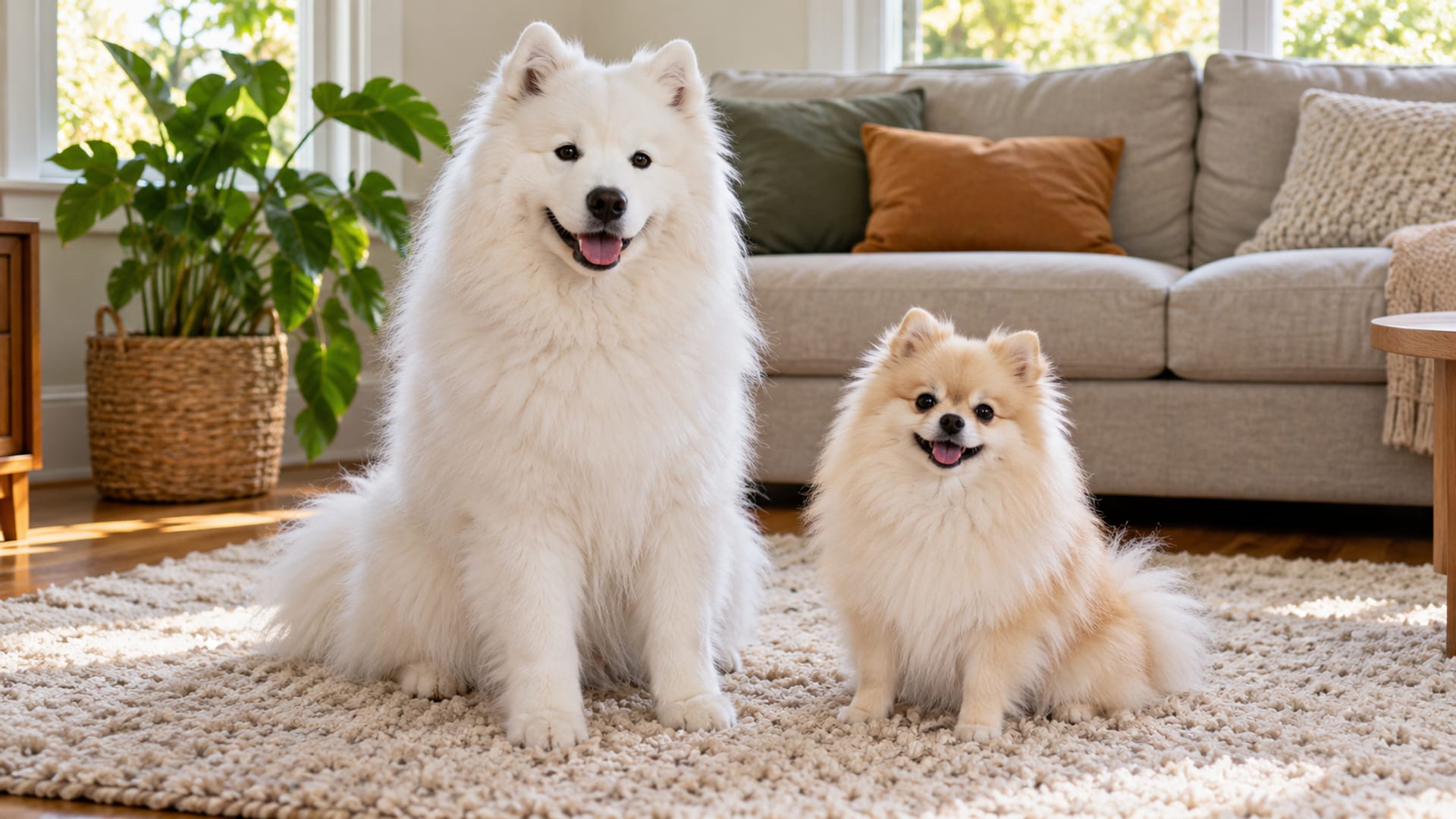
Fluffy dogs make warm companions, and every coat comes with its own work. Double-coated Pomeranians and Samoyeds shed heavily and need regular brushing, while the long or curly coats on Shih Tzus, Bichon Frise, and Poodles mat quickly and usually need professional grooming. Match size, shedding, heat management, exercise, and household to the breed, not looks alone.
The ten breeds below cover small, medium, and large dogs with three coat types: double coats, long single coats, and curly coats.
Key takeaways
Tap a card to bring it forward.
- Double coats (Pomeranian, Chow Chow, Samoyed, Great Pyrenees, Old English Sheepdog) shed seasonally and are brushed at least weekly, with extra sessions during heavy shedding.
- Long single coats (Maltese, Shih Tzu, Havanese) and curly coats (Bichon Frise, Standard Poodle) mat easily and are usually clipped by a groomer every 4 to 8 weeks.
- Shaving a double coat removes its sun and weather protection and does not stop shedding, so brushing and deshedding are the better routine.
- Fluffy dogs can still overheat; shade, water, and cooler exercise times matter for every breed here.
- "Teddy bear" is a grooming cut that groomers can give many breeds, so choose the breed for its size, energy, and temperament.
What makes a breed fluffy
A fluffy breed has a coat that is profuse, long, dense or curly. The ten below range from a 5-pound lapdog to a dog that looks like a small sheep, and their care differs as much as their size.
The best fit depends on how much shedding, brushing, professional grooming, exercise, barking and independence your household can live with.
How fluffy coats differ and what the care costs
A double coat has a protective outer layer over an insulating undercoat. Brush it at least weekly, and more often during seasonal shedding. A groomer can bathe, dry, deshed, and trim nails, but the coat is not normally shaved. The AKC explains why: the outer coat shields skin from weather, dirt, and sunlight, and shaving does not stop shedding.
Long single coats and curly coats shed less visibly, but loose hair stays in the coat and tangles. Plan on brushing several times a week or daily, plus a professional haircut about every 4 to 8 weeks depending on coat length.
Mats pull on the skin, trap moisture and debris, and can hide wounds or parasites. Brush through the whole coat down to the skin, since the surface can look smooth over a tangle underneath, and check the skin after baths or swimming because wet tangles tighten as they dry. Tight mats near the ears, armpits, groin, tail, and collar deserve a groomer or veterinarian rather than household scissors, and a short clip is sometimes the kindest option for a severely matted coat.
Grooming prices depend on location, size, and coat condition. Petco lists bath-and-haircut starting prices of about $46 for dogs of 1 to 10 pounds, $50 for 11 to 25 pounds, $68 for 51 to 80 pounds, and $97 for dogs of 100 pounds or more. Kiplinger puts salon grooming at $40 to $100 per visit and mobile grooming at about $70 to $150. Heavy drying, scissoring, or dematting can add to the base price, so ask a local groomer for an estimate for your dog's coat.
Heat deserves its own plan. A thick coat does not make a dog heat-proof, and the same goes for a short one. Offer shade, water, cooling surfaces, and walks at cooler times of day, and watch for heavy panting, weakness, confusion, vomiting, or collapse. If you see those signs, contact a veterinarian right away; DogServ can help you find care.
1. Pomeranian
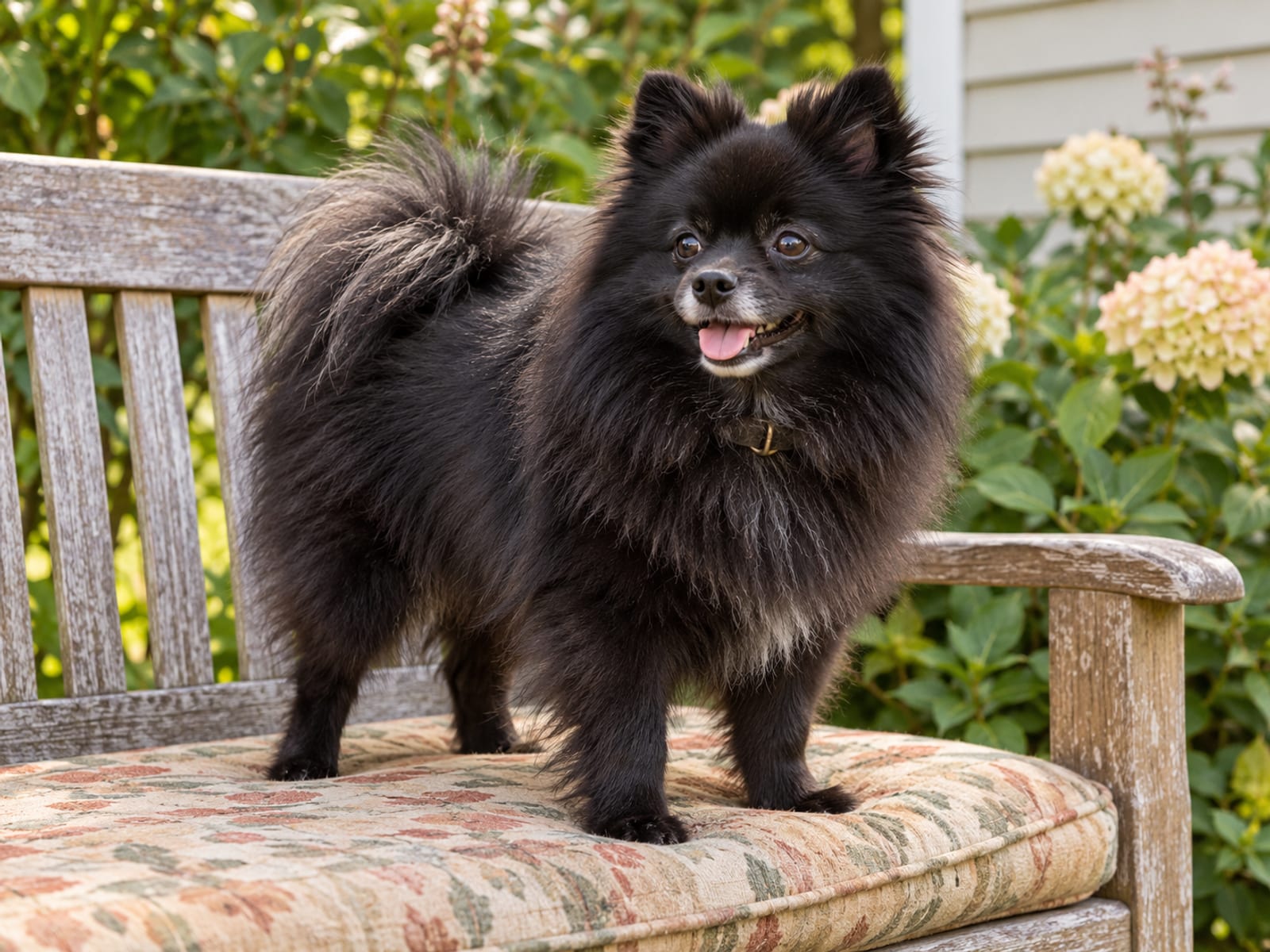
The Pomeranian is the smallest dog here, at 3 to 7 pounds and 6 to 7 inches tall, with a life expectancy of 14 to 16 years. The long, profuse double coat sheds seasonally. Brush several times a week, more during the coat blow, and use a groomer for baths, drying, a sanitary trim, and nails.
Its tiny frame is the practical point. Falls, rough play, and crowded teeth call for careful handling and regular dental care, and patellar luxation and tracheal collapse are among the health concerns to ask a breeder or veterinarian about.
Pomeranians are lively, intelligent, and often vocal, with moderate exercise needs met by short walks and play. They fit apartments and homes with older children who handle small dogs gently. A household that wants a quiet dog or a sturdy playmate for rough games will find a better match elsewhere.
2. Shih Tzu
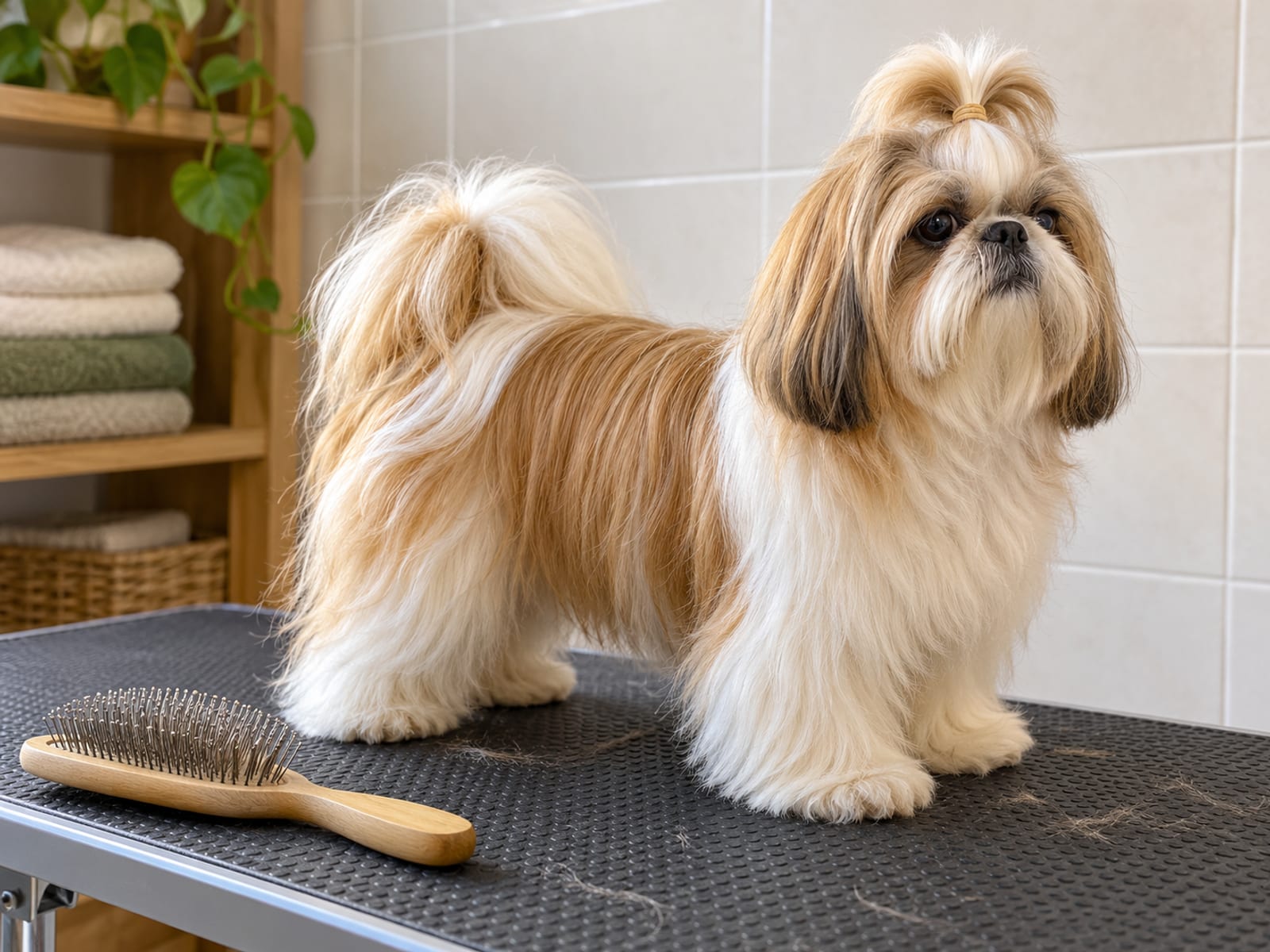
The Shih Tzu stands about 9 to 10.5 inches tall and weighs 9 to 16 pounds, with a life expectancy of 10 to 18 years. The long, flowing coat sheds little where you can see it but tangles fast. Kept long, it needs daily brushing and a professional visit about every 4 to 8 weeks.
The practical point is the short face. Airway, eye, and heat concerns matter more than the dog's size suggests, so plan gentle exercise, shade, and eye care.
Shih Tzus are generally affectionate, outgoing, and playful, though training can go at their own pace. Exercise needs are low to moderate and barking is usually moderate. They suit apartments and gentle households, and they do best with company through the day. Someone looking for a running or hiking partner will want a different breed.
3. Maltese
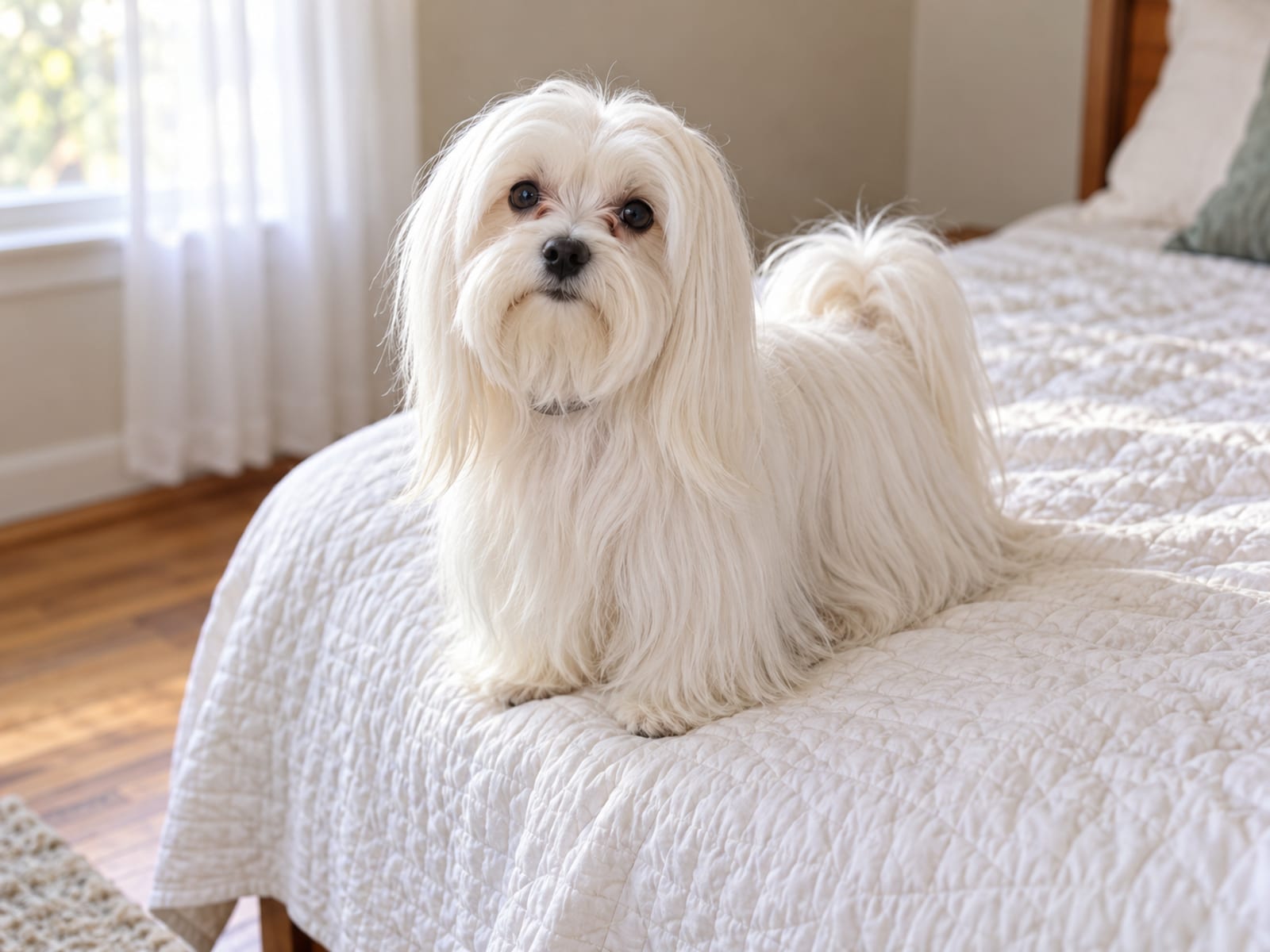
The Maltese is a toy dog at up to 7 pounds and about 7 to 9 inches tall, with a life expectancy of about 12 to 15 years. The long, silky single coat sheds very little but mats easily. Daily brushing and a professional trim about every 4 to 8 weeks keep it comfortable.
The white coat makes tear staining and visible dirt part of the weekly routine, so wiping the face and checking the coat after outings becomes a habit.
Maltese are lively, gentle, and affectionate, with modest exercise needs met by play and short walks. House-training can take patience. They fit apartments and calm homes with gentle pets, and they are strongly people-oriented, so long stretches alone are hard on them. Families who want a sturdy dog for rough handling will do better with a larger breed.
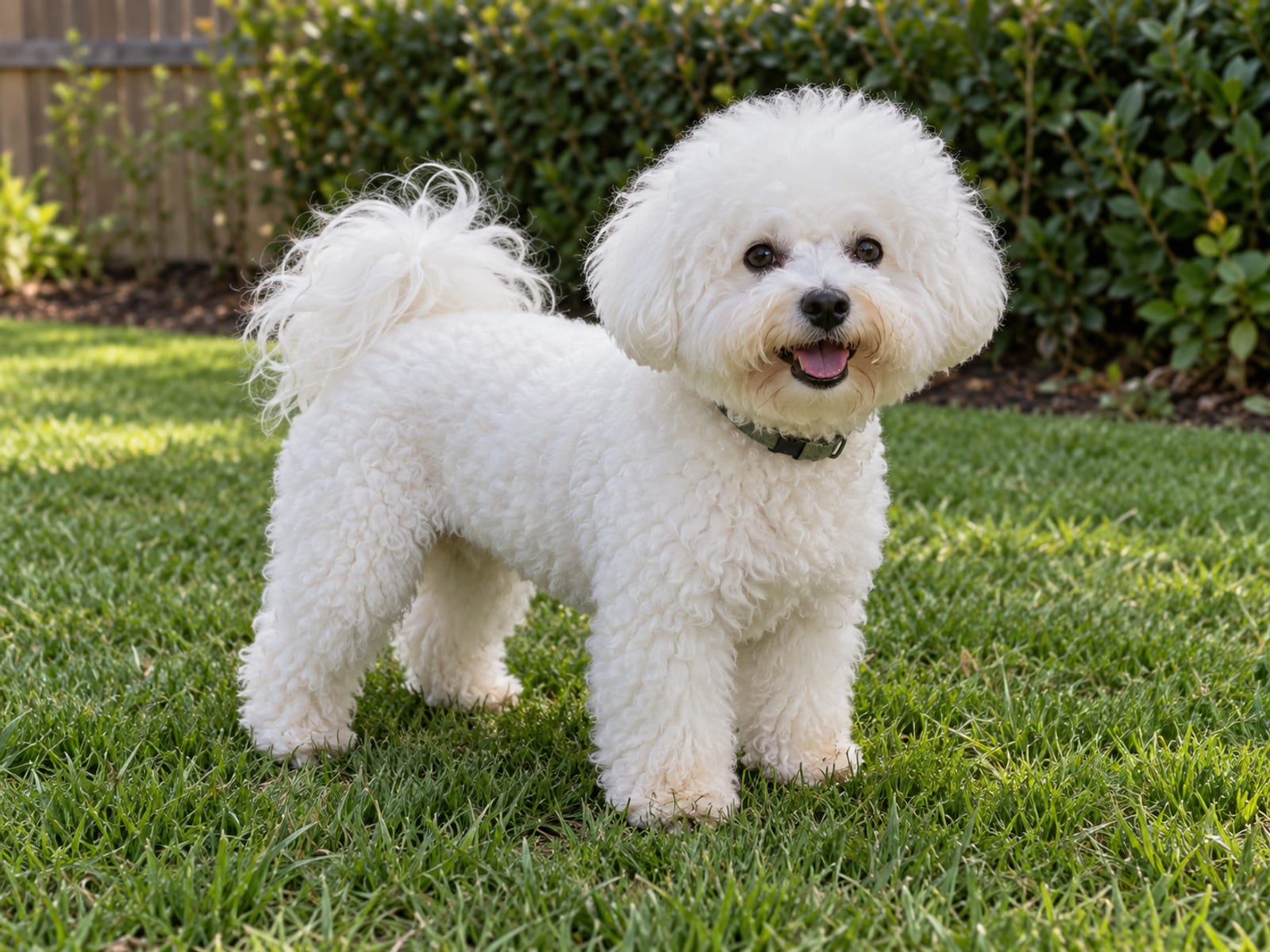
4. Bichon Frise
The Bichon Frise weighs 12 to 18 pounds and stands 9.5 to 11.5 inches tall, with a life expectancy of about 14 to 15 years. Its curly double coat sheds little, yet it can mat quickly. Plan on brushing several times a week or daily, plus professional bathing, drying, clipping, and shaping about every 4 to 6 weeks.
The curls hold loose hair inside the coat, so the dog looks low-shedding while the grooming work stays high.
Bichons are playful, cheerful, and trainable, with moderate exercise needs and moderate barking that can rise with boredom. They suit apartments, children, and other pets with supervision. Owners who want to skip a frequent grooming schedule will find the coat hard to keep up. A low-shedding coat can still bother people with allergies, since no dog breed is truly hypoallergenic, so spend time with the dog before you commit.
5. Havanese
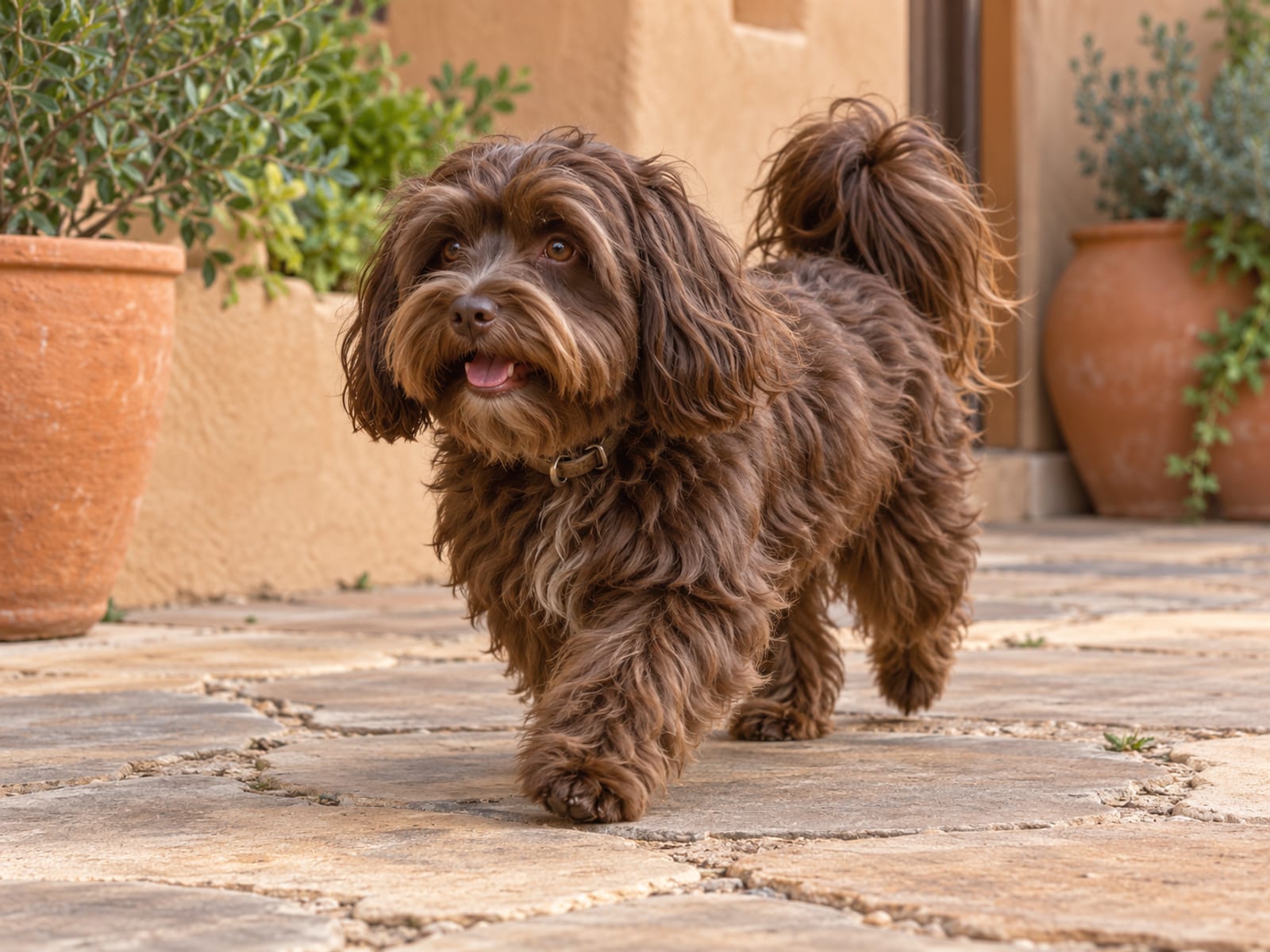
The Havanese weighs 7 to 13 pounds and stands 8.5 to 11.5 inches tall, with a life expectancy of about 14 to 16 years. The long, soft coat varies in texture and sheds lightly to moderately. Brush several times a week and book a groomer about every 6 to 8 weeks.
Its distinctive point is choice. The coat can be kept long, corded, or clipped, and each style comes with a different routine, so decide on the style first and plan the brushing around it.
Havanese are friendly, intelligent, and playful, with moderate exercise needs and moderate barking, though they will alert-bark at visitors. They are very people-oriented, which suits apartments, children, and other pets, and also means they cope poorly in a home that is empty most of the day.
6. Chow Chow
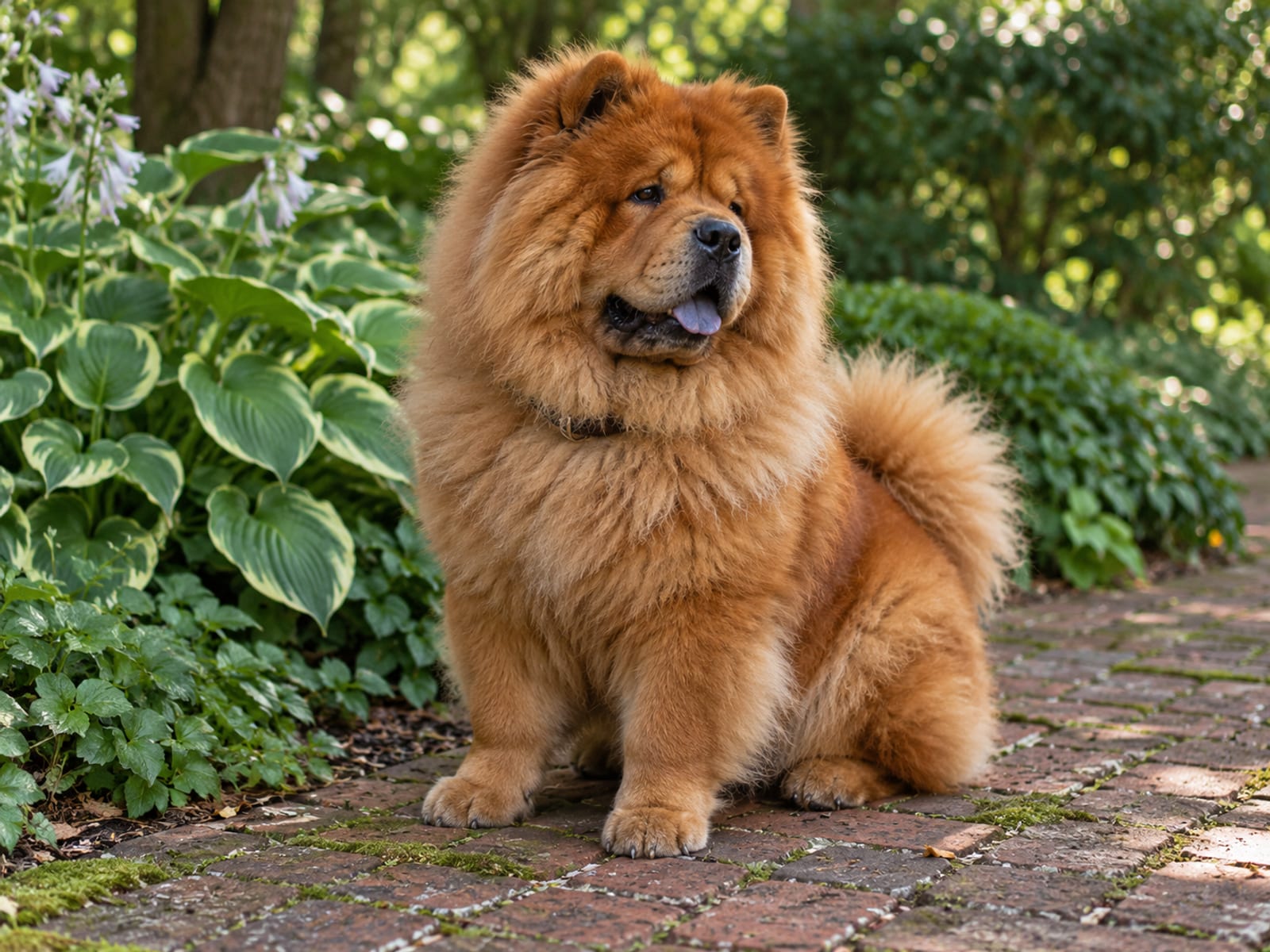
The Chow Chow is a sturdy, mane-framed dog of about 45 to 70 pounds and 17 to 20 inches tall, with a life expectancy of about 8 to 12 years. The dense double coat sheds heavily each season. Brush several times a week, more during the shed, and use a groomer for bathing and thorough drying.
Hot weather limits activity, so schedule walks for cool mornings and evenings. The practical point is temperament. The Chow Chow is dignified, independent, and reserved with strangers, and deliberate socialization matters more than its teddy-bear looks suggest.
Exercise needs are moderate and barking is usually moderate, though it can turn territorial. A Chow Chow can live in an apartment when it is exercised and managed well. It suits an experienced owner who values a calm, loyal dog, while a home with rough children or one that wants an openly social dog is a harder match.
7. Samoyed
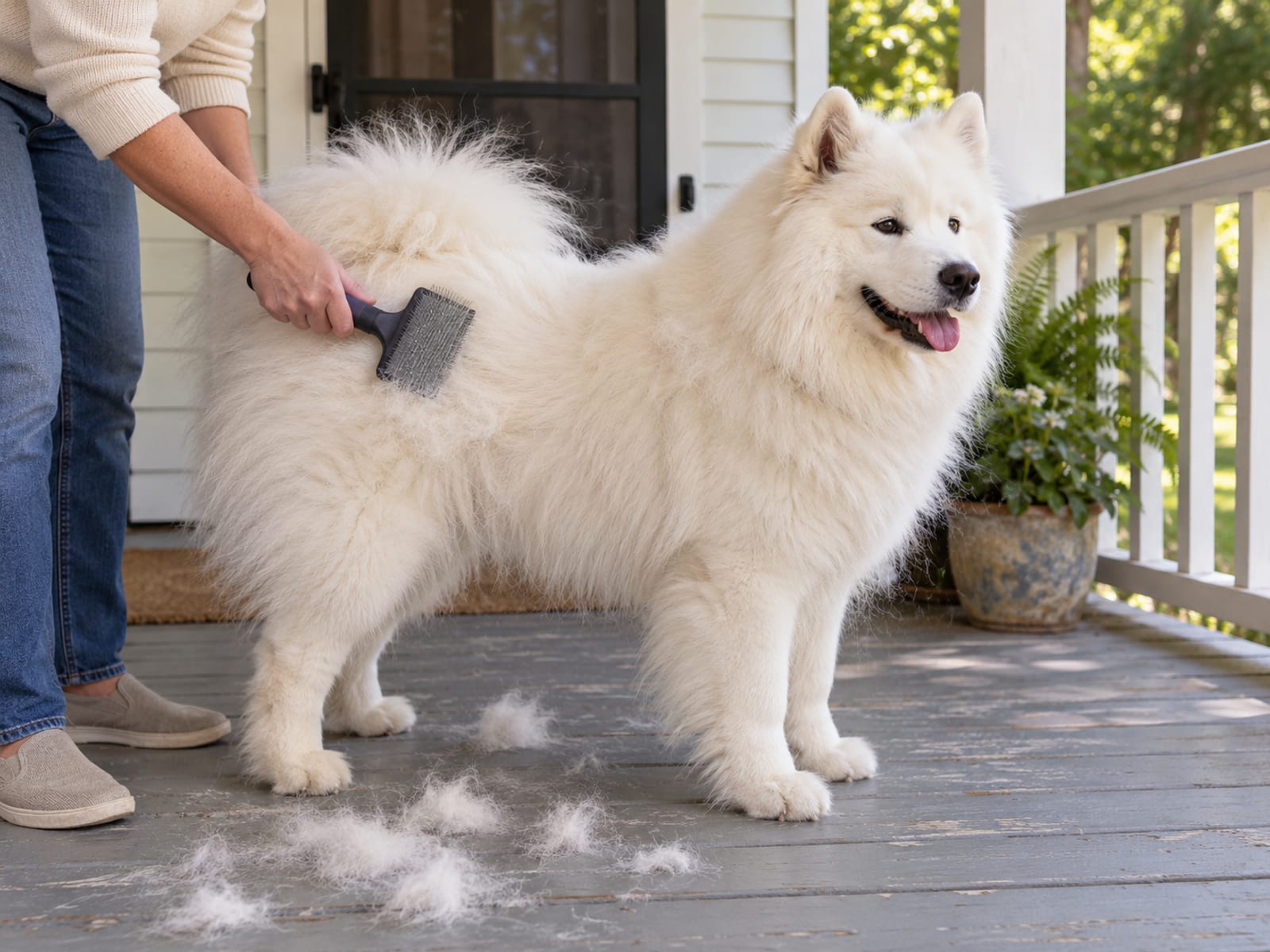
The Samoyed's profuse white double coat belongs to a mid-size dog: males stand 21 to 23.5 inches and weigh 45 to 65 pounds, females 19 to 21 inches and 35 to 50 pounds. Life expectancy is about 12 to 14 years. Shedding is heavy at the change of seasons. Brush several times a week and daily during the shed, and use a groomer for baths, drying, and deshedding.
The famous "Sammy smile" comes with big needs. Exercise is high, and the breed is energetic, social, and quick to vocalize, so apartment neighbors may hear about it. A Samoyed needs real daily activity and mental work.
Samoyeds are friendly and intelligent and prefer company over long hours alone. They suit active households in cooler climates, or warm-climate owners willing to manage heat carefully, and people who accept constant white fur on their clothes.
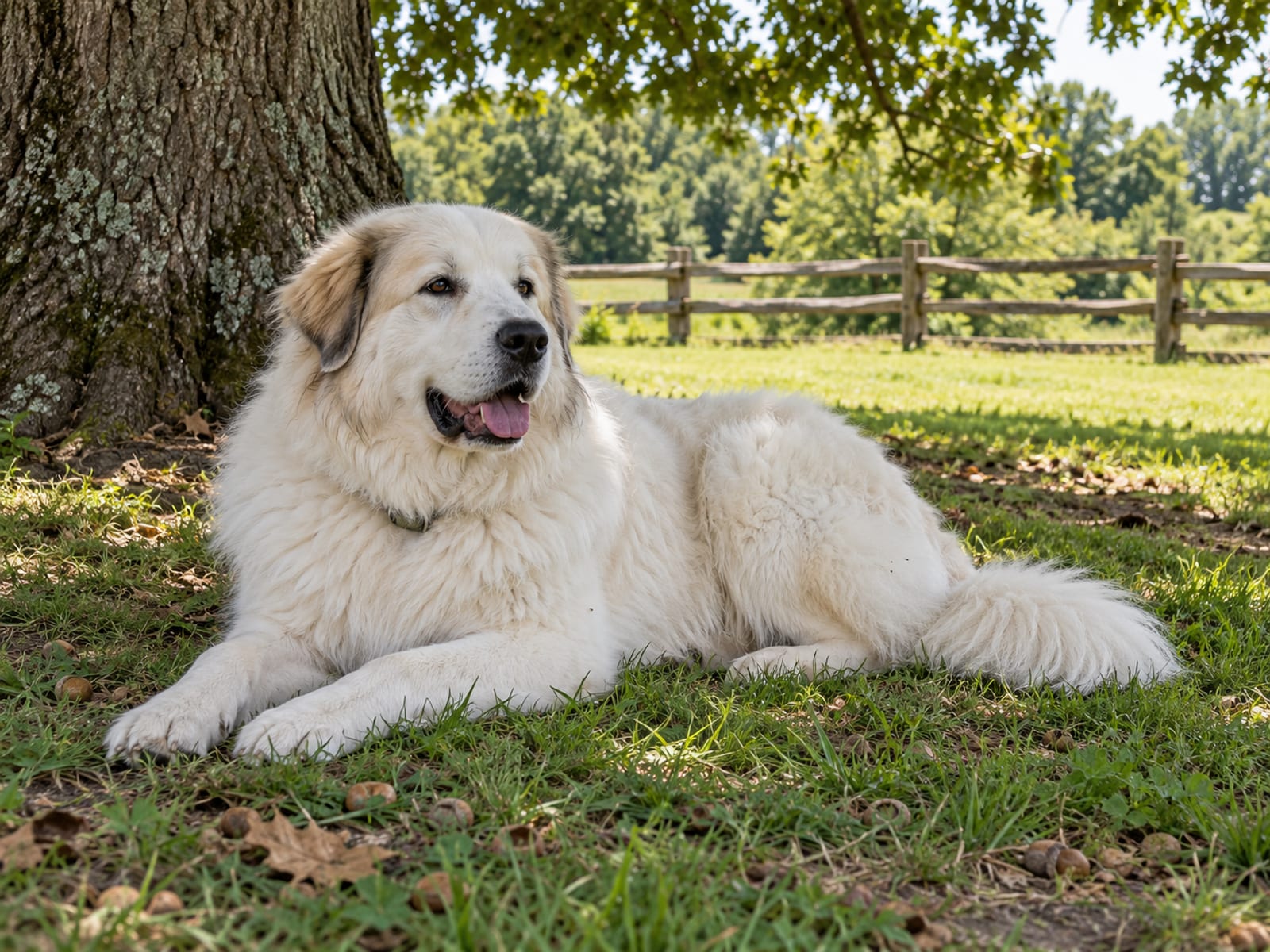
8. Great Pyrenees
The Great Pyrenees is a livestock guardian of impressive size: males stand 27 to 32 inches and weigh about 100 pounds or more, females 25 to 29 inches and about 85 pounds or more. Life expectancy is about 10 to 12 years. The long, weather-resistant double coat sheds seasonally. Brush at least weekly, more during the shed, and use a groomer for baths and drying.
The practical points are guardian behavior and space. The breed is calm and patient indoors, yet it is protective and barks often, particularly at night, and it needs secure fencing and purposeful activity.
Great Pyrenees are independent and may tolerate some time alone, though they still need supervision and safe containment. They fit a home with a large, well-fenced yard, a cooler climate or careful heat management, and an owner who welcomes a watchful, quiet-natured giant. Small apartments and homes that expect close obedience are a poorer fit.
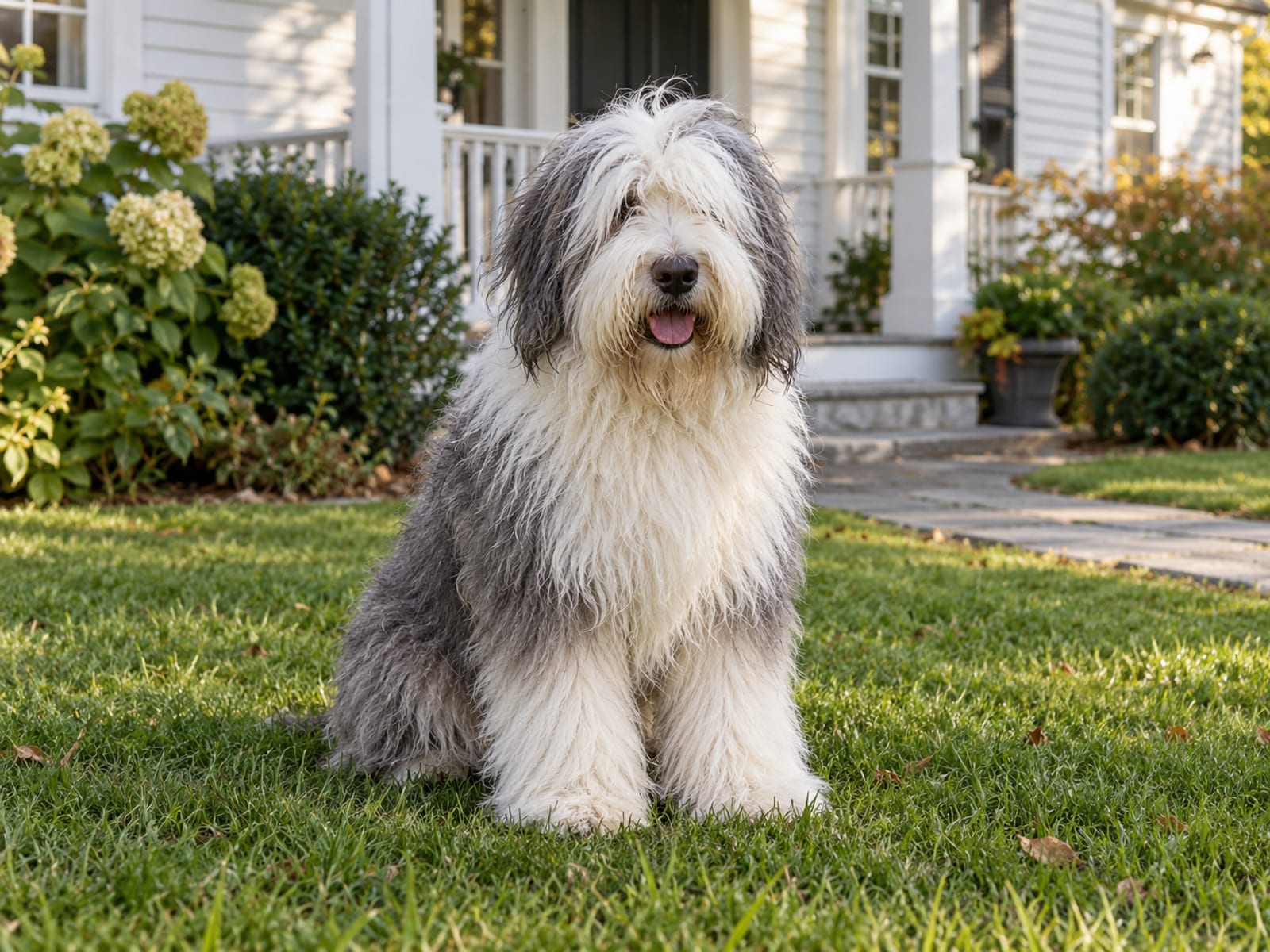
9. Old English Sheepdog
The Old English Sheepdog stands at least 22 inches (males) or 21 inches (females) and typically weighs about 60 to 100 pounds, with a life expectancy of about 10 to 12 years. The profuse, shaggy double coat sheds and mats readily, and the AKC describes thorough grooming down to the skin at least weekly.
That is the practical point: brushing has to reach the skin through the entire coat, since tidying only the outer silhouette leaves tangles underneath.
The breed is adaptable, intelligent, and gentle, though it can be boisterous, and its exercise needs run from moderate to high, with walks, play, and training. A larger apartment can work with plenty of exercise and grooming, but a home with space is easier. It suits families willing to brush weekly and handle a big, strong dog, and it prefers company to long isolation.
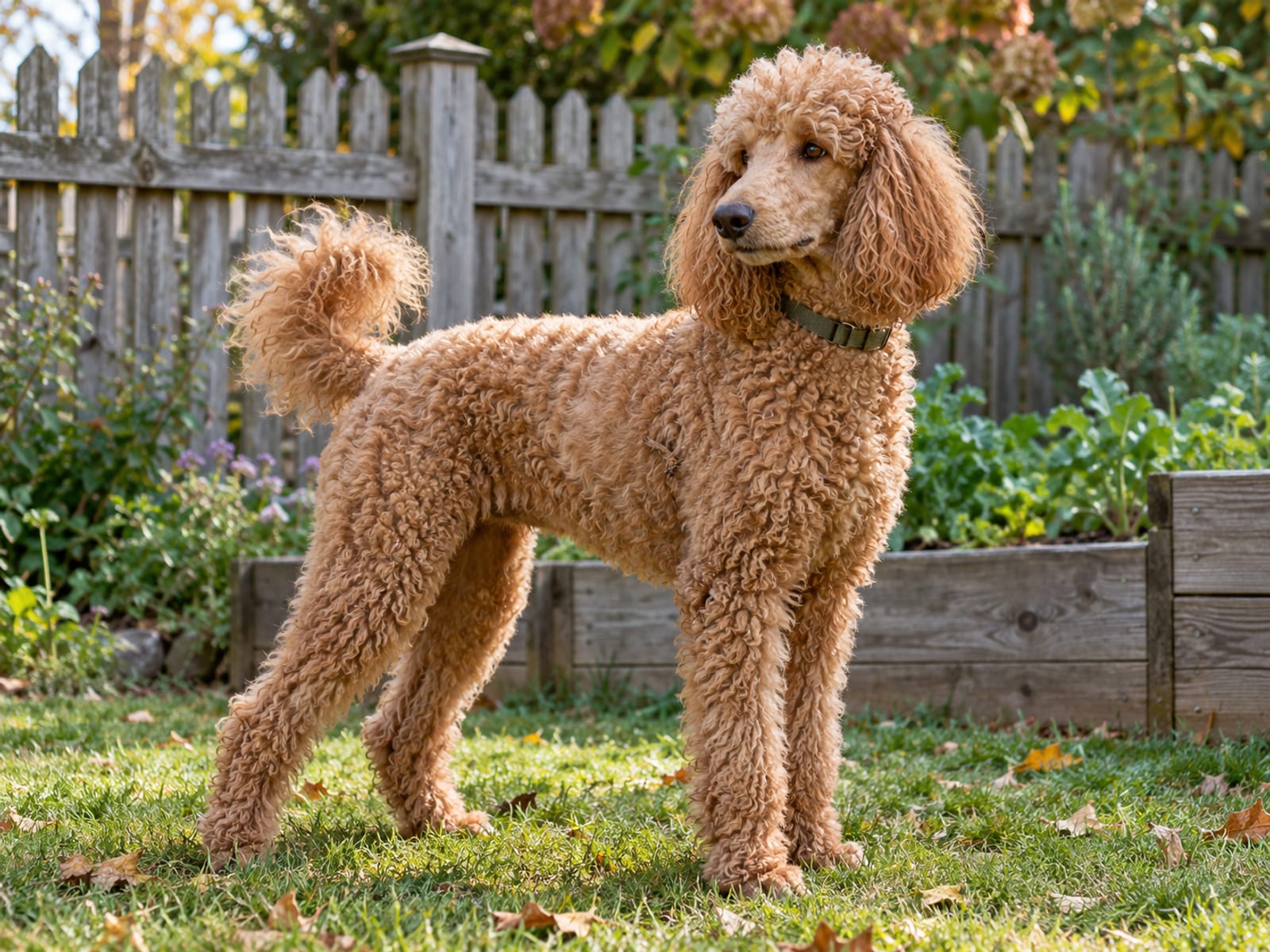
10. Standard Poodle
The Standard Poodle stands over 15 inches and commonly weighs 40 to 70 pounds, with males generally larger and a life expectancy of 10 to 18 years. The dense, curly single coat sheds little but grows continually, so it mats easily. Daily or near-daily brushing and professional clipping about every 4 to 8 weeks are typical.
Low visible shedding shifts the work from vacuuming to detangling and clipping, which is the practical point for anyone choosing it as a cleaner-looking alternative.
Poodles are highly intelligent, active, and people-oriented, and they can be sensitive and alert. Exercise needs are high and include training that keeps the mind busy, and barking can increase when they are under-stimulated. They suit active owners who enjoy training and accept a regular grooming budget. A Standard Poodle can live in an apartment with substantial daily exercise. A household wanting a low-effort coat or a low-energy dog will find another breed easier.
Comparison of the ten breeds
The table puts the numbers side by side so you can see how size, coat work, and exercise trade off.
Tap or hover a row to highlight it.
| Breed | Adult weight | Lifespan | Coat and shedding | Exercise |
|---|---|---|---|---|
| BreedPomeranian | Adult weight3 to 7 lb | Lifespan14 to 16 years | Coat and sheddingDouble coat, seasonal shedding | ExerciseModerate |
| BreedShih Tzu | Adult weight9 to 16 lb | Lifespan10 to 18 years | Coat and sheddingLong coat, low visible shedding, mats | ExerciseLow to moderate |
| BreedMaltese | Adult weightUp to 7 lb | Lifespan12 to 15 years | Coat and sheddingSilky single coat, low shedding, mats | ExerciseModest |
| BreedBichon Frise | Adult weight12 to 18 lb | Lifespan14 to 15 years | Coat and sheddingCurly coat, low shedding, mats | ExerciseModerate |
| BreedHavanese | Adult weight7 to 13 lb | Lifespan14 to 16 years | Coat and sheddingLong, soft coat, low to moderate shedding | ExerciseModerate |
| BreedChow Chow | Adult weight45 to 70 lb | Lifespan8 to 12 years | Coat and sheddingDense double coat, heavy seasonal shedding | ExerciseModerate |
| BreedSamoyed | Adult weight35 to 65 lb | Lifespan12 to 14 years | Coat and sheddingProfuse double coat, heavy shedding | ExerciseHigh |
| BreedGreat Pyrenees | Adult weight85 to 100+ lb | Lifespan10 to 12 years | Coat and sheddingLong double coat, seasonal shedding | ExerciseModerate |
| BreedOld English Sheepdog | Adult weight60 to 100 lb | Lifespan10 to 12 years | Coat and sheddingShaggy double coat, regular shedding, mats | ExerciseModerate to high |
| BreedStandard Poodle | Adult weight40 to 70 lb | Lifespan10 to 18 years | Coat and sheddingCurly single coat, low shedding, mats | ExerciseHigh |
For more ways to narrow a choice, see our guides to small dog breeds, lower-shedding breeds, and apartment dog breeds, or browse every profile in the dog breeds section.
Questions About Fluffy Dog Breeds
These are the questions people ask most when they start looking at fluffy dogs.
What are the top 10 fluffy dog breeds?
The ten fluffy breeds covered here are Pomeranian, Shih Tzu, Maltese, Bichon Frise, Havanese, Chow Chow, Samoyed, Great Pyrenees, Old English Sheepdog, and Standard Poodle. They span small, medium, and large dogs with double, long, and curly coats. Your own tolerance for shedding, brushing, barking, and grooming bills picks the winner.
What is the best fluffy dog?
The best fluffy dog is the one whose coat work and energy match your household. A Bichon Frise or Havanese suits someone who wants a small, social companion, a Shih Tzu suits a lower-exercise home, and a Standard Poodle suits an active owner who accepts regular clipping. A Great Pyrenees suits an experienced household with space, a fence, and tolerance for barking.
What are some small fluffy dog breeds?
Pomeranian, Shih Tzu, Maltese, Bichon Frise, and Havanese are small and fluffy. Pomeranians shed the most, Maltese and Shih Tzus need frequent detangling and trims, and Bichons and Havanese call for regular professional coat care. Our guide to small dog breeds covers more options.
What are some big fluffy dog breeds?
Samoyed, Great Pyrenees, Old English Sheepdog, Chow Chow, and Standard Poodle are the large or substantial fluffy breeds here. They differ in guardian barking, exercise needs, coat type, and heat management, and in whether the coat sheds or keeps growing and needs clipping.
Which fluffy dog breeds have curly coats?
Bichon Frise and Standard Poodle have distinctly curly coats, and some Havanese have waves or a little curl. Curly coats shed less visibly but trap loose hair, so expect near-daily brushing and regular professional grooming.
Which dog breeds have a fluffy coat?
Pomeranians, Chow Chows, Samoyeds, Great Pyrenees, Old English Sheepdogs, Bichon Frise, Shih Tzus, Maltese, Havanese, and Poodles are commonly described as fluffy. Their coats work differently: some shed heavily, while others need frequent brushing and clipping because loose hair stays in the coat.
Which breeds look like stuffed toys or teddy bears?
Pomeranians, Chow Chows, Bichon Frise, Shih Tzus, Samoyeds, and clipped Poodles are often described that way. "Teddy bear" is a grooming cut rather than a breed, and the same dog can look very different with a longer or shorter trim. Ask a groomer which cut suits the coat and the season.
Which fluffy breeds are the most affectionate?
Havanese, Bichon Frise, Shih Tzus, Maltese, and many Pomeranians are commonly described as affectionate companion breeds. Each dog is an individual, and affectionate breeds usually want company through the day, gentle handling, and supervised time with children. Our list of companion dog breeds goes deeper.
Which small dog breeds are fluffy?
Small fluffy breeds include the Pomeranian, Shih Tzu, Maltese, Bichon Frise, and Havanese. Pomeranians have a dense, shedding double coat, Maltese and Shih Tzus have long coats that mat without regular brushing, the Bichon Frise has a curly coat, and Havanese coats range from wavy to softly textured.
Where to go from here
If you would rather have less hair on the sofa, our lower-shedding dog breeds list is a good next read. Woof Wag Nation has more breed guides in the dog breeds library, and the free Woof Wag Nation newsletter sends one practical dog guide each week,.
Sources
- American Kennel Club, Double-Coated Dog Breeds: Care, Grooming, and Shedding
- American Kennel Club, How Should You Groom a Double-Coated Dog?
- American Kennel Club, Summer Dog Grooming Tips
- American Kennel Club Groomer Hub
- American Kennel Club, List of Breeds by Group
- American Kennel Club breed pages: Shih Tzu and Havanese
- American Kennel Club, Breed Weight Chart
- American Kennel Club, Breed Temperament Guide
- American Kennel Club, Pomeranian
- American Kennel Club, Maltese
- American Kennel Club, Bichon Frise
- American Kennel Club, Chow Chow
- American Kennel Club, Samoyed
- American Kennel Club, Great Pyrenees
- American Kennel Club, Old English Sheepdog
- American Kennel Club, Poodle
- United Kennel Club, Breed Standards
- Petco, Dog Grooming
- Kiplinger, How to Cut the Cost of Pet Care
- Merck Veterinary Manual, Recognition and Assessment of Pain in Animals
- American Academy of Allergy, Asthma and Immunology, Pet Allergy