

Breed list
10 Dog Breeds Built for Cold Climates, and What Winter Asks of You
Ten cold-weather dog breeds, from Huskies to Keeshonds, with size, coat, shedding and summer care, plus how to keep any dog safe outside in winter.
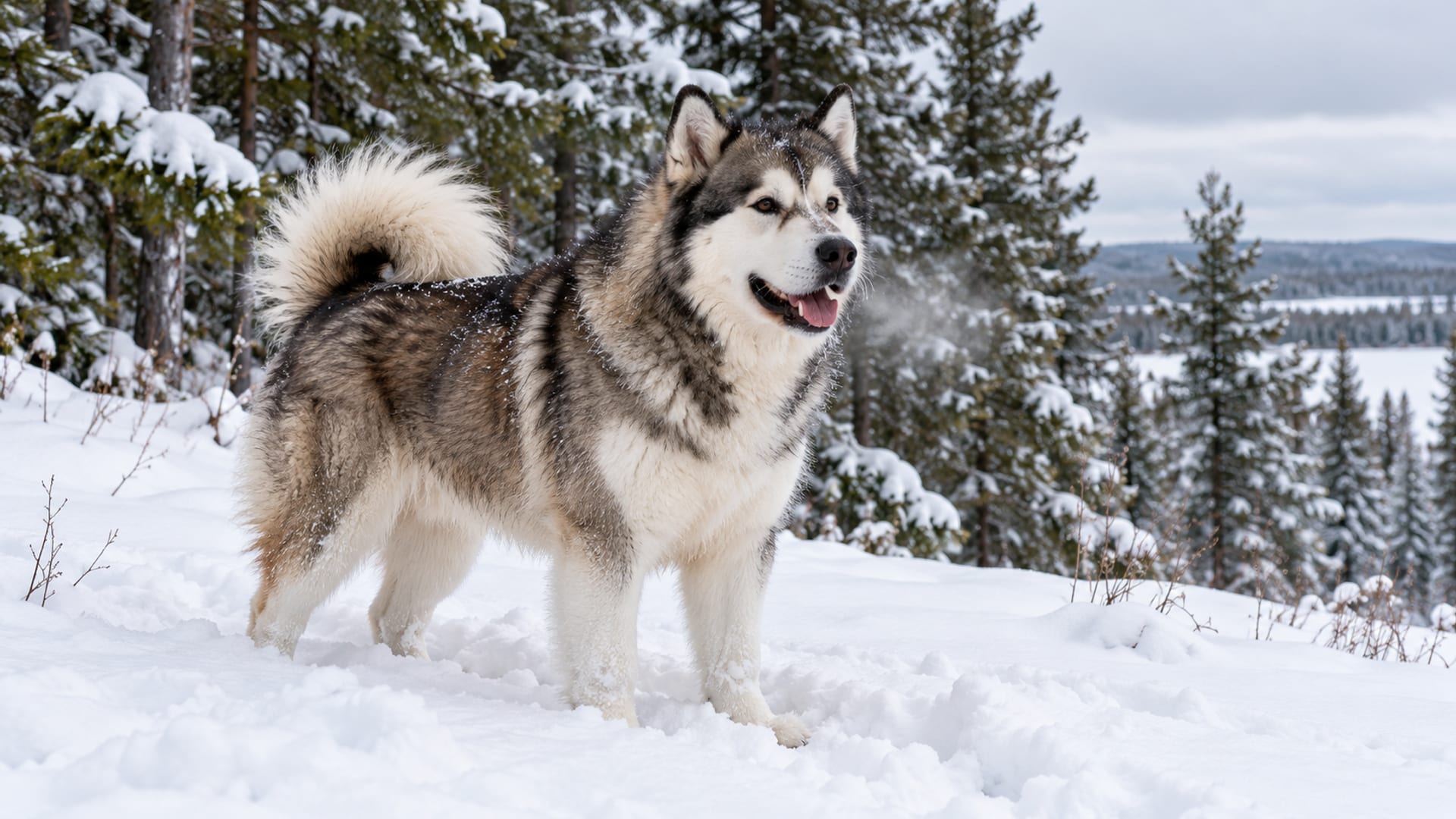
Dogs best suited to cold weather usually have dense double coats, sturdy bodies and a history of sledding, guarding, hauling or working in snow. Siberian Huskies, Alaskan Malamutes, Samoyeds, Newfoundlands and mountain breeds are examples. How long any dog can safely stay outdoors still depends on wind, wetness, age, health, body condition and exposure time all matter.
Key takeaways
Tap a card to bring it forward.
- Cold-adapted breeds share dense double coats, sturdy bodies and a working history in snow or mountains, but those traits do not make a dog safe in every condition (AKC).
- There is no universal safe temperature; coat, size, age, health, wind, wetness and time outside all change the risk (Merck Veterinary Manual).
- Expect heavy seasonal shedding, often twice a year, and weekly brushing as a baseline (AKC).
- Cold-hardy dogs can overheat; never shave a double coat, and plan shade, water and shorter summer outings (AKC, AVMA).
- Huskies are often rehomed because their exercise, escape and companionship needs outrun what the household expected.
Which breeds count as built for cold climates?
Cold-adapted breeds have a documented history or breed standard describing work in Arctic, subarctic, snowy or mountainous conditions, along with a thick insulating coat or other cold-adapted build. The ten here cover a mix of household types: high-endurance sled dogs, large mountain guardians, family-oriented working dogs, medium spitz breeds and one smaller companion breed.
Cold-tolerant dogs commonly combine a dense double coat, which is an insulating undercoat under a water-resistant outer coat, with a substantial body, small thickly furred ears, furry paws and a bushy tail that can cover the face during rest. These are traits that improve tolerance, so watch your own dog's comfort in the cold.
Browse our full dog breeds hub if you want to compare other types.
1. Siberian Husky
The Siberian Husky is a medium working dog. Males stand 21 to 23.5 inches and weigh 45 to 60 pounds; females stand 20 to 22 inches and weigh 35 to 50 pounds, with a lifespan of 12 to 14 years. The medium-length double coat sheds heavily by season, and the AKC points to weekly brushing, more during coat blow, with few baths needed.
The practical point is the running instinct. A Husky has exceptional running and pulling ability alongside a strong urge to escape, so secure fencing and a leash or harness are daily necessities. Huskies are friendly, intelligent and sometimes mischievous, often vocal (including howling), and they take consistent training. Prey drive can be a risk around cats and small animals.
A Husky suits an active person who wants a running or hiking partner and can offer real daily work. It is a poor fit for a sedentary home, unreliable fencing, a quiet household, anyone counting on dependable off-leash recall, or a dog left alone all day. Parent-club materials recommend hip, eye, SPS1 and SHPN1 testing.
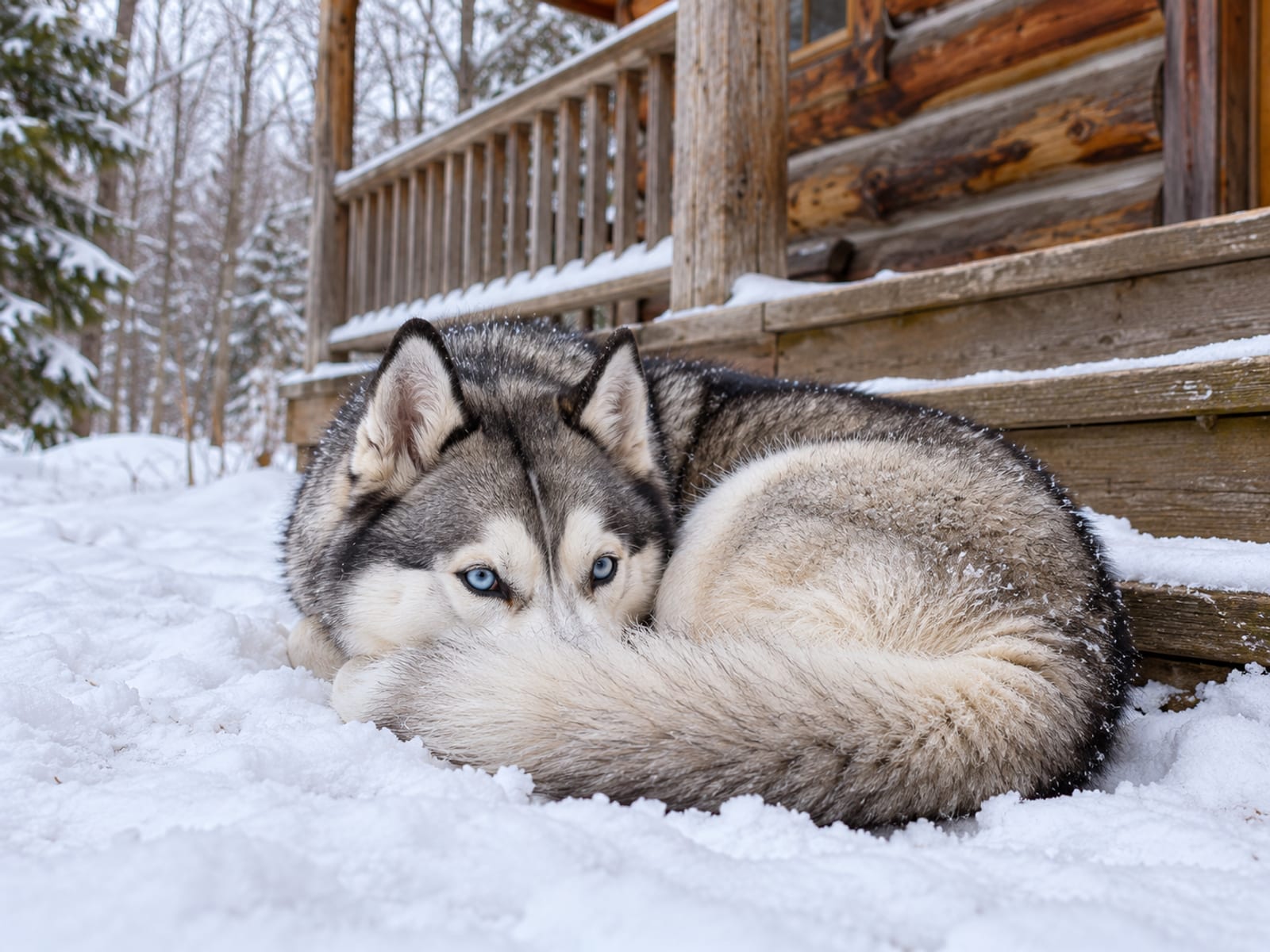
2. Alaskan Malamute
The Alaskan Malamute is bigger and heavier than the Husky. The AKC describes males commonly around 25 inches and 85 pounds and females around 23 inches and 75 pounds, with individuals running larger, and a lifespan of about 10 to 14 years. The thick, coarse double coat sheds heavily by season, so plan on frequent brushing during blowouts plus regular nail, dental and coat care.
This breed was built for heavy freight rather than the Siberian Husky's lighter, faster endurance work, so hiking, backpacking, weight pulling, sledding and skijoring are natural outlets. Malamutes are affectionate and loyal but also independent, powerful and often dog-selective. Same-sex conflict and prey drive can occur.
A Malamute suits an experienced, physically capable owner with secure containment and room to move. It is a poor fit for someone who cannot manage a strong dog, for long daily isolation, or for small spaces. Apartments are generally difficult because of size, strength, shedding and exercise needs. Health concerns include hip dysplasia, inherited polyneuropathy, cataracts, chondrodysplasia and bloat.
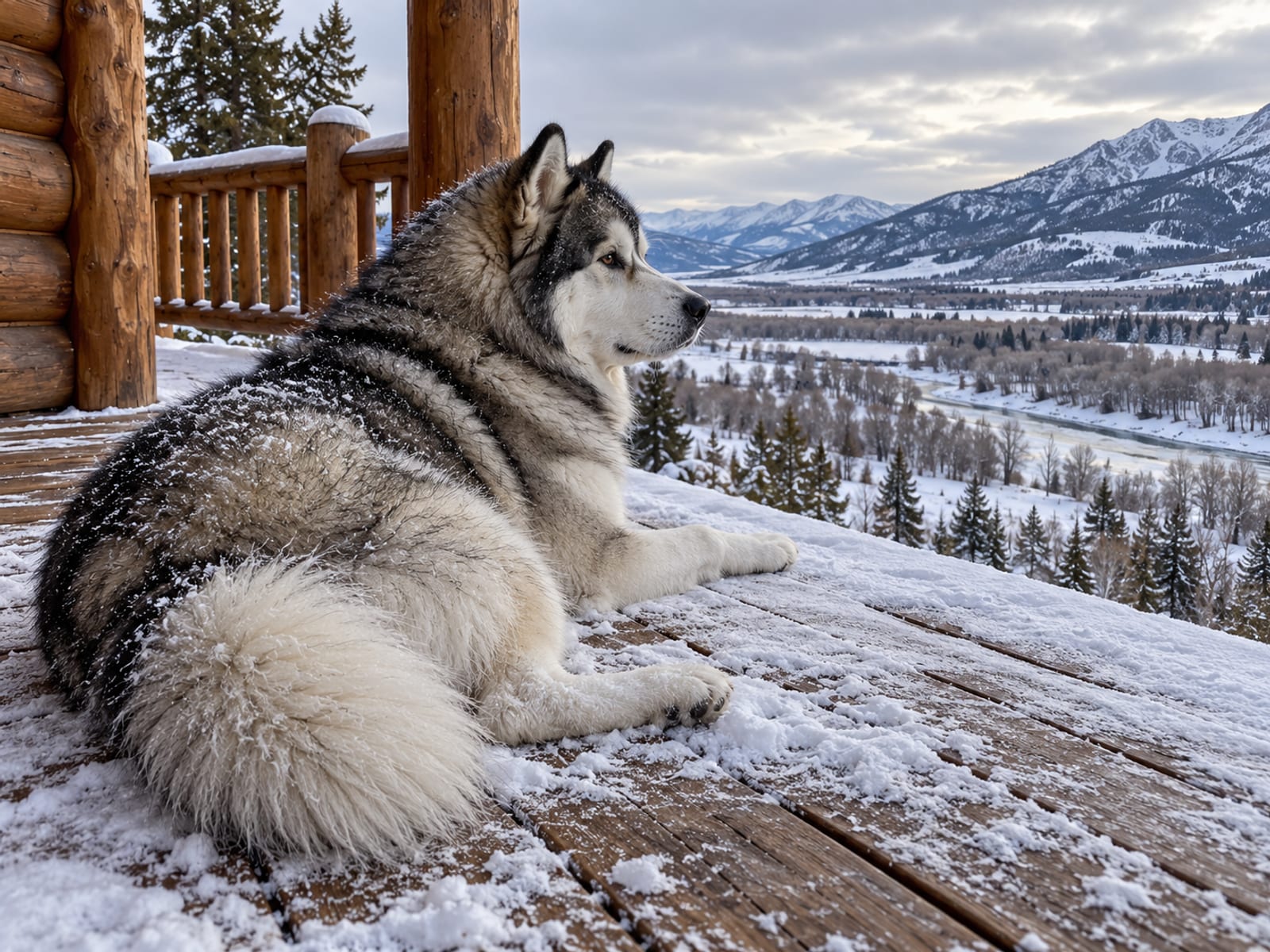
3. Samoyed
The Samoyed is a medium spitz with a profuse white double coat. Males stand 21 to 23.5 inches and weigh 45 to 65 pounds; females stand 19 to 21 inches and weigh 35 to 50 pounds, with a lifespan of 12 to 14 years. The coat sheds heavily by season, and mats develop if brushing falls behind.
What stands out is how much visible work the coat takes. Compared with most breeds on this list, the white coat asks for more grooming and more cleaning. Samoyeds are friendly, social, alert and adaptable, but they can be independent and vocal, and they may bark when bored or isolated. Moderate to high daily exercise, training and interactive play fit them well.
A Samoyed suits a sociable household that likes to brush and to have a dog underfoot. It is a poor fit for people unwilling to brush heavily, tolerate barking or provide companionship. An apartment is possible with strong exercise and vocal management. Health concerns include hip dysplasia, eye disease, diabetes, subvalvular aortic stenosis and hereditary kidney disease.
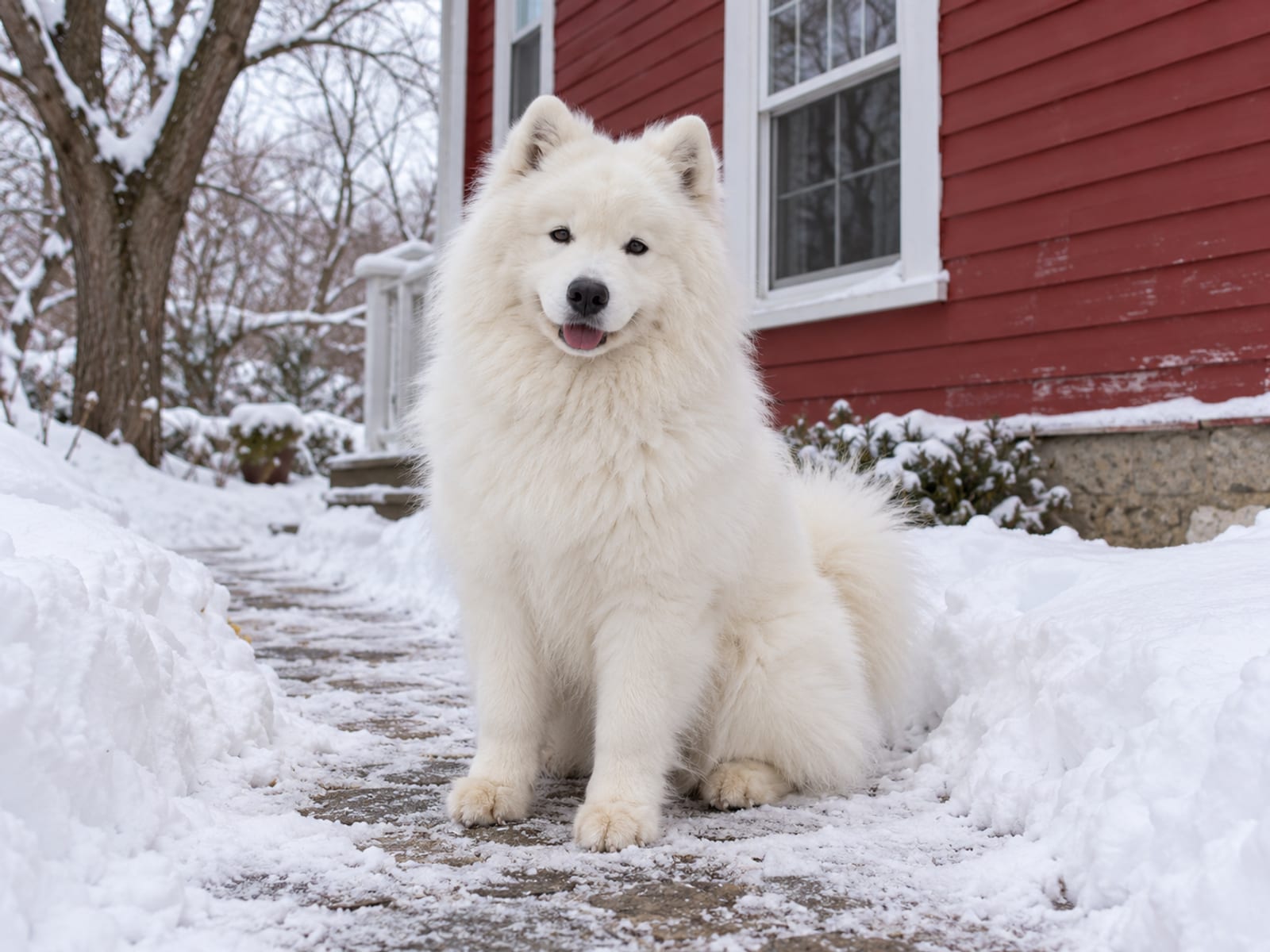
4. Newfoundland
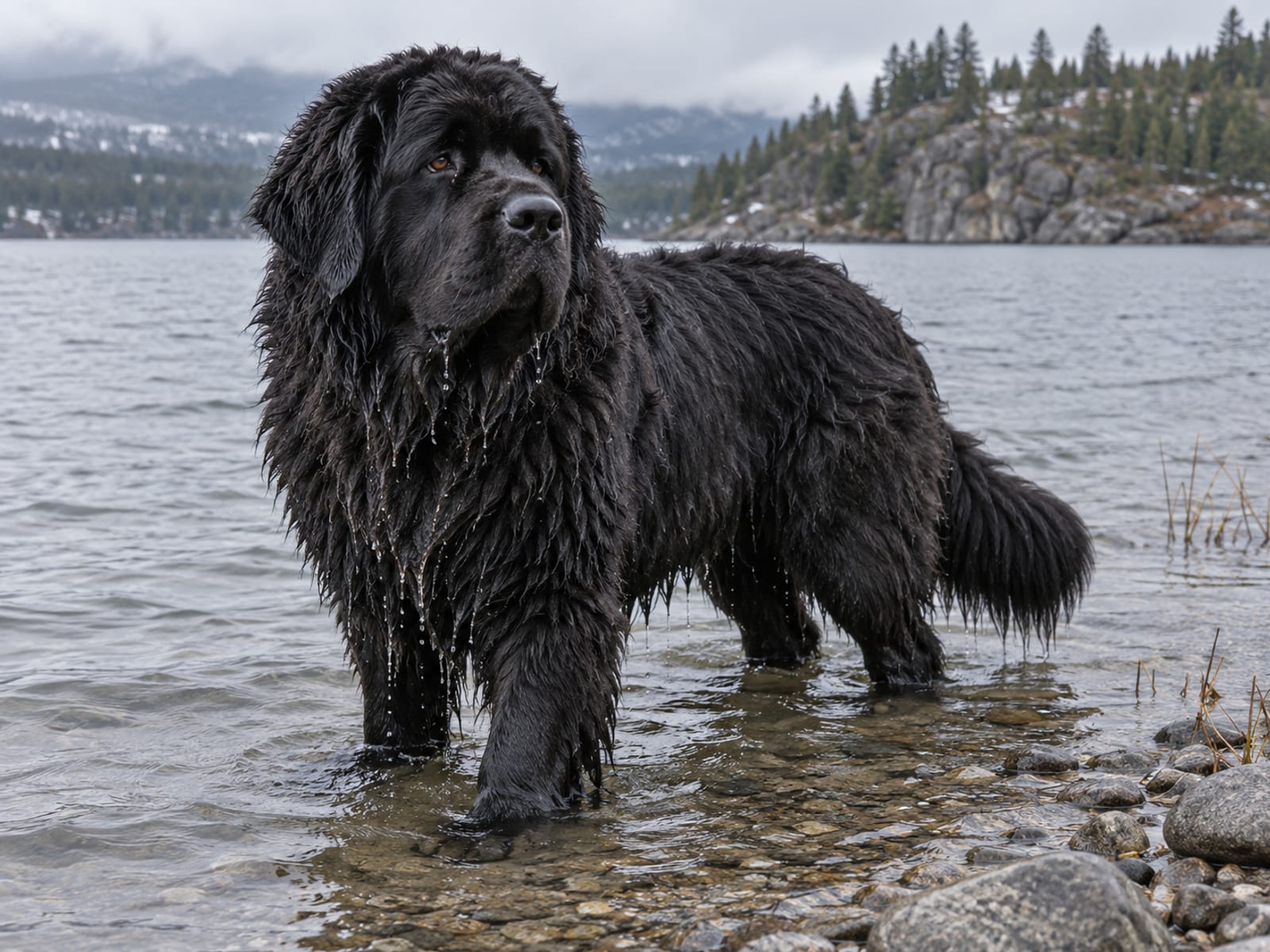
The Newfoundland is a giant water-and-cold dog. Males can reach 28 inches and 150 pounds, and females commonly weigh 100 to 120 pounds; AKC breed information gives a lifespan of commonly 9 to 10 years. The large, water-resistant double coat sheds heavily. Regular brushing, drool and a wet coat after water time are part of daily life.
Water is central here, not just snow. Swimming and water work are major enrichment, alongside daily walks that avoid heat and hard impact while a young dog is growing. Newfoundlands are patient, sweet-tempered and watchful, and they are often good with children and family pets, though their size calls for supervision.
A Newfoundland suits a family with space, patience for drool and a budget for giant-breed care. It is a poor fit for hot climates without reliable cooling, small living spaces, or anyone unable to handle giant-breed costs. Health concerns include hip and elbow dysplasia, cystinuria, subaortic stenosis, heart disease, cancer and gastric dilatation-volvulus.
5. Bernese Mountain Dog
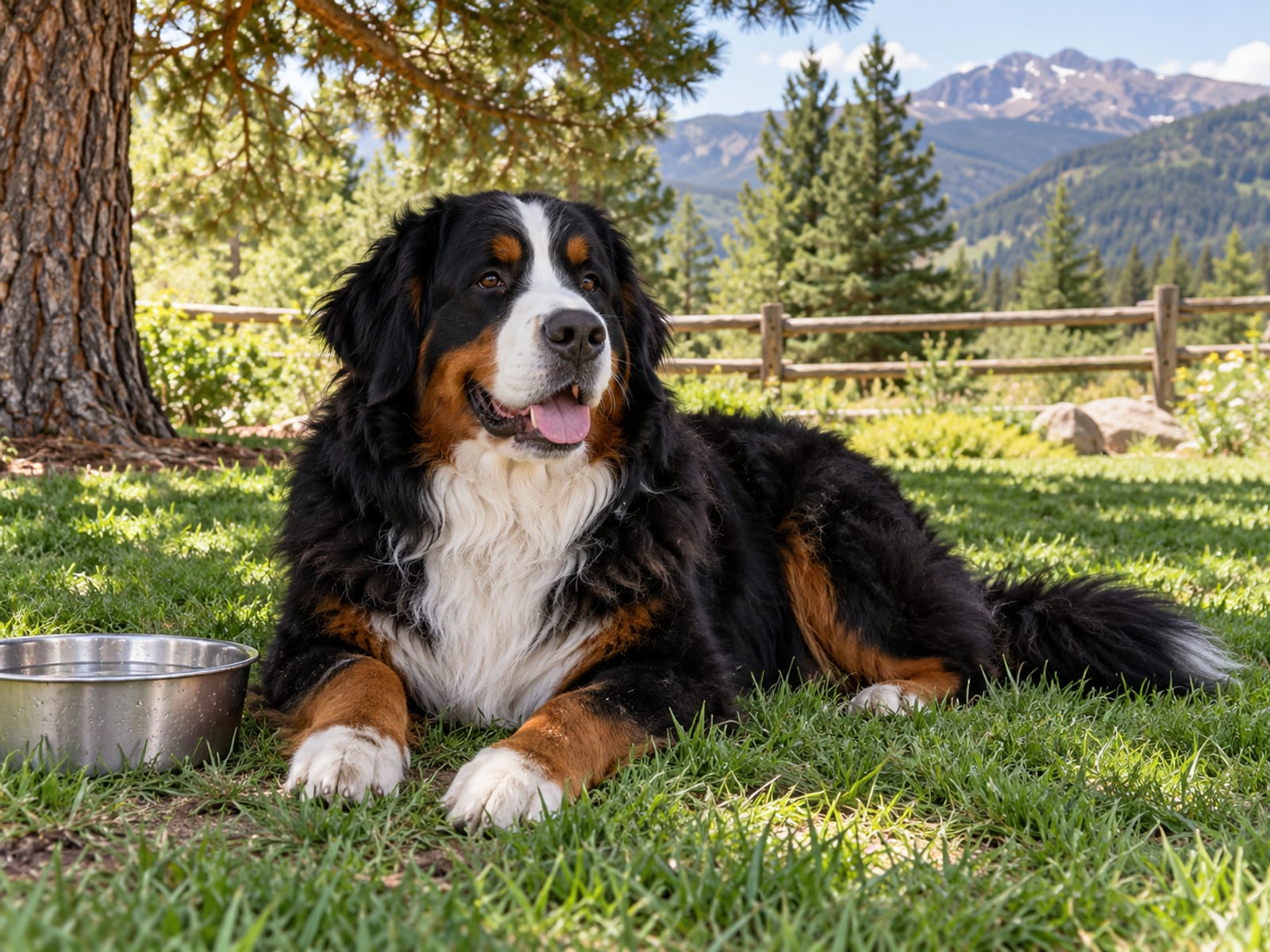
The Bernese is a large, gentle-mannered mountain dog. Males measure 25 to 27.5 inches and 80 to 115 pounds; females 23 to 26 inches and 70 to 95 pounds, with a lifespan of 7 to 10 years. The long, silky double coat sheds regularly, and weekly brushing rises during heavier shedding.
Lifespan is the practical point. It is notably shorter than that of most breeds on this list, so longevity belongs in your decision. Berners are generally affectionate, good-natured, calm and cooperative, and early socialization is important. Daily walks, hiking and training suit them, with care taken for joints and heat.
A Bernese suits a family that wants a moderately active, people-oriented dog and is ready for the grooming. It is a poor fit for a household that wants a long-lived breed, low grooming or hot-weather outdoor activity. A calm adult can manage an apartment with daily exercise, though size and shedding matter. Health concerns include cancer, hip and elbow dysplasia, gastric dilatation-volvulus and progressive retinal atrophy.
6. Great Pyrenees
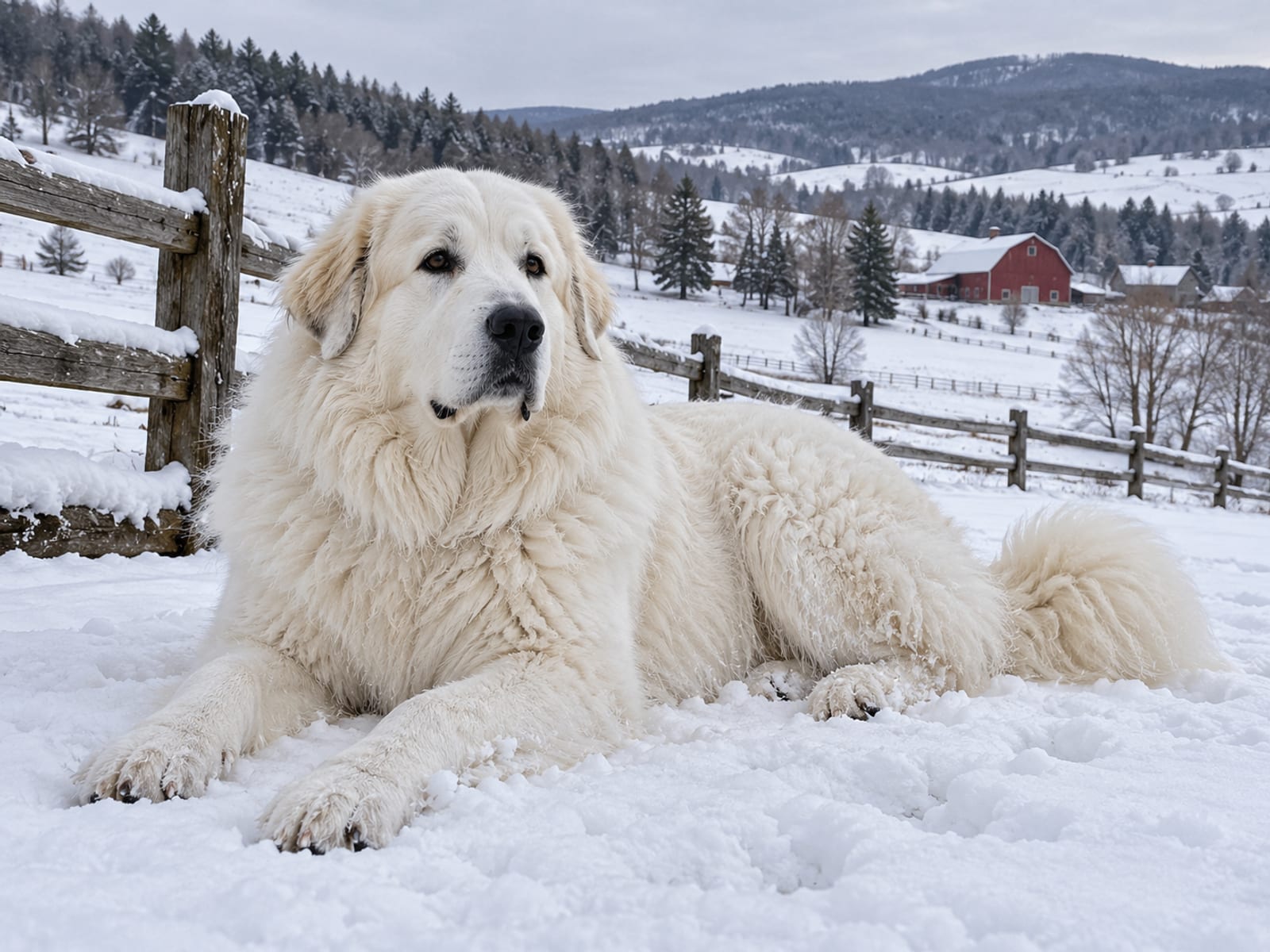
The Great Pyrenees is a livestock guardian. Males stand 27 to 32 inches and weigh 100 pounds or more; females 25 to 29 inches and 85 pounds or more, with a lifespan of 10 to 12 years. The long, thick, weather-resistant double coat sheds heavily by season. Brush it regularly, and do not shave it.
Guardian behavior shapes the routine. These dogs were bred to make decisions without constant direction, so independent perimeter patrolling and alert barking, especially at night, come with the breed. Exercise is moderate: patrols, walks and controlled activity instead of constant high-speed running. Calm and patient, they are often gentle with family and livestock, but size and guarding instincts call for supervision.
A Great Pyrenees suits rural or spacious homes with a fence and neighbors who tolerate barking. It is a poor fit for close neighbors, noise-sensitive households or owners wanting eager obedience. Apartments are usually a poor match. Health concerns include hip dysplasia, patellar luxation, osteosarcoma, bloat, heart disease and inherited neurologic conditions. Our guard dog breeds list covers similar breeds.
7. Saint Bernard
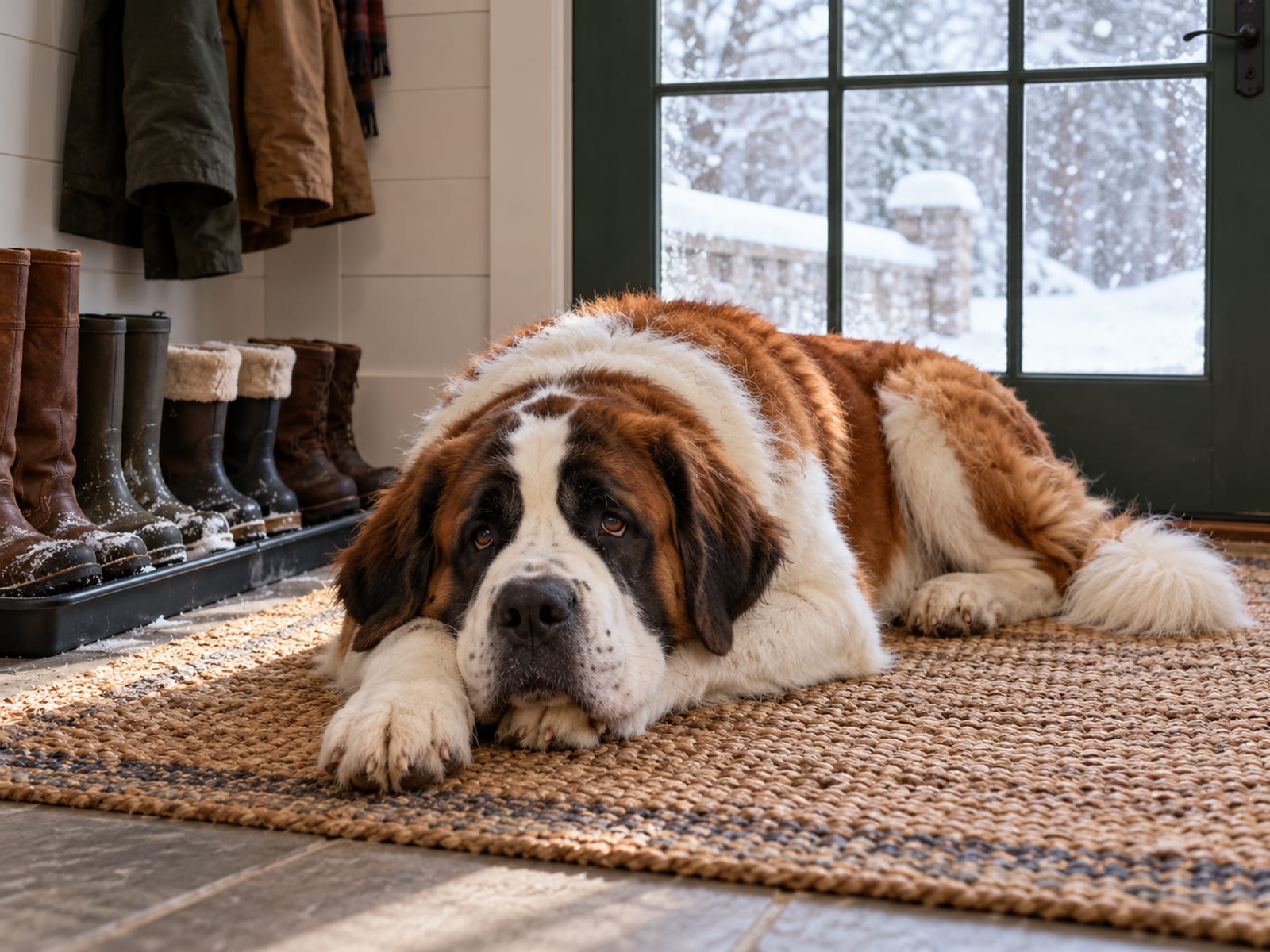
The Saint Bernard is a giant with Alpine roots. AKC breed information commonly gives males 28 to 30 inches and 140 to 180 pounds and females 26 to 28 inches and 120 to 140 pounds, with a lifespan of about 8 to 10 years. The smooth or long double coat sheds regularly to heavily. Plan on weekly brushing, more during shedding, plus drool management.
Giant size, drool and heat sensitivity shape the household more than the medium spitz breeds do. Saint Bernards are friendly, patient and watchful, but slow to mature, and they can knock a child over by accident. Exercise is moderate: daily walks and controlled activity. They need social contact and training, not long stretches alone.
A Saint Bernard suits a family with room, a cool home and a budget for giant-breed veterinary care. It is a poor fit for hot climates, small homes or owners who cannot manage a giant dog. Apartments are difficult because of size, drool and heat. Health concerns include hip and elbow dysplasia, gastric dilatation-volvulus, cardiomyopathy, eye disorders and bone cancer, according to AKC breed information.
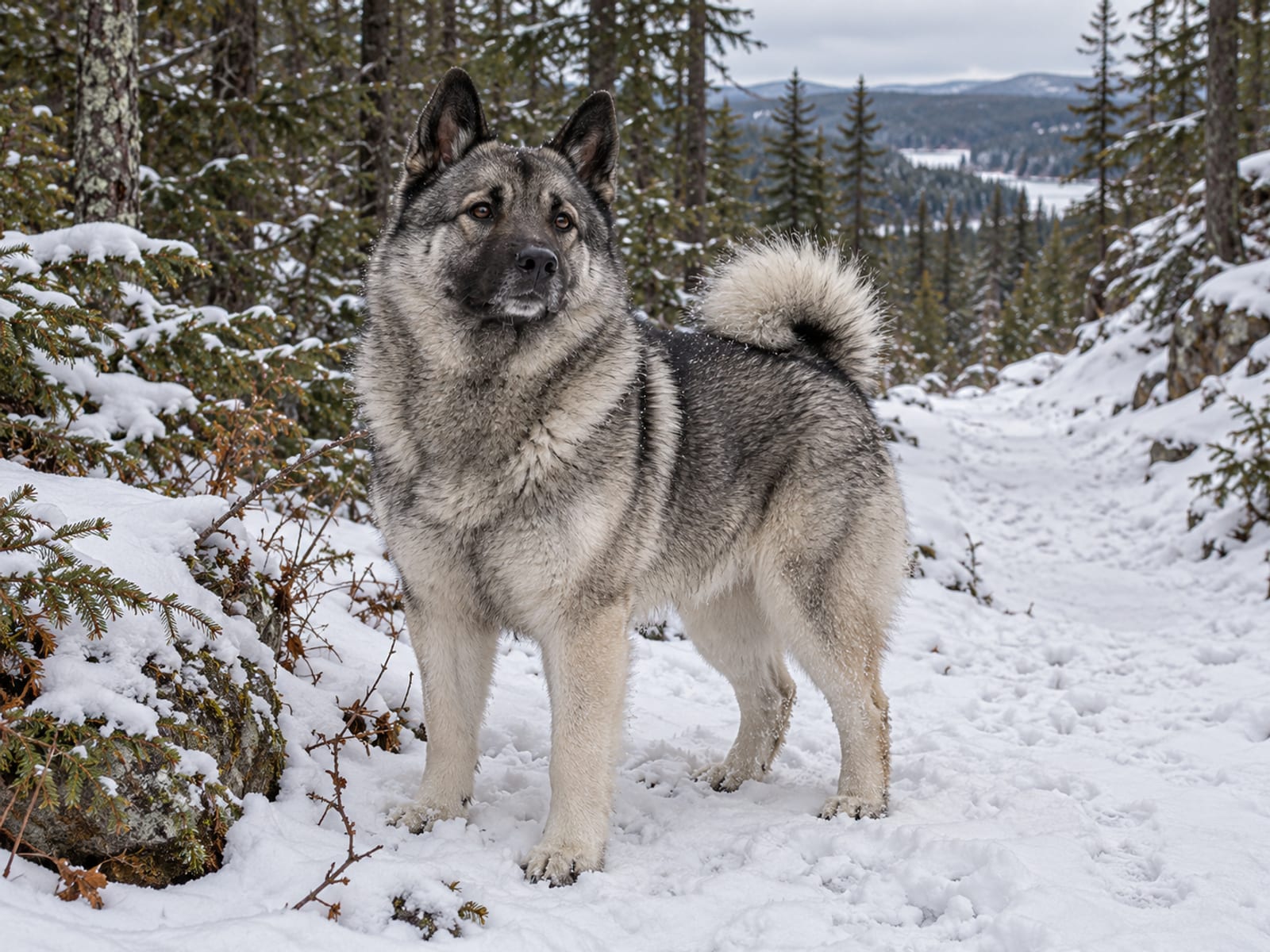
8. Norwegian Elkhound
The Norwegian Elkhound is a sturdy medium hunting dog. It stands about 20 inches at the shoulder and typically weighs 48 to 55 pounds, with a lifespan of 12 to 14 years. The dense silver-gray double coat sheds seasonally, and regular brushing matters most during coat blow.
The hunting background makes scent work and tracking especially natural outlets, and hiking, agility and obedience help too. Elkhounds are intelligent, alert and confident, friendly after introductions, sensitive and independent. They tend to bark at what they notice, and boredom raises the odds of vocal and destructive behavior.
An Elkhound suits an outdoorsy household with room for long walks and some patience for barking. It is a poor fit for quiet households, sedentary owners, or people wanting a very biddable dog. Hunting instincts may affect small pets. An apartment is possible only with substantial exercise and barking management. The AKC notes cancer and heart disease as health concerns.
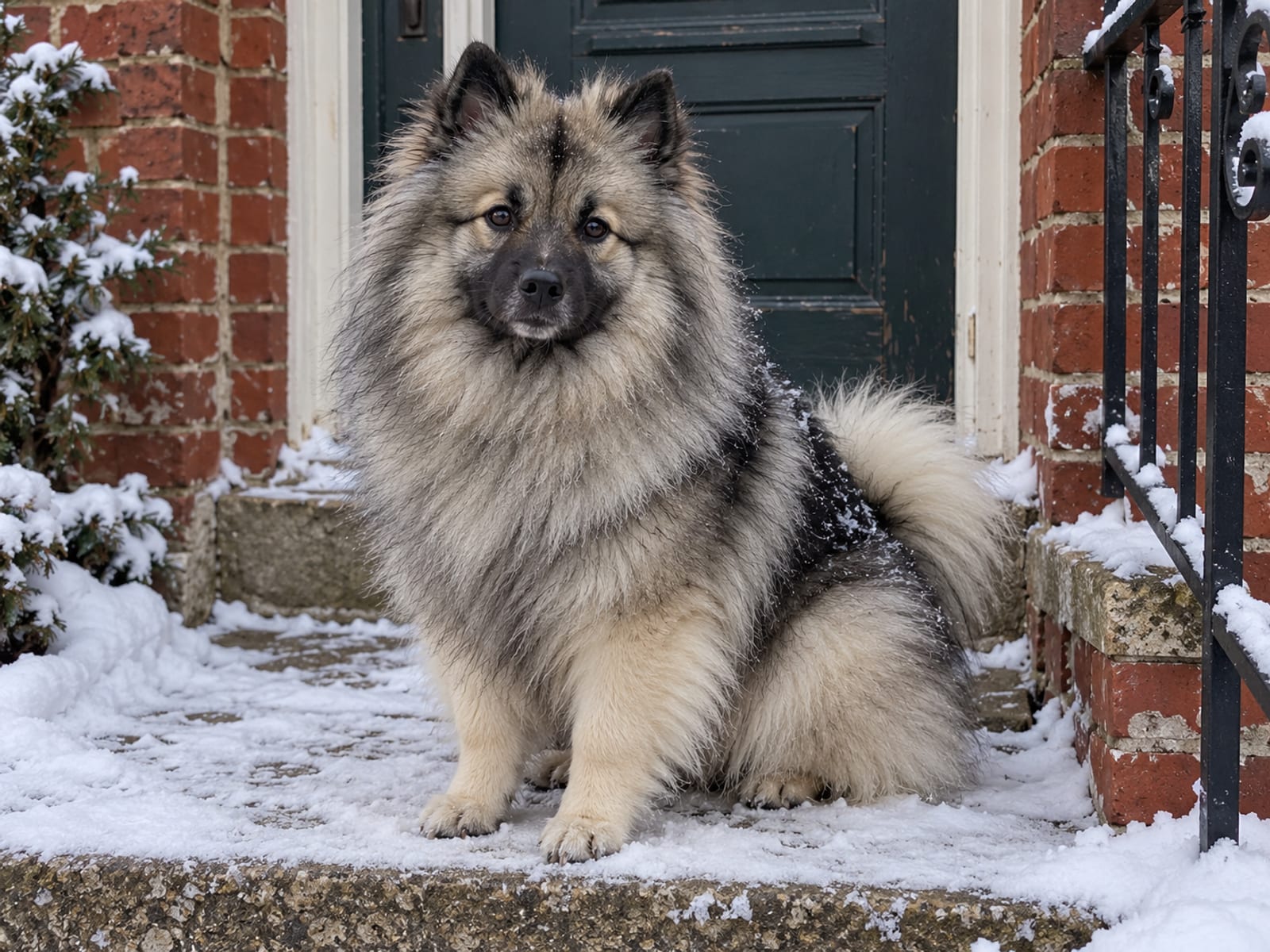
9. Keeshond
The Keeshond is the smaller, more apartment-minded choice. Males stand about 18 inches and females about 17 inches, with a typical weight of 35 to 45 pounds and a lifespan of 12 to 15 years. The abundant double coat sheds regularly and seasonally, so weekly brushing is the baseline and shedding season takes more.
Its practical point is cold-weather coat protection in a more manageable size. Keeshonds are affectionate, alert, intelligent and strongly people-oriented. They have a high alert-barking tendency, and strong social needs make long absences a poor match. Exercise is moderate, covering walks, play and training. See our apartment breeds list for more compact options.
A Keeshond suits a household wanting a fluffy, social dog that can handle apartment living if barking and exercise are managed. It is a poor fit for people wanting a quiet, low-shedding or independent dog. Health concerns include hip dysplasia, patellar luxation, primary hyperparathyroidism, epilepsy and eye disease.
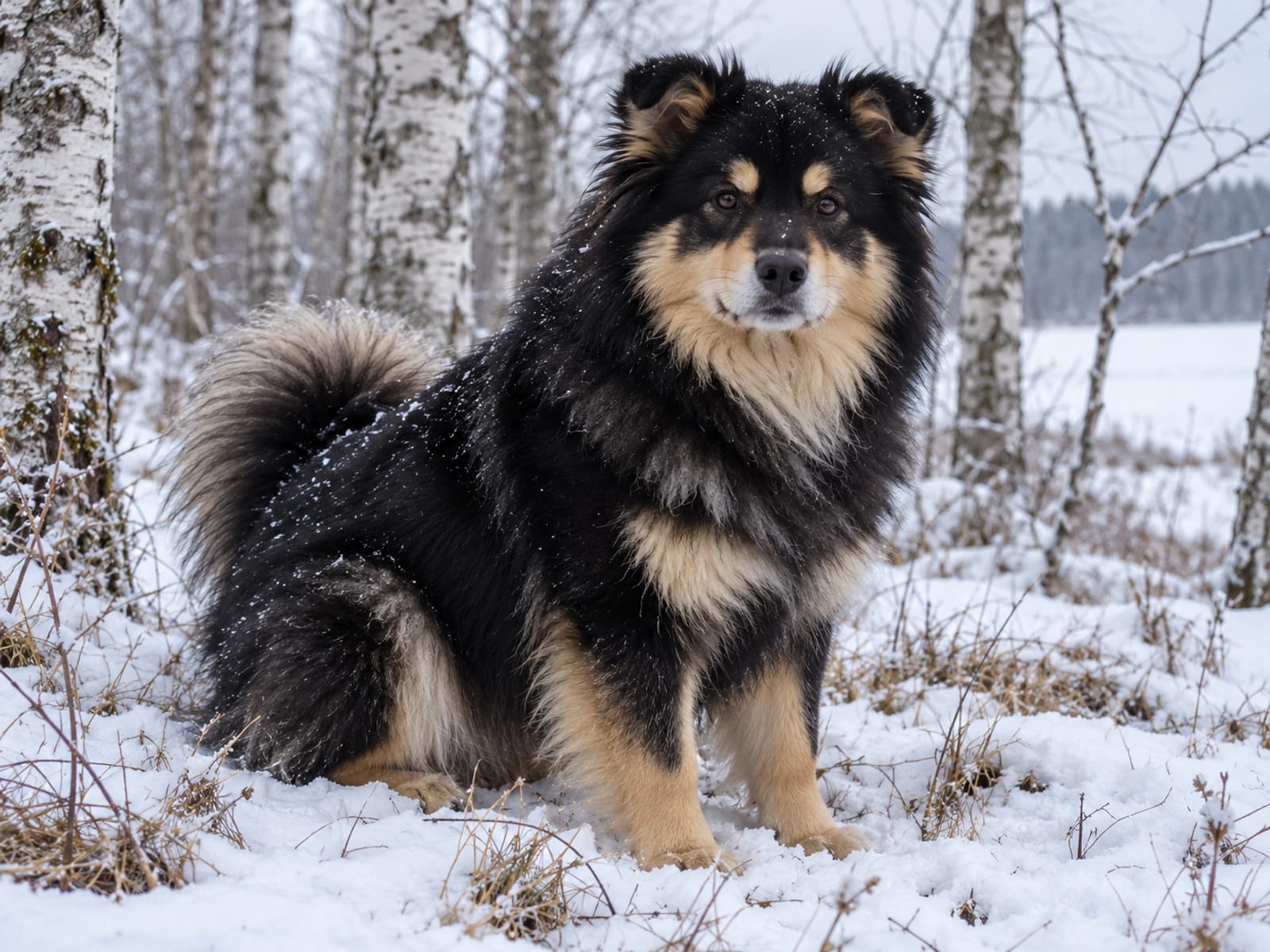
10. Finnish Lapphund
The Finnish Lapphund is a medium herding breed from the north. AKC information gives roughly 16 to 21 inches and 33 to 53 pounds, varying by sex and registry, with a lifespan commonly about 12 to 15 years. The profuse double coat has a water-resistant outer layer and sheds seasonally. Regular brushing continues year-round and increases during shedding.
Herding ancestry means cooperative training and activity games work well for both exercise and mental needs. Lapphunds are intelligent, friendly, responsive and often sensitive. Barking runs moderate to high, reflecting their herding and alert tendencies, and companionship and enrichment matter because moderate time alone is the most they tend to handle.
A Lapphund suits an active family that likes training games and hiking. It is a poor fit for owners wanting a silent dog or no seasonal shedding. An apartment is possible with daily activity and barking management. Screening recommendations vary by parent club, but recognized concerns include progressive retinal atrophy, cataracts, hip and elbow dysplasia and inherited metabolic disease, according to AKC breed information.
Tap or hover a row to highlight it.
| Breed | Weight | Lifespan | Coat or shedding | Exercise |
|---|---|---|---|---|
| BreedSiberian Husky | Weight35 to 60 lb | Lifespan12 to 14 years | Coat or sheddingMedium double coat, heavy seasonal shedding | ExerciseVery high |
| BreedAlaskan Malamute | WeightAbout 75 to 85 lb | LifespanAbout 10 to 14 years | Coat or sheddingThick, coarse double coat, heavy seasonal shedding | ExerciseHigh |
| BreedSamoyed | Weight35 to 65 lb | Lifespan12 to 14 years | Coat or sheddingProfuse white double coat, heavy seasonal shedding | ExerciseModerate to high |
| BreedNewfoundland | Weight100 to 150 lb | LifespanCommonly 9 to 10 years | Coat or sheddingWater-resistant double coat, heavy shedding | ExerciseModerate; swimming |
| BreedBernese Mountain Dog | Weight70 to 115 lb | Lifespan7 to 10 years | Coat or sheddingLong, silky double coat, regular shedding | ExerciseModerate |
| BreedGreat Pyrenees | Weight85 lb or more | Lifespan10 to 12 years | Coat or sheddingThick, weather-resistant double coat, heavy seasonal shedding | ExerciseModerate |
| BreedSaint Bernard | Weight120 to 180 lb | LifespanAbout 8 to 10 years | Coat or sheddingSmooth or long double coat, regular to heavy shedding | ExerciseModerate |
| BreedNorwegian Elkhound | WeightAbout 48 to 55 lb | Lifespan12 to 14 years | Coat or sheddingDense silver-gray double coat, seasonal shedding | ExerciseHigh |
| BreedKeeshond | Weight35 to 45 lb | Lifespan12 to 15 years | Coat or sheddingAbundant double coat, regular and seasonal shedding | ExerciseModerate |
| BreedFinnish Lapphund | Weight33 to 53 lb | LifespanAbout 12 to 15 years | Coat or sheddingProfuse double coat, seasonal shedding | ExerciseModerate to high |
How do you keep a cold-weather dog safe in winter?
Every coat has limits in harsh weather. The Merck Veterinary Manual says risk depends on breed and coat, size, age, body condition, acclimation, health, activity, time outside, wind, wetness and access to dry shelter. Puppies, seniors, underweight dogs, sick dogs, small dogs and dogs with thin or short coats are most vulnerable. For those dogs, the AKC says a coat may help thin-coated, small, elderly, ill or underweight dogs, and it works alongside supervision and shelter.
Bring a dog inside if it is shivering, weak, anxious, confused, unusually quiet, lifting its paws, refusing to walk, or showing pale, red, swollen or painful skin. Those signs call for a vet if hypothermia or frostbite is possible. For practical cold-weather safety and help finding care, see DogServ. The ASPCA's cold weather safety tips are another solid reference.
What do northern breeds ask of you in summer, and with shedding?
Expect seasonal shedding, often with heavy undercoat loss twice a year, and weekly brushing as a baseline for many double-coated breeds, with more during coat blow, according to the AKC's double-coat grooming guidance. Do not shave a double coat to manage heat; that guidance treats shaving as appropriate only when severe matting or a medical issue calls for it.
Cold-adapted coats insulate in warm weather too, but these dogs can still overheat. Provide shade, water and indoor cooling, shorten activity in hot periods and ask a vet about heat risk, as the AVMA's warm weather guidance recommends. If you live somewhere hot, the Newfoundland, Bernese and Saint Bernard deserve extra thought.
Why are Huskies rehomed so often?
The best-supported explanation is a mismatch between what a working breed needs and what the household expected. Huskies need substantial exercise, regular companionship and secure containment, and they can run, dig, escape, vocalize and chase small animals. When under-exercised or left alone, they can turn destructive or hard to manage.
Shelter research lists escape behavior, housing problems, behavior problems and owner circumstances among reasons for relinquishment. A 2024 shelter-record study reported Husky among the breeds in the owner-surrender records it studied. Rescue groups such as The Woof describe unrealistic expectations, insufficient exercise, escape behavior and prey drive as recurring placement problems.
Questions about cold weather, outdoor dogs and northern breeds
These are the questions people ask most when they are choosing a cold-weather dog or wondering about the one at home.
Who should not own a Husky?
A Husky is a poor choice for someone wanting a low-exercise, quiet, low-shedding or reliably off-leash dog. It is also a poor match for a household that leaves the dog alone all day, lacks secure containment or cannot provide daily physical and mental work. Read the AKC's guide to whether the Siberian Husky is the right fit before you decide.
Why are Huskies rehomed so much?
Common reasons include unrealistic expectations, too little exercise, escape behavior, vocalization, prey drive, destructive boredom and difficulty managing a strong, independent dog. Shelter research supports these as recurring relinquishment factors in the records studied.
How cold is too cold for a dog outside?
There is no single safe number. Coat, breed, size, age, health, body condition, acclimation, wind, wetness, activity and time outside all count. Bring the dog inside if it shows shivering, weakness, confusion, pain, paw-lifting or unusual reluctance to walk. Use sore paws and when to see a vet if paw-lifting follows walks on salted or treated surfaces.
Is leaving a dog outside all day neglect?
It can be, depending on the dog's needs and local law. Welfare standards call for adequate food, water, shelter, protection from heat, cold, wind, rain and snow, and care suited to age, breed and health, and a dog needs more than a coat or doghouse to be safe. Rules differ by state, as in Texas outdoor housing standards and Missouri animal-care regulations, so check the law where you live. The ASPCA's cold weather tips cover shelter basics.
What are the best large, medium and small dogs for cold weather?
Large options include the Newfoundland, Bernese Mountain Dog, Great Pyrenees and Saint Bernard. Medium options include the Siberian Husky, Samoyed, Alaskan Malamute, Norwegian Elkhound and Finnish Lapphund. A smaller option is the Keeshond. "Best" depends on exercise, barking, shedding, heat, space and training needs. Our small dog breeds list has more compact choices.
Which dogs need a coat or sweater in winter?
Dogs most likely to need a coat include small, thin-coated, hairless, elderly, underweight, ill or poorly acclimated dogs. A healthy, acclimated northern breed with a dense double coat may not need one for ordinary winter activity, per the AKC. Fit any coat comfortably and keep the dog dry.
What temperature can a dog tolerate?
No universal limit applies. Coat, breed, body size, age, health, body condition, acclimation, wind, wetness, activity and time outside all matter, so watch the dog's behavior and bring it inside at signs of cold stress. Ask a vet about your dog's individual risk, using the Merck Veterinary Manual's winter guidance as a starting point.
Where should dogs sleep when it is cold?
Indoors, in a warm, dry, draft-free spot off the floor with clean bedding. If a dog is outdoors temporarily, it needs accessible weatherproof shelter, protection from wind and precipitation, dry bedding, water and monitoring, according to the ASPCA. Puppies, seniors, sick dogs and thin-coated dogs should sleep indoors.
Which dog breeds tolerate cold?
Breeds with documented cold-weather adaptations include the Siberian Husky, Alaskan Malamute, Samoyed, Newfoundland, Bernese Mountain Dog, Great Pyrenees, Saint Bernard, Norwegian Elkhound, Keeshond and Finnish Lapphund, per AKC northern breed information. Even cold-tolerant breeds need shelter, monitoring and heat protection.
Where to go from here
If you want a big dog with a job, our working dog breeds guide list is a good next read. Woof Wag Nation has more breed guides in the dog breeds library, and the free Woof Wag Nation newsletter sends one practical dog guide each week,.
Sources
- AKC, Reasons Why Northern Breeds Rock Cold Weather
- Merck Veterinary Manual, Keeping Pets Safe During Cold Winter Months
- AKC, Does My Dog Need a Winter Coat?
- ASPCA, Cold Weather Safety Tips
- AKC, Siberian Husky
- AKC, Is the Siberian Husky the Right Fit for You?
- Siberian Husky Club of America, Health
- AKC, Alaskan Malamute
- AKC, Samoyed
- Samoyed Club of America, Health
- AKC, Newfoundland
- Newfoundland Club of America, Health
- AKC, Bernese Mountain Dog
- Bernese Mountain Dog Club of America, Health
- AKC, Great Pyrenees
- Great Pyrenees Club of America, Health
- AKC, Saint Bernard
- AKC, Norwegian Elkhound
- AKC, Keeshond
- AKC, Finnish Lapphund
- AKC, breed directory
- AKC, How Should You Groom a Double-Coated Dog?
- AVMA, Warm Weather Pet Safety
- Morris et al., Investigating the Reasons behind Companion Animal Relinquishment, 2024
- The Woof, Why Are So Many Huskies in Shelters?
- Texas outdoor housing standards (16 Tex. Admin. Code 91.103)
- Missouri animal-care regulations (2 CSR 30-9.010)