

Breed profile
Beagle
A friendly, energetic scent hound that needs daily exercise, plenty of sniffing and company.
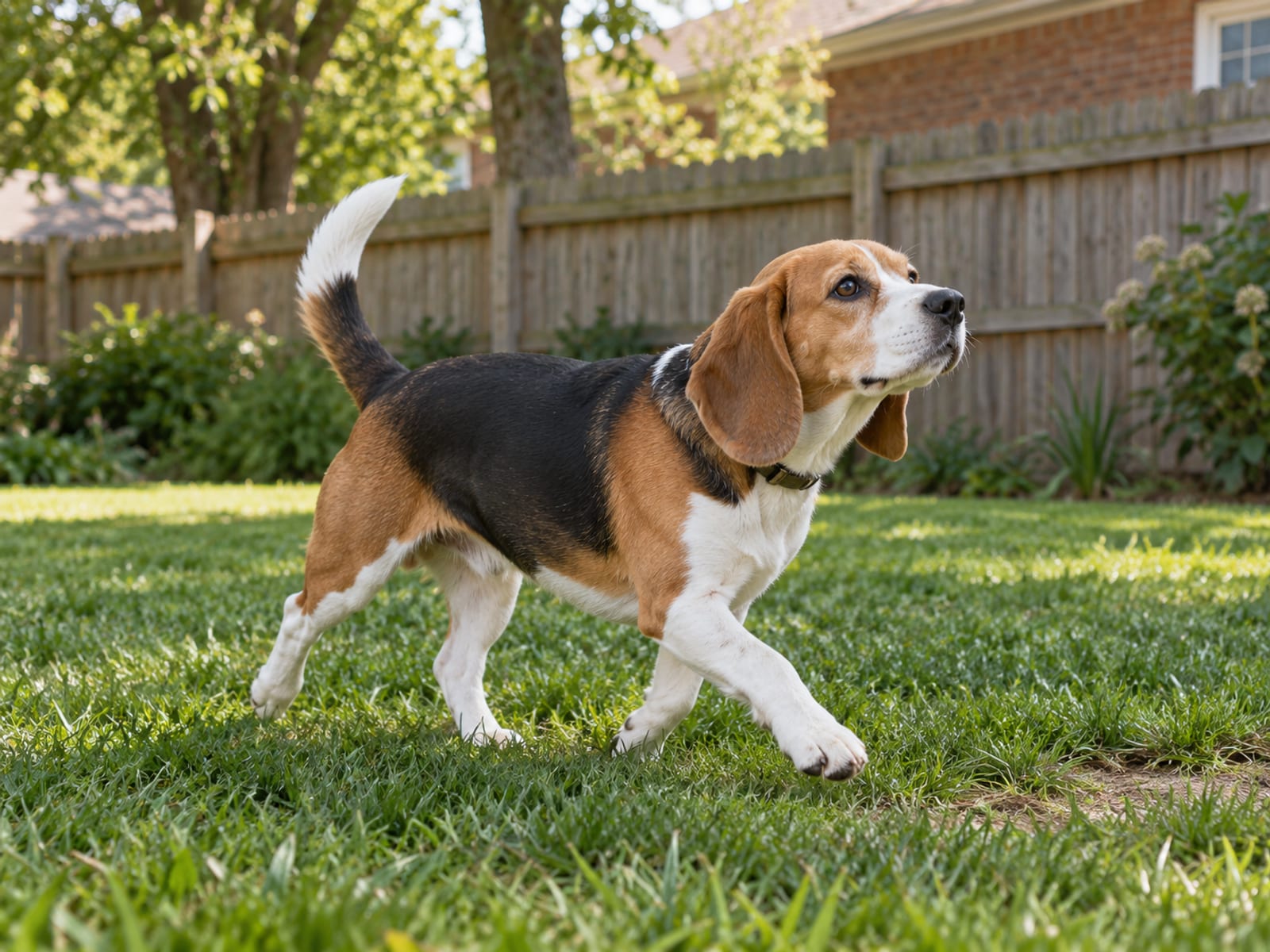
Adult size
13-inch variety
- Weight
- up to 20 lb (9.1 kg)
- Height
- up to 13 in (33 cm)
- Size group
- Small
15-inch variety
- Weight
- 20 to 30 lb (9.1 to 13.6 kg)
- Height
- 13 to 15 in (33 to 38 cm)
- Size group
- Medium
Source: AKC Beagle standard (effective July 30, 2024); AKC breed page. Puppy size guide
AKC ratings (1 to 5)
These are the American Kennel Club's ratings for the breed as a whole; each dog is an individual. Source: AKC breed page (2026-10-23).
Living with a Beagle means sharing your home with a friendly, energetic scent hound that needs daily exercise, plenty of sniffing and company. The short coat is easy to look after, but shedding is moderate and barking can be substantial.
Beagles can fit an active apartment or a house with a yard. What matters is whether your household can handle their nose, their voice, their appetite and their need for something to do.
The AKC places the Beagle in the Hound Group, and the breed comes from Great Britain, where it was developed to follow scent trails while hunting hare and other small quarry, often in packs. Almost everything below traces back to that job.
What a normal day with a Beagle looks like
Expect a dog that wants to be where you are. The AKC's temperament guide describes the Beagle as "friendly, curious, works cheerfully, loyal companion, generally easy-going," and that matches the usual day: a morning walk full of stops, a nap near you, a hunt for anything edible, and a loud greeting when someone comes to the door.
Size is easy to place. The AKC breed standard recognizes two varieties, hounds up to 13 inches tall and hounds over 13 and up to 15 inches, so a Beagle is a compact dog either way. Our puppy size guide can help you estimate where a particular puppy might land.
Exercise and keeping a Beagle's mind busy
Plan on at least 60 minutes of daily exercise for a healthy adult. The UK charity PDSA suggests at least 90 minutes, mixing walking, running, play, training and secure off-leash time. Walks work best when the dog is allowed to sniff, because sniffing is exercise for a scent hound's brain as well as its legs.
Good ways to fill that time:
- Leashed walks that allow safe sniffing
- Scent games, tracking exercises and food puzzles
- Short reward-based training sessions
- Fetch, play and hiking in secure areas
- Running time in a securely fenced space
The AKC warns that a Beagle may follow an interesting scent instead of coming back when called, and recommends a leash outdoors unless the area is secure. It also calls Beagles escape artists and suggests a fence at least five feet high with protection against digging. Puppies need age-appropriate play rather than long, high-impact exercise while they grow, and your veterinarian can help set limits for an individual dog.
Grooming and shedding
The Beagle has a smooth, dense, short double coat. According to the AKC, it gets heavier in winter, spring is the main shedding season, and moderate shedding continues all year. Professional clipping is not normally needed.
A simple routine covers most of it:
- Brush weekly with a medium-bristle brush, rubber grooming mitt or hound glove, and more often in heavy shedding weeks
- Check the ears weekly and clean them only as your veterinary team advises
- Bathe when the dog is dirty or smelly rather than on a fixed schedule
- Trim nails regularly
- Brush teeth regularly and arrange dental care with your vet as needed
Weekly brushing usually takes several minutes, plus the nail and dental care. A groomer, if you use one, may only be needed for baths, drying and nails. Shedding level and allergies are separate questions: the AAAAI says no dog breed is truly hypoallergenic, because allergens come mainly from proteins in dander, skin, saliva and urine rather than from hair length.
Temperament, training and that voice
The AKC describes Beagles as curious, clever and energetic. They tend to respond best to patience, positive reinforcement, treats and creativity, and they do not respond well to harsh methods. VCA Animal Hospitals notes that they can learn quickly, especially for food, but that scent drive and independence can make recall, attention and house training slower going.
Barking is the trait to think about before you commit. A Beagle may bark, howl and bay, which reflects its hunting background, and the AKC points out the breed's distinctive vocalizations. Excitement, a strong scent, boredom and being left alone can all set it off.
Company matters too. The AKC says a Beagle left alone for long periods may become destructive and tends to do better with human or canine company. That is a tendency, not a prediction for any one dog, but it is worth planning around if your workday keeps you out of the house.
Children, other pets, visitors and apartments
Beagles are social, pack-bred dogs that generally enjoy people and other dogs, and AKC and veterinary sources commonly describe them as friendly with children. Even so, each dog's temperament, early socialization and your supervision count more than a breed description, so keep an adult watching every child and dog interaction.
Cats and small pets call for more care, since the Beagle was bred to follow and chase scent. Some live happily with cats and others give chase, so introduce them gradually and supervise. Visitors are usually welcomed, though a Beagle may announce them loudly.
Apartment life can work when the dog gets daily exercise, sniffing, enrichment and training, and when you have a plan for barking and a building that tolerates some noise. A yard helps but does not replace walks and mental work.
A Beagle is a poor match for a household that wants a quiet, low-activity dog, one that will be alone for long stretches, or one that can roam off leash without secure fencing. For first-time owners, the answer is "with care." The breed is sociable and food-motivated, and it can do well with consistent reward-based training and realistic expectations about scent distraction and noise.
Health to know about
The National Beagle Club's health statement names epilepsy, allergies, hypothyroidism, hip dysplasia and back problems among the breed's common concerns. A 2025 UK VetCompass study by O'Neill and colleagues looked at 3,729 Beagles and found the most commonly recorded problems were everyday ones: obesity (24.27%), dental disease (17.78%), overgrown nails (11.61%), ear infection (11.18%) and anal sac impaction (10.59%).
Those numbers describe a population, not any single dog, but they point to easy wins: keep your Beagle lean, since the breed loves food, and stay on top of teeth, ears and nails.
On lifespan, the AKC lists 10 to 15 years. A 2024 study in Scientific Reports of UK dogs found a median life expectancy of 12.5 years for Beagles.
If you are buying a puppy, the National Beagle Club's screening tests are the checklist. Its CHIC requirements are a hip evaluation (OFA or PennHIP), an eye exam by a board-certified ophthalmologist, a DNA test for Musladin-Leuke Syndrome, a cardiac evaluation, and an autoimmune thyroiditis evaluation at 24 months or older. The OFA explains that a CHIC number means the results were entered and released publicly; it does not mean every result is normal, so ask to see the results themselves.
What a Beagle costs
Petful's September 2026 guidance puts a puppy from a responsible breeder at roughly $800 to $2,500, and adoption from a Beagle rescue at roughly $200 to $500. Those are broad market estimates, and fees vary by organization and region.
For yearly care, a reasonable planning range for a Beagle in the United States is about $1,500 to $3,500 for food, routine veterinary care, parasite prevention, basic grooming and insurance. That range comes from general dog-cost figures, including an older AKC owner survey that averaged about $2,500 a year. It leaves out emergencies, boarding, training, dental procedures and major illness, so confirm local prices with your own vet and insurer.
Questions to ask a breeder, rescue or foster
A few questions go a long way, whichever route you take:
- How does the dog behave on a leash, around other dogs and when left alone?
- How does it react to cats or small pets, if you have them?
- How much does it bark or howl, and when?
- What does a day of exercise and feeding look like now?
- For a puppy, who are both parents, and can you see their OFA or PennHIP, eye, cardiac, thyroid and Musladin-Leuke results?
Honest answers to these tell you more about fit than any breed profile can.
Where to go next
If you are leaning toward adoption, the AKC Rescue Network lists regional Beagle rescues, and the National Beagle Club of America is the AKC parent club. Rescues such as BREW, SOS Beagle Rescue and Triangle Beagle Rescue are among those to start with; availability and requirements vary.
To see how a Beagle stacks up against other dogs, read our lists of low-maintenance dog breeds and family-friendly dog breeds, both of which include it. You can also check the size of a growing puppy with the puppy size guide, or browse every profile on the dog breeds hub.